Iran War Hormuz: Why the Strait Matters for Global Oil
The Strait of Hormuz, a narrow waterway between Oman and Iran, has long been a critical chokepoint in global oil and gas trade. Stretching just 21 miles at its narrowest point, this maritime passage handles nearly one-third of the world’s seaborne oil shipments. Recent tensions between Iran and regional powers, particularly Israel and Gulf states, have once again thrust the Strait into the spotlight. The potential for conflict in this area carries significant implications not only for energy markets but also for geopolitical stability.
The region’s volatility is not new. Since the 1979 Islamic Revolution, Iran has used its geographic leverage in the Strait of Hormuz as a strategic tool in broader geopolitical disputes. The 1980s “Tanker War” during the Iran-Iraq conflict saw Iran and Iraq target each other’s oil shipments, disrupting global oil flows. More recently, tensions have flared over Iran’s nuclear program, its support for proxy groups across the Middle East, and its military exercises near the Strait. These actions have repeatedly raised concerns about the security of one of the world’s most vital shipping lanes.
The Strategic Importance of the Strait of Hormuz
The Strait of Hormuz is more than just a maritime route—it is a linchpin of the global economy. According to the U.S. Energy Information Administration, about 21 million barrels of oil pass through the Strait daily, accounting for roughly 20% of the world’s total oil consumption. Any disruption in this flow could send shockwaves through energy markets, driving up prices and destabilizing economies dependent on oil imports.
Several countries rely heavily on oil transiting the Strait, including China, India, Japan, and South Korea. The European Union, though less dependent on Middle Eastern oil than in past decades, still sources a significant portion of its energy from the region. A prolonged closure or disruption in the Strait would force these nations to seek alternative supply routes, potentially increasing costs and creating logistical challenges.
The Strait’s importance extends beyond oil. It is also a critical transit point for liquefied natural gas (LNG), with Qatar, the world’s largest LNG exporter, relying on the Strait to ship its gas to Asia and Europe. Any conflict that disrupts LNG flows could have far-reaching consequences for global energy security, particularly in winter months when demand for heating fuels peaks.
Recent Flashpoints and Escalating Tensions
The past decade has seen a series of incidents that have heightened concerns about the Strait’s stability. In 2019, attacks on oil tankers near the Strait, attributed to Iran by the U.S. and its allies, temporarily shut down a key shipping route. Iran denied involvement but framed the incidents as responses to U.S. sanctions and regional provocations.
In 2021, Iran seized a South Korean-flagged tanker in retaliation for the detention of Iranian funds in South Korean banks. The ship was held for months, further straining relations between Tehran and Seoul. More recently, Iran’s military exercises near the Strait have included missile tests and naval drills, signaling its readiness to disrupt shipping if provoked.
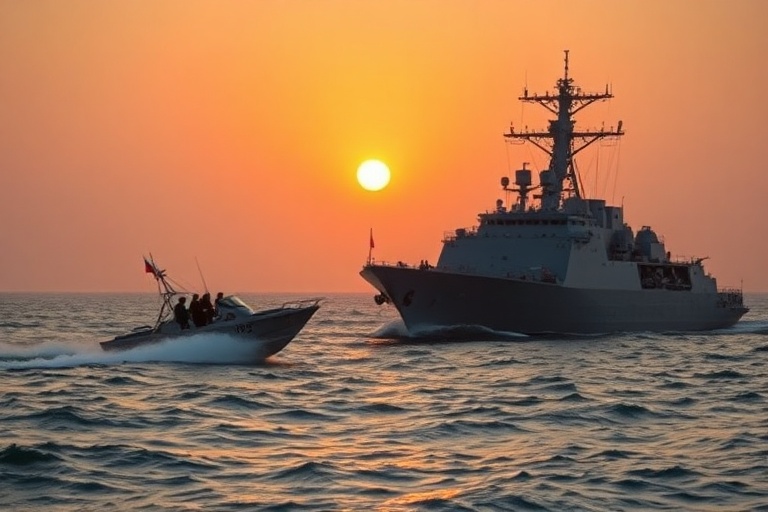
These actions are part of a broader pattern of Iranian brinkmanship. The country has long used its military presence in the Strait as a deterrent against external threats, particularly from the U.S. and Israel. Iran’s Revolutionary Guard Corps (IRGC) has developed asymmetric capabilities, including fast-attack boats and anti-ship missiles, to counter the superior naval forces of its adversaries.
Key Players and Their Interests
- Iran: Views control of the Strait as essential to its national security and regional influence. The IRGC’s naval forces are tasked with defending the Strait and deterring external threats.
- United States: Maintains a significant military presence in the region, including the Fifth Fleet based in Bahrain. The U.S. has vowed to keep the Strait open but faces challenges in balancing deterrence with diplomacy.
- Gulf States: Countries like Saudi Arabia and the UAE rely on the Strait for oil exports and are deeply concerned about Iranian aggression. They have strengthened alliances with the U.S. and Israel to counter Iran’s influence.
- China and India: Major importers of Middle Eastern oil, these countries have sought to maintain economic ties with Iran despite U.S. sanctions. Their involvement adds another layer of complexity to the geopolitical landscape.
Broader Implications: Energy Markets and Global Stability
The potential for conflict in the Strait of Hormuz extends beyond immediate military concerns. A disruption in oil flows could trigger a global energy crisis, particularly in countries already grappling with high inflation and economic instability. The International Energy Agency (IEA) has warned that any significant reduction in oil supplies from the Middle East could lead to price spikes and supply shortages, exacerbating existing economic challenges.
For the U.S., the stakes are particularly high. The country has become the world’s largest oil producer, but it still imports significant quantities of oil from the Middle East. A conflict in the Strait could force the U.S. to intervene militarily, risking escalation with Iran and further destabilizing the region.
Europe faces a different set of challenges. The continent is already contending with energy shortages following Russia’s invasion of Ukraine. A disruption in Middle Eastern oil supplies could force European nations to seek alternative sources, potentially increasing their reliance on Russian energy or accelerating their transition to renewable energy.
The broader geopolitical implications are equally concerning. A conflict in the Strait could draw in regional powers, including Israel, Saudi Arabia, and the UAE, each with its own strategic interests. The risk of a wider regional war, involving multiple actors, cannot be discounted. Such a conflict would have devastating humanitarian consequences and could reshape the Middle East’s political landscape for decades.
Diplomacy and the Path Forward
Despite the risks, there are avenues for diplomacy that could reduce tensions. The 2015 nuclear deal, formally known as the Joint Comprehensive Plan of Action (JCPOA), was designed to curb Iran’s nuclear program in exchange for sanctions relief. While the deal has faced numerous setbacks, its revival could ease some of the economic pressures driving Iran’s regional assertiveness.
However, diplomacy is complicated by the broader geopolitical context. The U.S. and its allies remain deeply skeptical of Iran’s intentions, while Iran views Western powers as unreliable partners. Regional dynamics further complicate efforts at reconciliation, particularly the ongoing rivalry between Iran and Saudi Arabia.
In the absence of a diplomatic breakthrough, the international community must prepare for the possibility of conflict. This includes diversifying energy supplies, increasing strategic oil reserves, and developing contingency plans for alternative shipping routes. Countries like India and China are already exploring options to reduce their dependence on Middle Eastern oil, such as increasing imports from Russia or investing in renewable energy.
For now, the Strait of Hormuz remains a powder keg, its stability dependent on the delicate balance of power in the region. The coming months will be critical in determining whether diplomacy can avert a crisis or whether the world must brace for another chapter of conflict in one of its most vital waterways.
To stay informed about the latest developments in energy and geopolitics, follow Dave’s Locker News for breaking updates and expert analysis.
Further Reading
For more insights into Middle Eastern geopolitics and energy security, explore Dave’s Locker Analysis section.