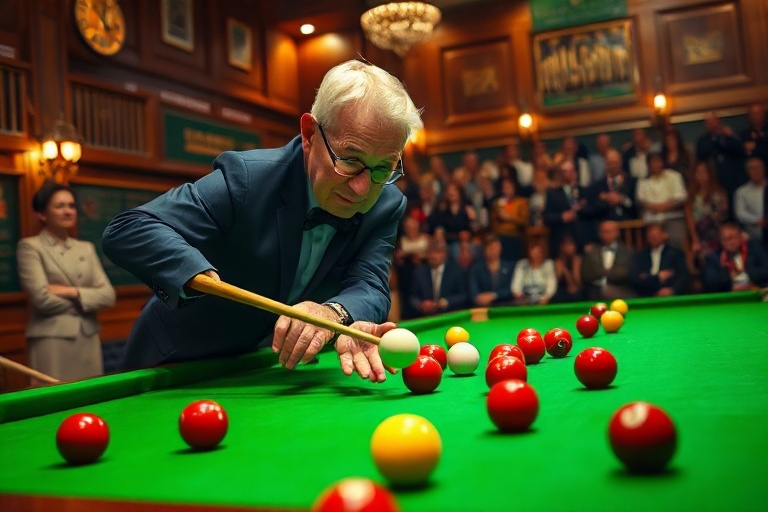
World Seniors Championship: Celebrating Veteran Snooker Legends
The World Seniors Championship stands as one of snooker’s most distinctive tournaments, offering veteran players over 40 a chance to compete at the highest level. Unlike traditional professional events, this championship celebrates experience and craftsmanship, providing a platform for legends who may have stepped away from the main tour. Its return in 2024 after a two-year hiatus further solidified its role as a bridge between past and present in the sport.
The event’s revival in recent years reflects snooker’s commitment to preserving its heritage while engaging new audiences. Players like Jimmy White, Stephen Hendry, and Ken Doherty have graced the stage, proving that age is no barrier to excellence. The tournament’s format—featuring a mix of direct qualifiers and wildcards—ensures a competitive balance while honoring the contributions of older competitors.
History and Evolution
First introduced in 1991 as the Professional Seniors Championship, the event initially struggled for consistency before being revived in 2010 under the World Seniors Championship banner. Organized by World Seniors Snooker, the tournament quickly gained traction for its nostalgic appeal and high-quality play. The 2015 edition marked a turning point when it was broadcast internationally, introducing a new generation to the magic of veteran players.
The championship’s early years were marked by financial instability, but its relocation to Bath’s South Western Hotel in 2017 provided a more structured foundation. This move coincided with a surge in popularity, as streaming platforms amplified its reach. Today, it remains one of the few events dedicated exclusively to senior professionals, offering a rare opportunity to see snooker’s golden generation in action.
Key Moments in Tournament History
- 1991: The inaugural Professional Seniors Championship is held, featuring legends like Cliff Thorburn and Dennis Taylor.
- 2010: The tournament is rebranded as the World Seniors Championship, with Jimmy White claiming the first title.
- 2015: The event gains global exposure through international broadcasts, boosting its profile.
- 2017: Relocation to Bath’s South Western Hotel stabilizes the tournament’s logistical and financial framework.
- 2022: The championship is paused due to scheduling conflicts but returns in 2024 with a renewed format.
Format and Competition Structure
The World Seniors Championship employs a straightforward yet engaging format. The tournament begins with a round-robin group stage, where players compete in best-of-three-frame matches. The top performers advance to a knockout phase, culminating in a best-of-seven final. This structure ensures a balance between endurance and high-stakes drama, a hallmark of snooker’s most prestigious events.
A unique feature of the competition is its wildcard system, which allows former world champions and local qualifiers to enter directly. This approach not only widens the field but also fosters a sense of inclusivity. The 2024 edition, for instance, featured eight seeded players alongside eight wildcards, creating a dynamic mix of experience and fresh talent.
The venue plays a crucial role in the tournament’s atmosphere. The South Western Hotel in Bath, with its intimate setting, enhances the viewing experience for both players and spectators. The absence of a large audience often amplifies the intensity, as competitors focus solely on their craft without external distractions.
Notable Players and Legendary Performances
Few tournaments in snooker can boast a roster as illustrious as the World Seniors Championship. Jimmy White, the 1985 world finalist, has been a perennial contender, winning the title in 2010, 2017, and 2018. His longevity and flair embody the spirit of the event, inspiring younger players to embrace the game’s traditions.
Stephen Hendry, despite his retirement from professional play, has remained a dominant force in the seniors circuit. His 2024 victory marked his fifth world title across all formats, reinforcing his status as one of the game’s greatest. Other standout performers include John Parrott, who claimed the 2014 title, and Ken Doherty, whose 2016 win showcased his tactical brilliance.
The tournament also serves as a proving ground for emerging senior players. In 2021, Michael Judge defeated Rodney Morris in a thrilling final, demonstrating that the championship is not just a retirement lap but a competitive arena. These performances highlight the evolving nature of the event, where past and present intersect.
Impact on Snooker’s Landscape
The World Seniors Championship contributes to snooker’s broader ecosystem by preserving its history and fostering intergenerational connections. Events like this remind fans of the sport’s rich legacy, from the dominance of Steve Davis to the revolutionary play of Ronnie O’Sullivan. By showcasing players who may no longer compete regularly, the tournament bridges gaps between eras.
Commercially, the championship has carved a niche for itself. Its broadcasts on platforms like Sports and Eurosport have attracted casual viewers, while sponsorship deals have strengthened its financial footing. The 2024 edition, for example, featured partnerships with leading snooker equipment brands, underscoring its growing appeal.
For younger players, the event offers a unique learning opportunity. Watching veterans like Hendry and White navigate pressure situations provides invaluable insights into the mental and technical aspects of the game. This educational aspect aligns with snooker’s efforts to nurture the next generation of talent.
Challenges and Future Prospects
Despite its successes, the World Seniors Championship faces challenges. Scheduling conflicts with the main professional tour remain a hurdle, as do efforts to maintain consistent broadcast coverage. The tournament’s organizers must balance tradition with innovation to ensure its long-term viability.
Looking ahead, potential expansions could include a women’s seniors division or regional qualifying events. Such initiatives would further diversify the competition while reinforcing snooker’s inclusivity. The 2024 return has already set a positive precedent, proving that the championship has a vital role to play in the sport’s future.
Conclusion
The World Seniors Championship is more than just a tournament; it is a celebration of snooker’s enduring spirit. By honoring the game’s veterans and engaging new audiences, it ensures that the legacies of its greatest players continue to inspire. As the event evolves, its ability to adapt while staying true to its roots will determine its lasting impact on the sport.
For fans of snooker, the championship offers a rare blend of nostalgia and excitement. It reminds us that greatness knows no age limit and that the game’s history is still being written by those who once defined it. The World Seniors Championship is not just a throwback—it is a vital thread in the fabric of snooker’s ongoing story.