What Is the Magic Hour Movie Phenomenon?
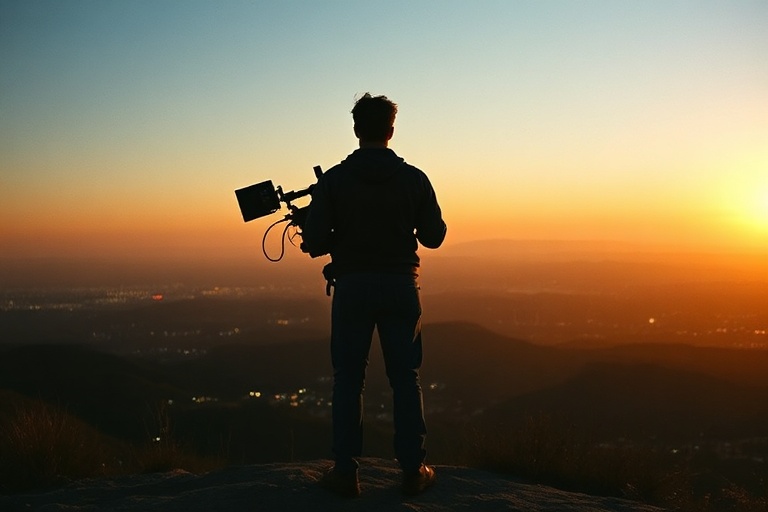
The term magic hour movie has quietly taken root in global film culture, referring not to a single film but to a distinct aesthetic movement that emerged across independent and mainstream cinema. The phrase describes movies shot during the fleeting window of time just after sunrise or before sunset, when natural light creates a soft, diffused glow that filmmakers harness to evoke emotion, memory, and visual poetry.
This phenomenon spans decades and continents, from the sun-drenched streets of 1960s French New Wave films to the neon-kissed alleys of contemporary Asian cinema. It’s less about genre and more about light as a narrative device—a way to slow time, deepen atmosphere, and invite viewers into a shared dreamlike state. Directors like Wong Kar-wai, Edward Yang, and Kelly Reichardt have all wielded the magic hour not just as a visual trick, but as a storytelling language.
The Roots: When Cinema First Fell in Love With Dawn and Dusk
Cinema’s fascination with the magic hour traces back to the medium’s early years. In the 1920s and ’30s, German expressionist filmmakers used controlled lighting to shape mood, though not always in natural settings. The real turning point came with Italian Neorealism in the 1940s, where location shooting under real light became essential. By the late 1950s, French critics-turned-filmmakers like François Truffaut and Jean-Luc Godard began shooting in natural light, especially during twilight, to capture spontaneity and authenticity.
In Asia, the magic hour became a cultural mirror. Ozu Yasujirō’s 1953 film Tokyo Story uses the quiet glow of dawn to underscore themes of loss and generational change. Decades later, Wong Kar-wai’s In the Mood for Love (2000) turned Hong Kong’s alleys into a canvas of golden haze, making the magic hour synonymous with longing and nostalgia. The technique evolved from technical necessity into a poetic signature.
A Global Movement: How Different Cultures Use the Magic Hour
The magic hour movie is not confined to a single style or story. Its meaning shifts across cultures, reflecting local values and artistic priorities.
- East Asia: In Japan and South Korea, the magic hour often symbolizes transience and beauty. Directors like Hirokazu Kore-eda (e.g., After the Storm) use soft morning light to reflect quiet resilience, while Korean films like The Handmaiden employ dusk’s fading glow to blur lines between reality and illusion.
- Europe: From the misty fjords of Norway in Thelma to the Parisian rooftops in Amélie, European cinema uses the magic hour to evoke nostalgia and intimacy. The light feels personal, almost like a character watching alongside the audience.
- Latin America: In countries like Mexico and Argentina, filmmakers like Alfonso Cuarón (Y Tu Mamá También) and Lucrecia Martel (Zama) use the golden hour to frame political and social landscapes, where beauty and hardship exist in the same frame.
- Africa & Middle East: Emerging voices like Tunisian director Kaouther Ben Hania (The Man Who Sold His Skin) use the magic hour to highlight contrasts—tradition vs. modernity, hope vs. constraint—within a single luminous moment.
Across these regions, the magic hour becomes more than a shooting schedule. It becomes a cultural metaphor—a visual shorthand for what societies value: memory, transition, or the fleeting nature of life.
Why the Magic Hour Resonates in the Digital Age
In an era dominated by digital effects and algorithm-driven content, the magic hour remains stubbornly analog. It cannot be replicated in post-production with CGI or color grading. Its magic lies in its unpredictability: a cloud passing, a door opening, a child’s laughter caught in the golden light. That unpredictability creates authenticity—something increasingly rare in a world of synthetic perfection.
Streaming platforms have amplified the reach of magic hour films. A viewer in Berlin can stream Paterson (2016) and feel the New Jersey dawn wash over them, just as a fan in Buenos Aires can experience the dusk-drenched streets of The Secret in Their Eyes. The internet has turned the magic hour into a global visual language, transcending subtitles and dubbing.
But accessibility has also diluted the term. What was once a rare aesthetic is now often misused—any film with warm tones gets labeled a “magic hour movie.” Critics and scholars are pushing back, arguing that true magic hour cinema isn’t just about lighting; it’s about rhythm, pacing, and emotional resonance. It’s less about the hour and more about the feeling it evokes: a moment suspended in time.
The Future: Will the Magic Hour Survive in a Digital World?
Despite the rise of LED volume filmmaking and virtual production, the magic hour endures. In fact, it may be more relevant than ever. As audiences crave authenticity, filmmakers return to real light, real locations, and real moments. Even in big-budget films like Dune (2021), directors like Denis Villeneuve used natural light to ground the sci-fi epic in emotional reality.
Emerging filmmakers are also redefining the magic hour. In 2023, the short film Golden Hour by Thai director Apichatpong Weerasethakul won awards at Cannes not for its plot, but for its meditative use of dusk in a rural village. It proved that the magic hour isn’t just for dramas or romances—it can be a tool for experimental storytelling.
Looking ahead, the magic hour may evolve into a hybrid practice. Drones capturing aerial sunsets, AI-assisted color matching, and even smartphone filmmaking are making the technique more accessible. But the core appeal remains unchanged: light as emotion.
How to Spot a True Magic Hour Movie
Not every film shot during dawn or dusk qualifies as a magic hour movie. Here are key traits to look for:
- Natural Light as Protagonist: The light isn’t just background—it shapes the scene’s mood and pace.
- Slow, Deliberate Pacing: Scenes unfold like the light itself, lingering on faces, gestures, and spaces.
- Emotional Weight: The beauty of the light mirrors the emotional journey of the characters.
- Cultural Context: The light often reflects local attitudes toward time, memory, or beauty.
- Minimal Artificial Enhancement: While post-processing may exist, the core light source is natural.
Films like Before Sunrise (1995), Lost in Translation (2003), and Nomadland (2020) embody these qualities. They don’t just use the magic hour—they breathe within it.
Where to Find More Magic Hour Films
If you’re inspired to explore the magic hour genre further, start with these essential titles from different eras and regions:
- Asia: In the Mood for Love (Wong Kar-wai, 2000), Spring, Summer, Fall, Winter… and Spring (Kim Ki-duk, 2003)
- Europe: Caché (Michael Haneke, 2005), The Lives of Others (Florian Henckel von Donnersmarck, 2006)
- Americas: Paris, Texas (Wim Wenders, 1984), Moonlight (Barry Jenkins, 2016)
- Independent: Wendy and Lucy (Kelly Reichardt, 2008), The Rider (Chloé Zhao, 2017)
For deeper analysis, check out our Culture section, where we regularly review films that push visual storytelling boundaries. You can also explore Entertainment for curated lists of visually stunning cinema.
Conclusion: The Magic Hour as a Universal Language
The magic hour movie is more than a trend or a technique. It is a quiet rebellion against the rush of modern life—a reminder that beauty and meaning can be found in fleeting moments. In an age of instant gratification, these films ask us to slow down, to watch, to feel.
From the neon alleys of Tokyo to the wheat fields of Kansas, the magic hour connects us across cultures, languages, and generations. It tells us that even in darkness, there is light worth waiting for—and that light, when captured just right, can say more than a thousand words.
As cinema continues to evolve, the magic hour may fade from the daily lexicon, but its spirit will endure. Because in the end, we all understand light when we see it—golden, soft, and full of possibility.