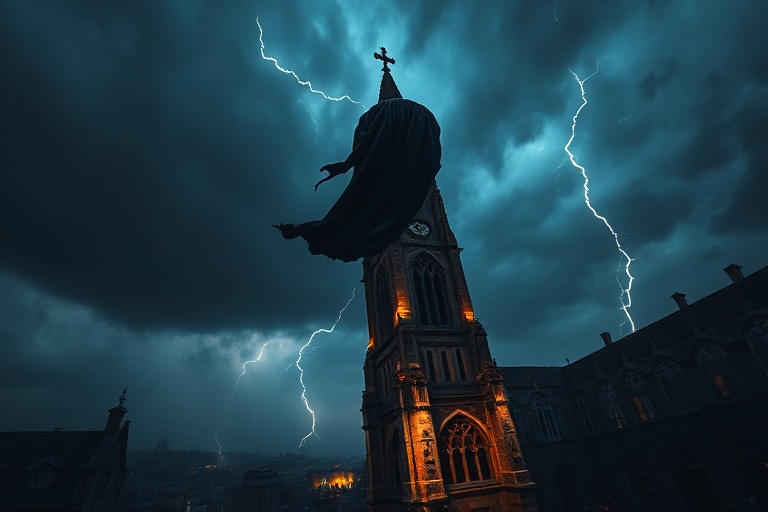
Mayhem Requiem: The Global Soundtrack of Rebellion and Redemption
The fusion of chaos and melody has long been a powerful artistic statement. Throughout history, music has served as both a weapon against oppression and a balm for wounded souls. One of the most striking recent examples of this duality is Mayhem Requiem, a musical project that has transcended traditional genres to become a cultural touchstone across continents.
Emerging from the underground scenes of Europe and North America, Mayhem Requiem blends elements of black metal, neoclassical composition, and industrial soundscapes. Its raw energy and intricate arrangements have earned it a devoted following among listeners who crave both intensity and sophistication. But what makes this project particularly noteworthy is its ability to resonate with diverse audiences in vastly different cultural contexts.
The Origins: From Scandinavia to the World Stage
The roots of Mayhem Requiem trace back to the extreme metal scenes of Scandinavia, where bands like Mayhem and Burzum laid the groundwork for a subgenre that thrives on darkness and theatricality. However, the project distinguishes itself by incorporating orchestral elements reminiscent of classical composers such as Wagner and Shostakovich. This fusion creates a soundscape that feels both ancient and futuristic—a quality that has helped it break free from niche categorization.
By the mid-2010s, Mayhem Requiem began gaining traction beyond Europe. Underground record labels in Japan and South Korea started releasing bootlegs of early performances, which quickly spread through peer-to-peer networks. The project’s first official release, Symphony of Desolation, arrived in 2017 and was met with critical acclaim in both metal circles and broader artistic communities.
Cultural Resonance Across Continents
The appeal of Mayhem Requiem can be attributed to several factors:
- Narrative Depth: The project’s conceptual albums tell stories of struggle, transcendence, and existential reckoning. For instance, Requiem for the Fallen (2019) explores themes of war and remembrance, drawing parallels to historical conflicts while maintaining a universal tone.
- Visual Aesthetic: The accompanying artwork and live performances are steeped in gothic and surreal imagery, evoking the works of artists like Zdzisław Beksiński and H.R. Giger. This visual language enhances the emotional impact of the music.
- Collaborative Spirit: Mayhem Requiem frequently features guest musicians from diverse backgrounds, including classical cellists, folk vocalists, and electronic producers. This collaborative approach has allowed the project to evolve while retaining its core identity.
In Eastern Europe, the project has been embraced by communities that connect its themes of resilience to their own histories of political upheaval. Meanwhile, in North America, it has found a home among listeners who appreciate its blend of aggression and melody, often placing it alongside acts like Neurosis and Opeth.
The Sound: A Fusion of Extremes
At its core, Mayhem Requiem is defined by contrast. The music oscillates between moments of serene beauty and overwhelming intensity, creating an emotional rollercoaster for the listener. Key elements include:
- Orchestral Underpinnings: The use of strings, brass, and choirs adds a cinematic quality to the compositions. Tracks like Eclipse of the Soul demonstrate how classical instrumentation can elevate extreme metal.
- Guttural and Clean Vocals: The project alternates between guttural screams and haunting clean vocals, allowing for dynamic storytelling. This duality mirrors the struggle between chaos and order that defines its thematic core.
- Rhythmic Complexity: The drumming is precise yet unpredictable, drawing from both metal and classical traditions. This approach creates a sense of urgency while maintaining structural integrity.
The production quality is meticulous, with a focus on creating a rich, immersive sound. Engineers often cite the influence of 1970s progressive rock and 1990s black metal, blending analog warmth with digital precision.
Controversy and Legacy
Like many projects that push boundaries, Mayhem Requiem has not been without its share of controversy. Some critics argue that its fusion of extreme metal and classical elements dilutes the raw power of its origins. Others praise its ambition, noting that it challenges listeners to engage with music on a deeper level.
The project’s live performances have also sparked debate. Venues known for hosting extreme metal shows have occasionally banned Mayhem Requiem due to concerns over audience behavior, while more progressive spaces have embraced it as a symbol of artistic freedom. These polarizing reactions underscore the project’s role as a lightning rod for discussions about the purpose and limits of art.
Despite these challenges, Mayhem Requiem has cemented its place in the modern musical landscape. Its influence can be seen in the rise of hybrid genres that blend metal with classical, electronic, and folk traditions. Bands like Dimmu Borgir and Fleshgod Apocalypse have cited it as an inspiration, further solidifying its impact.
Looking Ahead: The Future of Mayhem Requiem
As of 2024, Mayhem Requiem remains active, with new material in development. Rumors suggest a collaboration with a renowned film composer, which could expand its reach into the world of soundtracks. The project’s longevity is a testament to its adaptability and the universal appeal of its themes.
For listeners seeking an experience that is as intellectually stimulating as it is emotionally charged, Mayhem Requiem offers a compelling journey. It is more than just music; it is an exploration of the human condition through the lens of sound and spectacle.
In a cultural moment where fragmentation and polarization dominate, projects like Mayhem Requiem remind us of the unifying power of art. By embracing contradiction—chaos and order, destruction and creation—it invites us to confront our own contradictions and find meaning in the struggle.