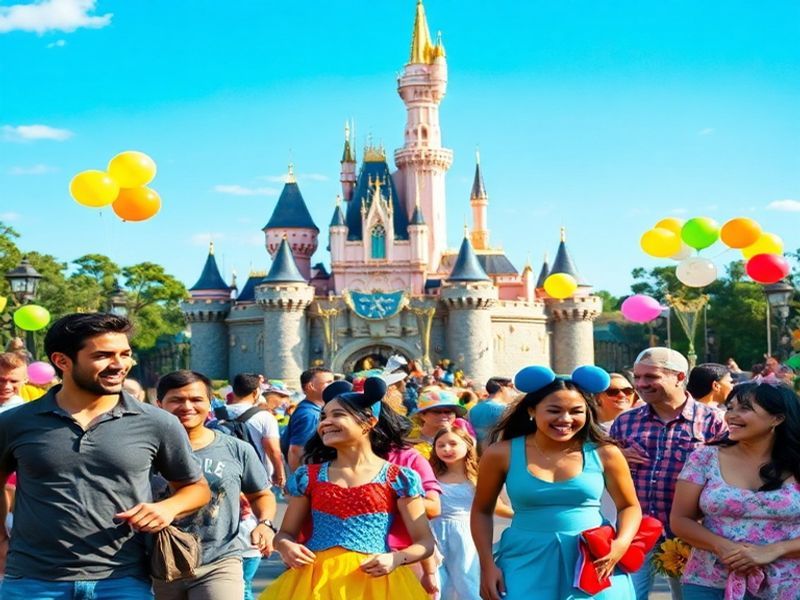
The Walt Disney Company stands as one of the most recognizable names in entertainment, with a legacy spanning over a century. From its humble beginnings as a small animation studio to its current status as a multinational conglomerate, Disney has redefined global culture through film, television, theme parks, and digital platforms. Its reach extends beyond entertainment, shaping education, technology, and even urban development in communities worldwide.
The company’s evolution reflects broader trends in media consumption, technological innovation, and cultural globalization. This journey is not just about entertainment—it’s about how stories connect people across borders, generations, and languages. Understanding Disney’s influence requires examining its roots, expansion strategies, and cultural impact on a global scale.
The Humble Beginnings and Early Innovations
The story of Disney begins in 1923 when brothers Walt and Roy Disney founded the Disney Brothers Studio in Los Angeles. Initially, the studio focused on short animated films, with early successes like the Alice Comedies series. However, it was the creation of Mickey Mouse in 1928 that marked the turning point. Steamboat Willie, the first synchronized sound cartoon, introduced Mickey to audiences and launched a cultural icon.
Disney’s early innovations extended beyond animation. The introduction of Technicolor in the 1930s brought vibrant color to films like Snow White and the Seven Dwarfs (1937), the first full-length animated feature in English. This achievement set a new standard for the industry and demonstrated Disney’s commitment to pushing creative boundaries.
The company’s growth during this era was not without challenges. Financial struggles during World War II forced Disney to diversify, producing training films for the U.S. military. Yet, these adaptations reinforced the company’s resilience and adaptability, qualities that would define its future.
Expansion into Global Markets and Diversification
By the mid-20th century, Disney had transitioned from an animation studio into a diversified entertainment empire. The opening of Disneyland in 1955 marked the company’s first foray into theme parks, offering families an immersive experience centered on beloved characters. This innovation transformed leisure travel and established a new industry standard.
Disney’s global expansion gained momentum in the 1980s and 1990s under CEO Michael Eisner. The company acquired major assets, including ABC Television in 1996, which expanded its influence in news and sports broadcasting. This period also saw the launch of the Disney Channel, a 24-hour cable network that became a cultural staple for young audiences.
The acquisition of Pixar in 2006 and Marvel Entertainment in 2009 further solidified Disney’s dominance in family entertainment. These deals brought blockbuster franchises like Toy Story and the Marvel Cinematic Universe under the Disney umbrella, blending animation, live-action, and superhero narratives into a cohesive brand identity.
Key Acquisitions and Strategic Moves
- Pixar Animation Studios (2006): Brought technological innovation and beloved franchises like Finding Nemo and The Incredibles.
- Marvel Entertainment (2009): Added over 8,000 characters and 20 films to Disney’s portfolio, creating a cinematic universe.
- Lucasfilm (2012): Acquired the Star Wars franchise, revitalizing a cultural phenomenon and launching new television series.
- 21st Century Fox (2019): Expanded Disney’s reach into international markets and added content libraries like Avatar and X-Men.
Cultural Impact and Global Influence
Disney’s influence extends far beyond entertainment. Its stories have shaped childhoods worldwide, with characters like Mickey Mouse, Elsa from Frozen, and Simba from The Lion King becoming cultural touchstones. These characters are often the first exposure children have to storytelling, morality, and imagination.
The company’s impact is also evident in education and technology. Disney Educational Productions has created content used in classrooms globally, while Disney’s investment in streaming technology has revolutionized how families consume media. The launch of Disney+ in 2019 demonstrated the company’s ability to adapt to changing consumer habits, offering a vast library of content at consumers’ fingertips.
However, Disney’s global reach has not been without controversy. The company has faced criticism for its portrayal of diverse cultures, labor practices, and corporate influence. For example, some of its early animated films have been scrutinized for stereotypes, while theme park employees have organized protests over wages and working conditions. These challenges highlight the complexities of operating on a global scale.
The Future of Disney in a Digital World
As Disney enters its second century, it faces a rapidly changing media landscape. The rise of streaming services has transformed how audiences engage with content, prompting Disney to prioritize its direct-to-consumer platforms. Disney+ has quickly amassed over 150 million subscribers, competing with giants like Netflix and Amazon Prime.
The company’s future strategy revolves around three pillars: storytelling, technology, and global expansion. Disney is investing heavily in new technologies like virtual reality and augmented reality to create immersive experiences. Additionally, it is expanding its presence in international markets, particularly in Asia, where demand for family-friendly content is growing.
One of Disney’s most ambitious projects is the development of new theme park experiences. The company is planning expansions in countries like China and India, where it sees significant growth potential. These parks will blend traditional Disney magic with local cultural elements, ensuring relevance in diverse markets.
Despite these opportunities, Disney must navigate challenges like piracy, changing consumer preferences, and competition from tech giants. Its ability to innovate while staying true to its core values will determine its success in the coming decades.
For those interested in the intersection of entertainment and technology, Technology offers insights into how Disney’s digital strategies compare to other industry leaders. Meanwhile, the Entertainment category explores broader trends shaping the global media landscape.
Conclusion: A Legacy Built on Storytelling
The Walt Disney Company’s journey from a small animation studio to a global entertainment powerhouse is a testament to the power of storytelling. For over a century, Disney has connected people across cultures, generations, and languages through its characters and narratives. Its influence is evident in film, television, theme parks, and digital platforms, making it a cornerstone of modern entertainment.
As Disney continues to evolve, its commitment to innovation and creativity will be crucial in maintaining its relevance. Whether through new theme park attractions, blockbuster films, or streaming services, Disney remains dedicated to bringing joy and inspiration to audiences worldwide. Its legacy is not just about entertainment—it’s about the universal language of stories that bring us together.