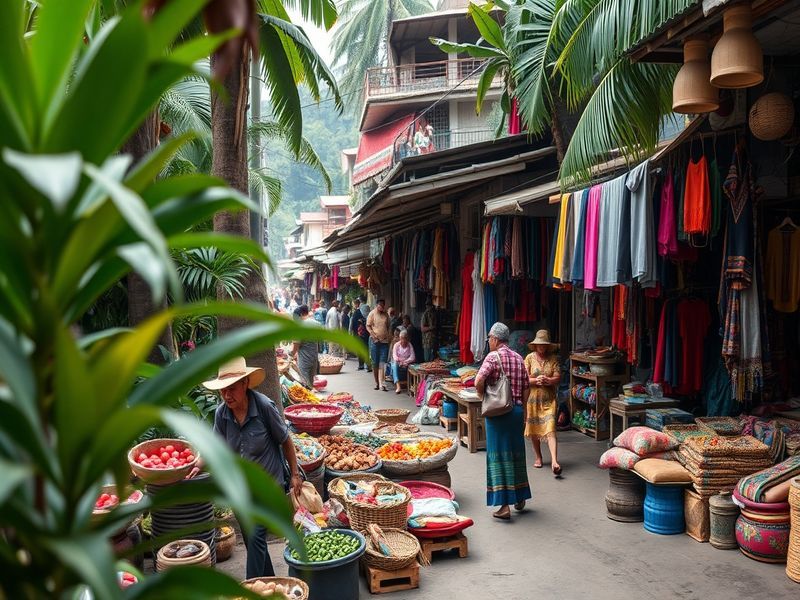
South America’s vast and varied landscape stretches from the Andean peaks of Bolivia to the dense rainforests of Suriname, each nation offering a distinct blend of history, culture, and natural splendor. While often overlooked in global discussions, these two countries share more than just a continent. Both are rich in indigenous heritage, possess remarkable biodiversity, and face unique socio-economic challenges despite their contrasting scales and geographies.
The Geography of Extremes: From the Andes to the Amazon
Bolivia sits landlocked in the heart of South America, its territory dominated by the towering Andes Mountains and the vast, windswept Altiplano. Home to Lake Titicaca—the world’s highest navigable lake—and the salt flats of Uyuni, Bolivia’s topography is as dramatic as it is challenging. The country’s elevation ranges from the high-altitude plains to the dense Amazon rainforest in the north, creating a mosaic of ecosystems within its borders.
Suriname, by contrast, is a coastal nation on the northeastern edge of the continent, its territory blanketed by one of the most pristine rainforests on Earth. Over 90% of the country remains covered in jungle, interwoven with meandering rivers like the Maroni and the Coppename. Unlike Bolivia’s dramatic elevation shifts, Suriname’s landscape rises and falls gently, with savannas and coastal mangroves adding to its ecological diversity. While both nations boast UNESCO World Heritage Sites—Bolivia’s historic city of Potosí and Suriname’s Central Suriname Nature Reserve—their environments could hardly be more different.
A Shared Legacy of Indigenous and Colonial Influence
The cultural fabric of both Bolivia and Suriname is deeply rooted in indigenous traditions. In Bolivia, the Aymara and Quechua peoples have maintained their languages and customs despite centuries of colonial rule. The country’s official recognition of 36 indigenous nations reflects a living heritage that shapes everything from agriculture to art. Potosí’s colonial churches stand in stark contrast to the vibrant textiles woven by indigenous artisans, a visual reminder of the layered history that defines the nation.
Suriname’s cultural landscape is equally rich but shaped by a different colonial legacy. The Dutch brought enslaved Africans and later indentured laborers from India, Java, and China, creating a multicultural society where Creole, Hindustani, Javanese, and Indigenous Maroon communities coexist. This fusion is evident in Paramaribo’s wooden Dutch colonial architecture, a UNESCO site, and in the pulsating rhythms of its music—kaseko and kawina—that blend African beats with Caribbean influences. Both nations, though separated by geography, share a narrative of resilience and cultural synthesis born from both oppression and adaptation.
Economic Realities: Resource Wealth and Development Challenges
Bolivia’s economy has long been tied to its mineral wealth. The Cerro Rico mountain in Potosí, once the world’s largest silver producer, symbolizes both the country’s historical significance and its ongoing struggles with exploitation and environmental degradation. Today, Bolivia remains a leading global producer of lithium, a critical component in electric vehicle batteries, found in the vast salt flats of the Salar de Uyuni. Yet, despite this resource abundance, poverty remains widespread, and the benefits of extraction have not been evenly distributed.
Suriname’s economy, while smaller in scale, is equally dependent on natural resources. Gold mining drives much of its GDP, alongside bauxite, oil, and timber. The country has seen economic growth in recent years, particularly after the discovery of offshore oil in 2015. However, like Bolivia, Suriname faces challenges in translating resource wealth into broad-based development. Inequality persists, infrastructure remains underdeveloped in rural areas, and environmental concerns—particularly deforestation and mercury pollution from mining—threaten long-term sustainability.
Both countries illustrate the paradox of resource-rich nations struggling to achieve equitable growth. While Bolivia and Suriname differ in size and economic output, their reliance on extractive industries highlights a shared vulnerability to global commodity price fluctuations and the resource curse—a phenomenon where wealth in natural resources fails to translate into prosperity for the majority.
Social Progress and Persistent Inequalities
Despite their differences, Bolivia and Suriname share pressing social challenges. In Bolivia, indigenous and rural populations continue to face marginalization, with limited access to education and healthcare in remote areas. The country has made progress in reducing poverty and expanding social programs, yet regional disparities remain stark. In 2005, Bolivia elected its first indigenous president, Evo Morales, a historic moment that reflected growing political representation for marginalized groups. However, political tensions and social unrest have persisted, particularly around issues of land reform and resource governance.
Suriname, though smaller and less densely populated, grapples with its own inequalities. Indigenous and Maroon communities in the interior often lack access to basic services, and the legacy of colonial labor systems continues to influence social stratification. The country has made strides in healthcare and education, but youth unemployment and brain drain—particularly among professionals seeking opportunities abroad—remain critical issues. Like Bolivia, Suriname is working to balance development with the preservation of cultural identity, especially as globalization accelerates.
The Global Stage: Diplomacy, Migration, and Cultural Exchange
On the international stage, Bolivia and Suriname play distinct but increasingly visible roles. Bolivia, under Morales and his successors, has positioned itself as a leader in Latin American progressive movements, advocating for indigenous rights and opposing U.S. influence in the region. Its foreign policy often emphasizes sovereignty and resource nationalism, particularly in its disputes with multinational corporations over lithium and gas extraction.
Suriname, meanwhile, has strengthened its ties with the Caribbean and the Global South. As a member of CARICOM—the Caribbean Community—it bridges South America and the Caribbean, fostering trade and cultural exchange. Suriname’s diaspora, particularly in the Netherlands, has become a significant force in both countries, sending remittances and shaping bilateral relations. In 2023, the two nations signed a bilateral cooperation agreement focused on trade, education, and environmental protection, signaling a growing recognition of shared interests.
Culturally, both countries contribute uniquely to South America’s diverse tapestry. Bolivia’s music, from the haunting melodies of the panpipes to the energetic rhythms of the saya, reflects its Andean soul. In Suriname, festivals like the Pagara Koto Olo (a Javanese harvest celebration) and the Winti rituals of the Afro-Surinamese community showcase the nation’s pluralistic identity. These cultural expressions are not merely tourist attractions—they are vital to national pride and social cohesion.
Looking Ahead: Opportunities and Responsibilities
As the world grapples with climate change, both Bolivia and Suriname face unique environmental responsibilities and opportunities. Bolivia’s glaciers are retreating at alarming rates, threatening water supplies for millions. Meanwhile, Suriname’s pristine rainforests are among the most intact on the planet, offering a critical carbon sink in the fight against global warming. Both nations are exploring ways to leverage their natural assets for sustainable development—Bolivia through eco-tourism and renewable energy, Suriname through carbon credit initiatives and conservation programs.
The path forward requires balancing economic ambition with environmental stewardship and social equity. For Bolivia, this means ensuring that lithium extraction benefits local communities and does not repeat the ecological mistakes of the past. For Suriname, it involves protecting its forests while diversifying an economy too reliant on mining. Both countries also face the challenge of preserving cultural heritage amid globalization, ensuring that indigenous knowledge and traditions are not lost to time.
In an era where global attention often focuses on megacities and economic powerhouses, Bolivia and Suriname offer a quieter but equally compelling narrative—one of resilience, diversity, and the quiet power of cultural identity. Their stories remind us that progress is not measured solely in GDP or skyscrapers, but in the well-being of people and the health of the planet they inhabit.
For travelers and scholars alike, these two nations represent a journey not just across space, but across time—from the ancient rhythms of the Andes to the living pulse of the Amazon. Whether through the salt flats of Uyuni or the rivers of the interior, Bolivia and Suriname invite exploration, reflection, and a deeper understanding of what it means to belong to a land rich in history and possibility.