Pentagon Island: The Geometric Mystery in the South Pacific
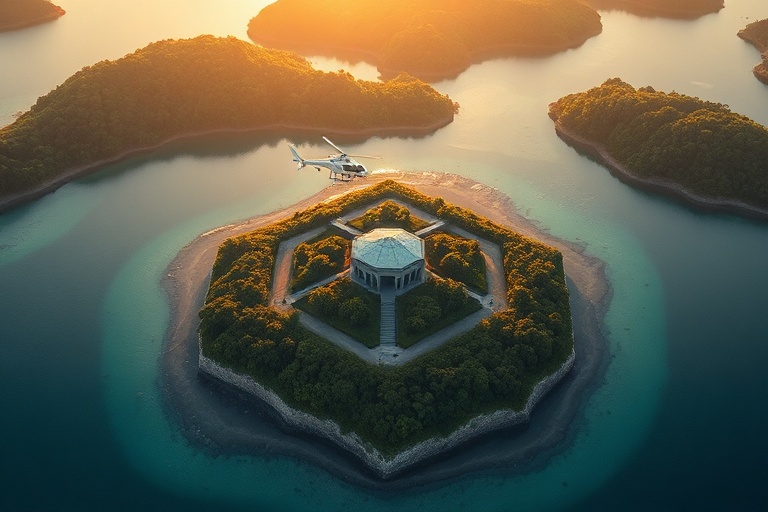
In the vast expanse of the South Pacific lies a peculiar geographical oddity known as Pentagon Island. Measuring just 0.2 square kilometers, this uninhabited speck of land sits roughly 50 kilometers northwest of New Caledonia’s main island, Grand Terre. Its most striking feature is not its size but its nearly perfect pentagonal shape, a rarity in nature where coastlines typically form irregular, fractal-like patterns. The island’s geometric precision has fueled speculation, misinformation, and even conspiracy theories, though its origins are far more grounded in geology than mystery.
The Geological Oddity: How Did Pentagon Island Form?
Pentagon Island’s formation is a testament to the slow, relentless forces of erosion and volcanic activity. Geologists attribute its shape to a combination of wave action and the island’s volcanic origins. Unlike typical coral atolls or sedimentary islands, Pentagon Island emerged from an underwater volcano that erupted millions of years ago. As the lava cooled and solidified, it created a roughly circular base. Over millennia, relentless ocean currents chiseled away at the softer rock formations, leaving behind the five distinct sides that give the island its name.
The island’s perimeter is lined with jagged basalt cliffs, a stark contrast to the smooth, sandy beaches found on neighboring islands. These cliffs are remnants of the volcanic core, resistant to erosion, while the softer volcanic ash and tuff have been worn away. The result is a near-symmetrical pentagon, though satellite imagery reveals subtle irregularities—proof that nature rarely adheres to perfect geometry.
Despite its small size, Pentagon Island has become a point of interest for researchers studying coastal erosion and volcanic landform evolution. The island serves as a natural laboratory, offering insights into how geological processes shape even the most remote corners of the planet.
Historical Footnotes: From Discovery to Modern Exploration
Pentagon Island was first documented by European explorers in the early 19th century, though its existence was likely known to indigenous Melanesian communities long before. The island appears on nautical charts as early as 1820, labeled simply as “Pentagon Islet” in British and French maritime records. Its remoteness meant it was rarely visited, and for decades, it remained little more than a curiosity for cartographers.
In the 20th century, the island gained attention from military strategists during World War II. The U.S. Navy briefly considered Pentagon Island as a potential observation post due to its elevated terrain and unobstructed views of the surrounding waters. However, logistical challenges and the island’s lack of natural harbors made it an impractical choice. The plan was abandoned, and Pentagon Island returned to obscurity.
Modern exploration has been limited to scientific expeditions and the occasional adventurer willing to brave the treacherous waters. In 2018, a team of French geologists conducted a brief survey of the island, collecting samples of its volcanic rock and mapping its shoreline. Their findings confirmed the island’s volcanic origins and provided new data on the erosion rates of similar landforms in the region.
Ecological Significance: A Fragile Ecosystem
Despite its size, Pentagon Island supports a surprisingly diverse range of flora and fauna. The island’s vegetation consists primarily of hardy shrubs and grasses, adapted to the salty, nutrient-poor soils. A few species of seabirds, including terns and noddies, nest on the cliffs, while marine life thrives in the surrounding waters. The island’s isolation has prevented the introduction of invasive species, making it an important site for studying endemic ecosystems.
However, Pentagon Island’s ecosystem is under threat from rising sea levels and increased storm activity linked to climate change. The island’s low elevation makes it particularly vulnerable, and scientists predict it could disappear entirely within the next century. This has sparked calls for further study and potential conservation efforts, though the remoteness of the location presents significant challenges.
For those interested in the broader ecological challenges facing small island nations, Pentagon Island serves as a microcosm of the threats posed by environmental change. The island’s fate underscores the need for global action to protect vulnerable ecosystems from the impacts of climate change.
Cultural and Pop-Cultural Impact: From Conspiracy Theories to Internet Fame
Pentagon Island’s unusual shape has made it a magnet for conspiracy theorists and armchair detectives. Some online forums speculate that the island is artificial, constructed by an unknown civilization or even extraterrestrial beings. These claims are easily debunked by geological evidence, but they persist in niche corners of the internet, fueled by misinformation and a love of the mysterious.
The island’s geometric precision has also drawn comparisons to the so-called “geometric islands” of the South Pacific, a category that includes places like Clipperton Island, another remote atoll with a distinct shape. Pentagon Island, however, stands out for its near-perfect symmetry, which has made it a favorite subject for satellite imagery enthusiasts and map enthusiasts alike.
In popular culture, Pentagon Island has been referenced in documentaries and travel blogs, often as a quirky example of nature’s oddities. It has also appeared in fictional works, where its remote location makes it an ideal setting for survival stories or lost-civilization narratives. While the island may never achieve mainstream fame, its unique features ensure it remains a topic of fascination for those who stumble upon it.
Myths and Misconceptions About Pentagon Island
Like many remote and unusual landmarks, Pentagon Island has accumulated its share of myths. Here are a few of the most persistent:
- It’s an artificial structure: Some claim the island was built by humans or aliens, pointing to its geometric shape. Geologists, however, confirm it’s a natural formation created by volcanic activity and erosion.
- It hides a secret base: Conspiracy theories suggest the island is home to a hidden military or scientific facility. No evidence supports this, and the island’s size makes such a base impractical.
- It’s a haven for lost treasure: Rumors persist that pirates or ancient civilizations buried treasure on the island. To date, no such treasure has been found.
These myths, while entertaining, are easily dispelled by the island’s well-documented geological and historical record. Still, they contribute to Pentagon Island’s allure as a place where fact and fiction blur.
Why Pentagon Island Matters: A Call for Awareness and Preservation
Pentagon Island may be small, but its significance extends beyond its size. As a natural geological phenomenon, it offers valuable insights into the processes that shape our planet. Its ecological fragility highlights the broader challenges facing island ecosystems in the face of climate change. And its cultural mystique reminds us of humanity’s enduring fascination with the unknown.
Yet, Pentagon Island remains largely unknown outside of scientific and niche communities. This lack of awareness poses a challenge for conservation efforts. Without recognition, the island may slip further into obscurity—or worse, disappear entirely before its importance is fully understood. Advocates argue that increased public and scientific interest could help secure funding for research and protection efforts.
For those intrigued by remote and unusual places, Pentagon Island is a reminder that even the smallest corners of the world hold stories worth telling. Whether through scientific study, environmental advocacy, or simply the joy of discovery, there are many ways to engage with this enigmatic island. The next time you find yourself scrolling through satellite imagery or planning an adventurous journey, consider Pentagon Island—a place where nature’s oddities and human curiosity intersect.
For more on remote geological formations, explore our science category, where we delve into the mysteries of the natural world. If you’re interested in the intersection of geography and culture, don’t miss our travel section, where we uncover hidden gems like Pentagon Island.
Pentagon Island may never be a household name, but for those who take the time to learn about it, it offers a compelling glimpse into the wonders—and fragility—of our planet.