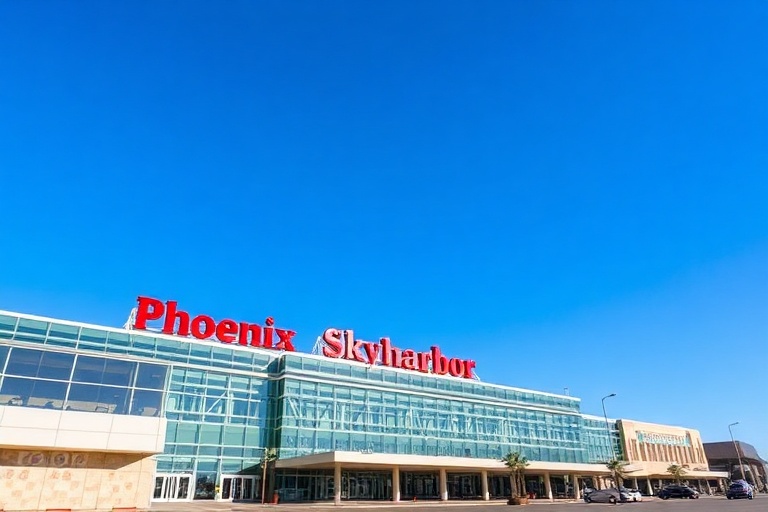
Few airports embody the spirit of a region as completely as Phoenix Sky Harbor International Airport does for the American Southwest. Opened in 1928 and now handling over 44 million passengers annually, this bustling hub serves as both a gateway and a destination in its own right. More than just a transit point, Sky Harbor reflects the growth, culture, and dynamism of Phoenix and the broader Southwest.
The Evolution of a Regional Powerhouse
Sky Harbor’s journey from a small municipal airfield to one of the busiest airports in the United States is a story of vision and adaptation. Originally known as “The Municipal Airport of Phoenix,” it was renamed Sky Harbor in 1935—a nod to its reputation as a place where pilots could safely “harbor” their aircraft. Over the decades, it expanded in lockstep with the city’s booming population, adding terminals and runways to accommodate rising demand.
Today, Sky Harbor operates as a major hub for American Airlines, with additional service from Southwest Airlines and Delta Air Lines. It supports over 1,200 daily flights to more than 100 destinations across the United States, Canada, Mexico, and beyond. The airport’s three terminals—Terminal 3 (with its iconic red arches), Terminal 4 (the newest and most modern), and Terminals 1 and 2 (used primarily for Southwest)—are designed for efficiency, but also carry a sense of place. The use of desert-inspired colors, native landscaping, and art installations pays homage to the Sonoran Desert environment.
A Model of Efficiency and Innovation
Sky Harbor consistently ranks among the top airports in North America for on-time performance and passenger satisfaction. A key factor is its streamlined design. Terminal 4, completed in 2020 after a decade-long expansion, introduced 28 new gates, advanced baggage systems, and enhanced security checkpoints optimized for speed. The terminal also features a striking 30-foot-tall sculpture titled “Monsoon,” which captures the raw energy of Arizona’s summer storms—a reminder of the natural forces that shape the region.
The airport has also embraced sustainability. Sky Harbor was the first airport in Arizona to achieve LEED Gold certification for Terminal 4, thanks to energy-efficient lighting, water conservation systems, and recycled building materials. Its solar array generates enough power to offset the equivalent of 3,500 homes annually, reducing both costs and carbon emissions.
- On-time performance: Sky Harbor ranks in the top 10% of U.S. airports for flight punctuality.
- Customer experience: Rated highly for cleanliness, ease of navigation, and dining options.
- Art and culture: Over 20 permanent art installations, including works by local artists.
- Accessibility: Free Wi-Fi, charging stations, and family-friendly amenities throughout.
More Than an Airport: A Reflection of Phoenix’s Identity
Sky Harbor is not just a functional space—it’s a cultural landmark. The airport’s design subtly reinforces Phoenix’s identity as a city of innovation, resilience, and connection. Whether it’s the warmth of the desert sun streaming through Terminal 4’s skylights or the sight of the Superstition Mountains in the distance, travelers are constantly reminded of the landscape that defines Arizona.
This connection extends to the local economy. Sky Harbor supports over 48,000 jobs and generates $3.7 billion in annual economic activity. It’s a vital link for business travelers, tourists heading to the Grand Canyon or Sedona, and residents returning from trips. The airport’s proximity to downtown Phoenix (just three miles away) also makes it a convenient entry point for business conferences, cultural events, and spring training baseball—a major draw for sports fans.
Challenges and Future Horizons
Despite its success, Sky Harbor faces challenges common to growing urban airports: capacity constraints, noise concerns, and rising operational costs. The airport has explored expansion options, including potential new terminals or runway enhancements, but these are complicated by land availability and environmental regulations. Noise abatement programs and community partnerships have helped mitigate impacts on nearby neighborhoods, yet balancing growth with quality of life remains an ongoing conversation.
Looking ahead, Sky Harbor is positioning itself for the future. The airport is investing in biometric screening technology to speed up international arrivals and exploring electric ground support equipment to reduce emissions. It’s also expanding partnerships with regional airlines to strengthen connections across the Southwest and Mexico, reinforcing its role as a vital link between cultures and economies.
Why Sky Harbor Matters Beyond Its Runways
Sky Harbor’s influence extends far beyond its terminals. It serves as a microcosm of the Southwest’s transformation—from a desert outpost to a global crossroads. The airport has played a role in shaping the region’s identity, attracting businesses, talent, and visitors who contribute to Phoenix’s growing reputation as a hub for technology, healthcare, and outdoor recreation.
For travelers, Sky Harbor offers more than a layover—it offers a glimpse into the Southwest’s character: warm, expansive, and full of possibility. Whether you’re catching a connecting flight or beginning a vacation, the airport’s design, efficiency, and cultural touchpoints make the journey part of the experience.
As Phoenix continues to grow and redefine itself, Sky Harbor will remain at its core—not just as a transit point, but as a symbol of what the region has become and where it’s headed next.
“Sky Harbor isn’t just where you catch a plane—it’s where you feel the pulse of the Southwest.”
For those interested in exploring more about travel infrastructure and regional hubs, visit our Travel and News sections on Dave’s Locker.