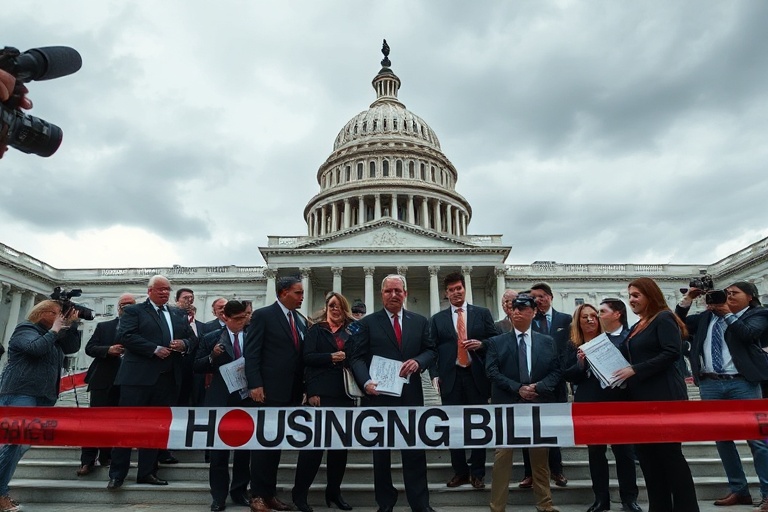
Senate Housing Bill Hits House Delay: What’s Next for Affordable Housing?
The Senate’s latest housing bill, aimed at addressing affordability and supply shortages, has hit an unexpected roadblock in the House. Negotiations that appeared smooth have stalled, leaving lawmakers and housing advocates scrambling to understand the delay. This development could have far-reaching consequences for millions of Americans struggling with rising housing costs.
The bill, introduced in early June, sought to expand tax credits for first-time homebuyers and allocate billions toward affordable housing construction. While it passed the Senate with bipartisan support, its journey through the House has been anything but straightforward. Lawmakers cite disagreements over funding mechanisms and partisan priorities as key sticking points.
Key Points Behind the Delay
The delay isn’t just a procedural hiccup—it reflects deeper divisions in Congress over how to tackle the housing crisis. Below are the primary factors contributing to the impasse:
- Funding Disputes: House members are divided over whether to prioritize tax incentives or direct spending for housing programs. The Senate version leans heavily on tax credits, while House Republicans argue for reduced federal spending.
- Partisan Priorities: Democrats are pushing for broader eligibility in housing assistance programs, while Republicans want stricter income limits to ensure benefits target those most in need.
- Amendment Concerns: A group of moderate House Democrats has raised objections to certain provisions, arguing they don’t go far enough in addressing rural housing shortages.
- Procedural Hurdles: House leadership has yet to schedule a floor vote, raising questions about whether the bill will be revised or scrapped entirely.
Broader Implications for the Housing Market
The delay comes at a critical time for the U.S. housing market, which has seen home prices surge nearly 20% over the past two years. With mortgage rates climbing and inventory remaining tight, the bill’s potential impact—even in its current form—could have been significant.
If the bill stalls indefinitely, advocates warn of worsening affordability issues, particularly for low- and middle-income families. The National Association of Realtors has already expressed concern that without federal intervention, homeownership may become increasingly out of reach for many Americans.
For renters, the stakes are equally high. The bill includes provisions for expanding rental assistance programs, which have seen growing demand as eviction rates rise in high-cost cities. A failure to pass the legislation could leave millions of tenants vulnerable to housing instability.
What’s Next for the Bill?
Congressional aides indicate that House Speaker Mike Johnson is working behind the scenes to broker a compromise. However, the timeline remains uncertain. Some observers suggest the bill could be folded into a larger spending package later this year, while others believe it may be abandoned entirely.
One possible resolution could involve scaling back the bill’s ambitions. A trimmed-down version focusing solely on tax credits for first-time buyers might secure enough Republican support to pass. Alternatively, House Democrats could pursue a discharge petition to force a floor vote, though this would require significant intraparty unity.
For now, housing advocates are urging lawmakers to prioritize action over partisan posturing. As one policy analyst noted, “Every day of delay translates to more families priced out of the market.”
Lessons from Past Housing Legislation
This isn’t the first time housing legislation has faced gridlock in Congress. The 2008 housing crisis led to the creation of programs like the Neighborhood Stabilization Program, but implementation was slow and uneven across states. Similarly, the 2017 Tax Cuts and Jobs Act included housing-related provisions, but their impact was limited by bureaucratic hurdles.
The current delay highlights a recurring challenge: balancing immediate relief with long-term structural reforms. Without a clear path forward, the housing crisis may continue to deepen, disproportionately affecting Black and Hispanic households, which have historically faced systemic barriers to homeownership.
For those tracking the bill’s progress, the coming weeks will be critical. Whether it advances, stalls, or dies in committee could shape the housing landscape for years to come.
To stay updated on housing policy and other legislative developments, visit Dave’s Locker Politics and Dave’s Locker News for comprehensive coverage.