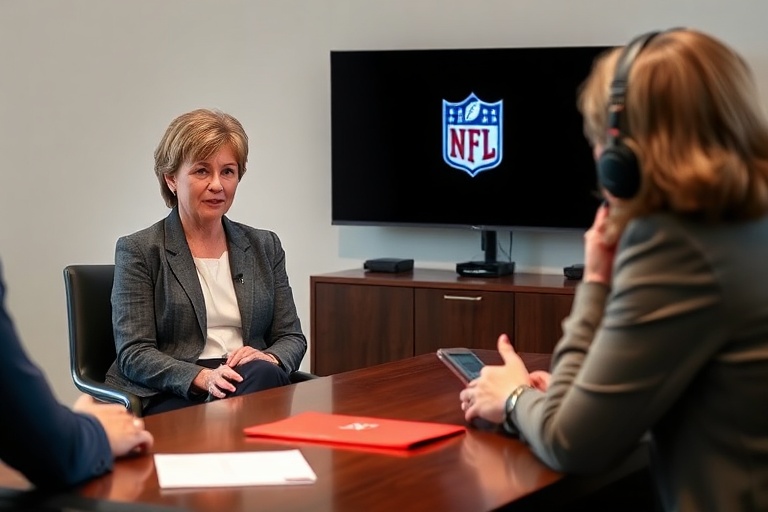
U.S. Senator Tammy Baldwin’s recent remarks regarding the NFL’s relationship with Netflix have ignited discussions about media rights, player safety, and corporate accountability in professional sports.
The Statement That Started It All
On a Tuesday morning, Senator Tammy Baldwin of Wisconsin delivered a statement that immediately drew attention from sports analysts, policy experts, and entertainment industry observers alike. Speaking at a press conference in Milwaukee, Baldwin questioned the NFL’s recent decision to license exclusive streaming rights for certain content to Netflix, framing it as part of a larger pattern of corporate decision-making that prioritizes profit over player welfare and public transparency.
The senator’s comments came in response to reports that the NFL had struck a multi-year deal with Netflix worth hundreds of millions of dollars. This agreement would grant the streaming giant exclusive access to behind-the-scenes footage, documentaries, and other proprietary content previously available through traditional media partners. Baldwin argued that such arrangements could limit public access to information about player health and safety protocols, which she described as “critical public health data.”
Key Points from Senator Baldwin’s Statement
- Media Rights vs. Public Interest: Baldwin questioned whether the NFL’s exclusive licensing deals with streaming platforms might restrict access to information that could affect player safety and long-term health outcomes.
- Corporate Accountability: She emphasized the need for greater oversight of how sports leagues negotiate media rights, particularly when those deals involve health-related content.
- Player Welfare Concerns: The senator highlighted the NFL’s concussion crisis and the league’s ongoing efforts to manage player health data, suggesting that exclusive content deals could complicate these initiatives.
- Legislative Response: Baldwin hinted at potential legislative action to ensure that media rights agreements in professional sports do not undermine public health or transparency.
Why This Statement Matters Now
Baldwin’s comments arrive at a time when the NFL is navigating a complex media landscape. The league recently finalized a massive $110 billion media rights deal with CBS, Fox, NBC, and ESPN, which will significantly expand its streaming presence. However, the addition of Netflix into this mix introduces a new dynamic, particularly as the streaming giant continues to invest heavily in sports-related content through partnerships with leagues like the UFC and Formula 1.
The timing of Baldwin’s statement also coincides with growing scrutiny of the NFL’s handling of player health data. Recent studies have highlighted the long-term risks associated with repetitive head trauma, and advocacy groups have called for greater transparency in how the league manages and shares this information. Baldwin’s concerns about exclusive content deals potentially limiting public access to such data resonate with these broader conversations.
Moreover, the senator’s intervention reflects a broader trend of lawmakers taking a more active role in regulating the intersection of sports, media, and public health. As streaming platforms increasingly dominate the media landscape, questions about data ownership, privacy, and access to information are becoming more urgent. Baldwin’s statement suggests that Congress may soon weigh in on these issues, particularly if they involve sensitive health-related data.
Reactions from the Sports and Media Worlds
Baldwin’s remarks have elicited a range of responses from stakeholders across the sports and media industries. While some critics have praised her for drawing attention to potential conflicts of interest, others argue that her concerns are overblown or misplaced.
Supporters of Baldwin’s Position
Advocacy groups focused on player safety and concussion awareness have largely applauded Baldwin’s statement. These organizations point to the NFL’s history of downplaying concussion risks and argue that any move to restrict access to health-related content could undermine public trust in the league’s transparency.
Some media analysts have also weighed in, suggesting that Baldwin’s concerns highlight a broader issue with how sports leagues control access to their content. They argue that exclusive streaming deals could lead to a fragmented media landscape where fans and researchers struggle to access critical information.
Critics of Baldwin’s Statement
Not everyone is convinced by Baldwin’s arguments. Several sports media executives have pushed back, arguing that the NFL’s deals with Netflix and other platforms are simply part of a natural evolution in how content is distributed. They contend that exclusive licensing agreements help leagues maximize revenue, which in turn funds player salaries, league operations, and safety initiatives.
Others have pointed out that Baldwin’s focus on health-related content may be misplaced. The NFL has made significant strides in recent years to improve player safety, investing in research, rule changes, and technology to better monitor and manage concussions. Some critics argue that Baldwin’s concerns could distract from these efforts rather than support them.
Broader Implications for Sports, Media, and Public Policy
Senator Baldwin’s statement is more than just a critique of a single media deal; it signals a potential shift in how policymakers approach the regulation of sports media rights and player health data. As streaming platforms continue to reshape the media landscape, several key issues are likely to come to the forefront.
Potential Legislative Action
Baldwin’s comments suggest that Congress may soon take a closer look at how sports leagues negotiate media rights, particularly when those deals involve health-related content. Potential legislative responses could include:
- Mandating Public Access: Laws requiring sports leagues to make certain health and safety data publicly available, even if they license exclusive content to streaming platforms.
- Regulating Data Ownership: Clarifying who owns player health data and how it can be shared or restricted in media deals.
- Transparency Requirements: Imposing stricter transparency rules on media rights negotiations to ensure that the public interest is represented.
Impact on Player Welfare Advocacy
Baldwin’s statement also underscores the growing influence of player welfare advocacy groups. These organizations have long pushed for greater transparency in how leagues handle health data, and Baldwin’s intervention suggests that they may have found a powerful ally in Congress. As these groups continue to gain traction, leagues like the NFL may face increasing pressure to adopt more open practices.
Changing Media Dynamics
The NFL’s deal with Netflix is just one example of how streaming platforms are reshaping the media landscape. As traditional broadcasters lose ground to digital-first companies, questions about content ownership, access, and distribution will become even more pressing. Baldwin’s statement highlights the need for a broader conversation about how these changes affect fans, researchers, and the public at large.
For sports leagues, the challenge will be balancing the financial benefits of exclusive media deals with the need to maintain transparency and public trust. For policymakers, the task will be crafting regulations that protect the public interest without stifling innovation or competition in the media industry.
What Comes Next?
Senator Baldwin’s statement has set the stage for what could become a significant debate about media rights, player safety, and corporate accountability in professional sports. While it remains to be seen whether Congress will take legislative action, the conversation she has sparked is likely to continue gaining momentum.
For now, all eyes will be on the NFL and Netflix as they navigate the fallout from this deal. Will they address Baldwin’s concerns by making certain health-related content more accessible? Or will they double down on their exclusive licensing strategy, risking further backlash from advocates and lawmakers?
One thing is clear: the intersection of sports, media, and public health is becoming an increasingly important battleground for corporate power, legislative oversight, and the public interest. Senator Baldwin’s statement is just the latest reminder that these issues are far from settled.