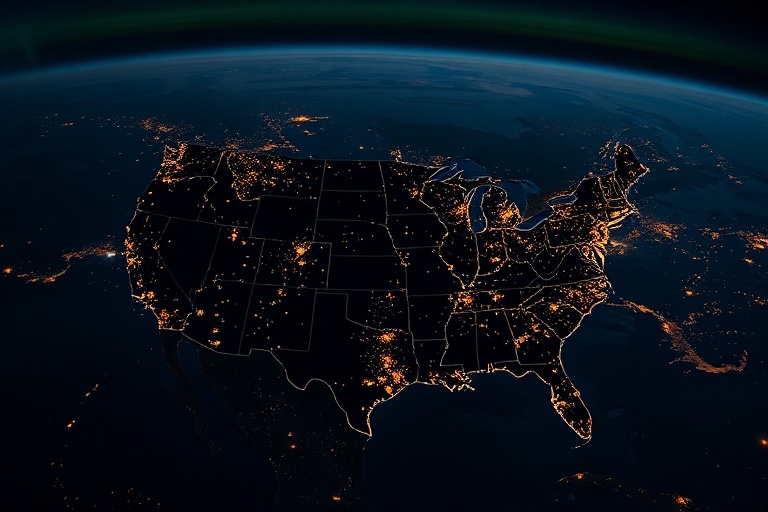
stany zjednoczone
Few countries shape the modern world as profoundly as the United States. From its founding in 1776 to its current status as a global superpower, the nation has been defined by both its contradictions and its capacity for reinvention. With a population of over 330 million people and a gross domestic product exceeding $25 trillion, the United States remains an economic and cultural engine whose policies reverberate across continents.
Its political system, built on a framework of checks and balances, continues to evolve amid debates over governance, equality, and national identity. Meanwhile, its cultural exports—music, film, technology, and cuisine—have become global phenomena, influencing billions. Yet beneath its reputation as a land of opportunity lies a complex tapestry of social, economic, and regional disparities that challenge even its most ardent supporters.
The Architectural Blueprint: How the U.S. Political System Functions
The United States operates under a federal system with three distinct branches of government: executive, legislative, and judicial. This separation of powers is designed to prevent any one entity from becoming too dominant. The president, elected every four years, serves as both head of state and commander-in-chief. However, the president’s authority is carefully circumscribed by Congress and the Supreme Court.
Congress, the legislative branch, consists of two chambers: the Senate and the House of Representatives. Each state elects two senators, ensuring equal representation regardless of population size, while the House allocates seats based on state population. This bicameral structure was a compromise between large and small states during the Constitutional Convention of 1787.
Judicial power rests with the Supreme Court, whose nine justices serve lifetime appointments. Their rulings on constitutional interpretation have shaped everything from civil rights to corporate regulation. For example, the 1954 Brown v. Board of Education decision declared racial segregation in public schools unconstitutional, marking a pivotal moment in the civil rights movement.
The system’s resilience lies in its adaptability. Amendments to the Constitution, such as the 19th Amendment granting women the right to vote in 1920, reflect the nation’s evolving values. Yet this same structure can lead to gridlock, as seen in recent debates over immigration reform and healthcare policy.
A Cultural Export Empire: How American Ideas Shape the World
No nation exports culture on the scale of the United States. Hollywood, centered in Los Angeles, produces over 700 films annually, dominating global box offices. American television series, from The Simpsons to Stranger Things, are streamed in nearly every country. Music, too, has crossed borders effortlessly: genres like jazz, rock, hip-hop, and country have all originated in the U.S. before becoming international languages.
Technology is another area where American influence is unmistakable. Silicon Valley, home to companies like Apple, Google, and Meta, has redefined communication, commerce, and social interaction. The iPhone, launched in 2007, didn’t just sell a product—it created a cultural shift in how humans connect with information and each other.
Even American food has gone global. Fast-food chains like McDonald’s and Starbucks have become symbols of modernity, while regional dishes such as barbecue, pizza (via Italian immigrants), and Tex-Mex cuisine have been adapted worldwide. The U.S. Department of Agriculture reports that American agricultural exports totaled nearly $170 billion in 2023, feeding millions beyond its borders.
Yet this cultural dominance comes with criticism. Some argue that American media promotes homogeneity, erasing local traditions in favor of a homogenized global culture. Others point to the commercialization of art and music, where authenticity is often sacrificed for mass appeal. Still, the U.S. remains a magnet for artists, musicians, and creators seeking opportunity and audience.
The Economic Engine: Growth, Inequality, and Innovation
The U.S. economy is the largest in the world, driven by a mix of technology, finance, manufacturing, and agriculture. Wall Street, located in Lower Manhattan, serves as the nerve center of global finance. The New York Stock Exchange alone lists over 2,400 companies with a combined market capitalization exceeding $28 trillion.
Innovation has long been a cornerstone of American prosperity. The country has produced 400 of the world’s 1,000 largest companies by revenue, according to Fortune magazine. From Thomas Edison’s light bulb to Elon Musk’s SpaceX, the nation has consistently turned ideas into industries. The annual budget for research and development in the U.S. exceeds $600 billion—more than the combined total of Germany, Japan, and China.
However, economic success has not been evenly distributed. Income inequality is among the highest in the developed world. The top 1% of households control nearly 35% of the nation’s wealth, while the bottom 50% hold less than 3%. This disparity is reflected in access to education, healthcare, and housing.
Consider the cost of higher education. The average student loan debt in the U.S. surpassed $37,000 in 2024. Meanwhile, cities like San Francisco and New York face housing crises, with median home prices exceeding $1.2 million in some neighborhoods. These pressures have fueled political movements advocating for wealth redistribution, universal healthcare, and free college tuition.
The gig economy, while offering flexibility, has also created a class of workers without benefits or job security. Companies like Uber and DoorDash have redefined employment, prompting debates over labor rights and corporate accountability. The U.S. Bureau of Labor Statistics reports that nearly 6% of the workforce—about 9 million people—now participate in gig work, a figure expected to rise.
Regional Identities: The Diverse Fabric of America
One of the United States’ greatest strengths—and challenges—is its regional diversity. From the industrial cities of the Rust Belt to the tech hubs of the West Coast, from the agricultural plains of the Midwest to the cultural melting pots of the South, each area tells a different story of American life.
A closer look reveals distinct economic, social, and political identities:
- Northeast: The financial and educational backbone, home to Wall Street, Harvard, and the U.S. Capitol. States like New York and Massachusetts lead in innovation and culture but face high costs of living.
- South: Known for hospitality and tradition, the South includes states like Texas and Florida, which are among the fastest-growing in population. It also has some of the lowest wages and highest poverty rates.
- Midwest: The nation’s breadbasket, producing nearly 75% of the world’s soybeans and corn. Cities like Chicago and Detroit are cultural centers but struggle with population decline and industrial decay.
- West: A land of extremes, from the tech boom in Silicon Valley to the natural beauty of Colorado and Oregon. It’s also home to the highest levels of income inequality and housing shortages.
- West Coast: California, Oregon, and Washington lead in technology, environmental policy, and progressive legislation. Yet wildfires, droughts, and homelessness crises pose existential challenges.
These regional differences are reflected in voting patterns. In the 2020 presidential election, the Northeast and West Coast voted overwhelmingly Democratic, while the South and rural Midwest leaned Republican. This urban-rural divide has intensified debates over issues like climate policy, gun control, and healthcare funding.
Yet despite these contrasts, a shared national identity persists—one rooted in ideals of freedom, opportunity, and resilience. Immigrants continue to arrive, bringing languages, cuisines, and traditions that enrich the cultural landscape. The U.S. Census Bureau projects that by 2045, no single racial or ethnic group will constitute a majority of the population.
Challenges on the Horizon: What Lies Ahead for the U.S.
Looking ahead, the United States faces a series of existential tests. Climate change poses an immediate threat, with wildfires, hurricanes, and droughts becoming more frequent and severe. The 2023 wildfires in Maui and California caused over $10 billion in damages and claimed hundreds of lives.
Demographic shifts are also reshaping the nation. The aging Baby Boomer generation is placing unprecedented strain on Social Security and Medicare, while younger generations demand systemic change in areas like student debt and climate action. The rise of artificial intelligence and automation threatens to disrupt millions of jobs, particularly in manufacturing and customer service.
Internationally, the U.S. must navigate a multipolar world. The rise of China as an economic and military rival has led to trade wars and technological decoupling. Meanwhile, alliances with Europe and Japan are being tested by shifting global priorities. The war in Ukraine and tensions in the Middle East require careful diplomacy to prevent escalation.
Yet history suggests that the U.S. has repeatedly adapted to crisis. The Marshall Plan rebuilt Europe after World War II. The moon landing in 1969 showcased American ingenuity. The resilience of American society lies in its ability to debate, reform, and reinvent itself when necessary.
As the nation approaches its 250th anniversary in 2026, the question remains: Can it reconcile its ideals with its realities? Can it address inequality without stifling innovation? Can it lead globally while healing internally? There are no easy answers, but the journey itself defines the American experience.
Further Reading
To explore more about the cultural and political dynamics shaping the U.S., visit our Culture and Politics sections for in-depth analysis and commentary.
The United States is not a static entity. It is a living experiment—one that continues to redefine what it means to be a nation, a society, and a global citizen. Its story is far from over.