strait of hormuz news
The Strait of Hormuz remains one of the most volatile geopolitical flashpoints in the world today. This narrow waterway, just 21 miles wide at its narrowest point, connects the Persian Gulf to the Gulf of Oman and, ultimately, the Arabian Sea. Roughly 20-30% of the world’s seaborne oil passes through the strait daily, making it a linchpin of global energy security. Recent months have seen tensions escalate, raising concerns about supply chain disruptions, economic repercussions, and the broader stability of international trade.
While the strait itself is a natural formation shaped by geography, its significance has been amplified by decades of political conflict. The region’s history is marked by territorial disputes, nuclear negotiations, and proxy wars. Today, the interplay between regional powers—particularly Iran, Saudi Arabia, and the United States—continues to define the strait’s role in global affairs. Understanding the Strait of Hormuz requires more than just acknowledging its strategic importance; it demands a deeper look at the cultural and economic forces that make this waterway indispensable to modern civilization.
Why the Strait of Hormuz Matters to the Global Economy
The Strait of Hormuz is not just a shipping route—it is the circulatory system of the world’s energy supply. Approximately 21 million barrels of oil transit the strait each day, a figure that dwarfs the daily production of most oil-producing nations. This volume underscores the strait’s role as the single most important chokepoint in global energy infrastructure. Disruptions here can send shockwaves through financial markets within hours, as seen during past incidents such as the 2019 attacks on oil tankers and the 1980s “Tanker War” during the Iran-Iraq conflict.
The economic implications extend beyond oil. Natural gas shipments, particularly from Qatar—the world’s largest liquefied natural gas (LNG) exporter—also rely on safe passage through the strait. Any prolonged closure or blockade could trigger energy shortages in Asia, Europe, and beyond, leading to price spikes and supply chain bottlenecks. In 2022, for instance, fears of a potential closure contributed to a temporary surge in global oil prices, demonstrating how quickly financial markets react to instability in the region.
For nations dependent on energy imports, the strait is a symbol of vulnerability. Countries like Japan and South Korea, which import nearly all their oil, maintain naval presences in the region to protect their interests. Meanwhile, European nations have increasingly diversified their energy sources in recent years, reducing reliance on Middle Eastern oil. Still, no alternative route offers the same capacity or efficiency as the Strait of Hormuz. The Suez Canal, while an alternative for some shipments, is deeper but still vulnerable to blockages, as evidenced by the 2021 Ever Given incident.
The Human Element: Lives and Livelihoods at Stake
Behind the geopolitical posturing and economic calculations are the people whose lives are directly affected by the strait’s stability—or lack thereof. The crews of the thousands of ships that pass through the strait each year come from diverse backgrounds: Filipino, Indian, Ukrainian, Greek, and Chinese, among others. Many spend months away from home, navigating waters that are as psychologically taxing as they are physically demanding. The risk of piracy, accidents, or deliberate attacks adds a layer of stress that shapes the daily routines of these mariners.
Local communities along the Gulf coast, particularly in Oman and the UAE, have long relied on fishing and small-scale trade. However, the militarization of the strait has altered their way of life. Fishing grounds have become off-limits due to naval exercises, and coastal towns have seen an influx of foreign military personnel, changing the social fabric of the region. In cities like Fujairah and Khasab, which serve as key ports for oil storage and logistics, the presence of international forces has created a unique blend of cultures and economies. Yet, this coexistence is fragile, often overshadowed by the ever-present threat of conflict.
Recent Escalations: A Timeline of Tensions
The past five years have seen a notable increase in incidents involving the Strait of Hormuz. The timeline below highlights some of the most significant events that have shaped current perceptions of risk in the region.
- May 2019: Four commercial ships, including two Saudi oil tankers, were damaged in what the U.S. and its allies described as an attack by Iran. The incident occurred near the UAE port of Fujairah, raising concerns about the vulnerability of shipping infrastructure.
- June 2019: Iran shot down a U.S. drone over the strait, nearly provoking a military response from Washington. The incident was defused at the last moment, but it underscored the precarious nature of the situation.
- July 2019: The U.K. seized an Iranian oil tanker in Gibraltar, accusing it of violating sanctions against Syria. Iran retaliated by seizing a British-flagged tanker in the strait, escalating tensions further.
- January 2020: A U.S. drone strike killed Iranian General Qasem Soleimani in Baghdad. In response, Iran threatened to close the strait, though no action was taken. The event highlighted the direct link between regional conflicts and the strait’s security.
- April 2023: Iran seized two oil tankers in the strait—one Panamanian-flagged and one Marshall Islands-flagged—accusing them of smuggling oil to foreign buyers. The seizures were seen as part of Iran’s strategy to pressure Western nations over nuclear negotiations.
These incidents are not isolated; they reflect a broader pattern of brinkmanship that has become a hallmark of regional diplomacy. Both Iran and the U.S. have engaged in a cycle of threats and counter-threats, with each side accusing the other of destabilizing the strait. Meanwhile, smaller Gulf states like the UAE and Oman have sought to position themselves as neutral mediators, though their influence is limited by their strategic alliances.
Naval Presence and International Alliances
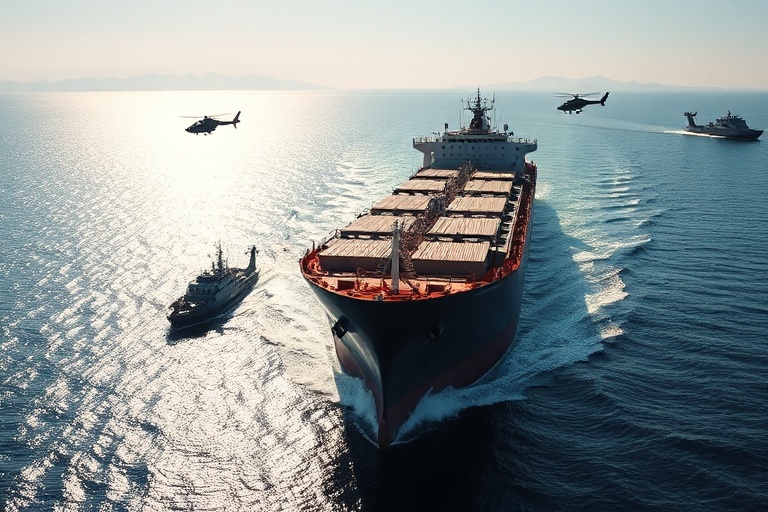
The Strait of Hormuz is one of the most heavily militarized waterways in the world. The U.S. Fifth Fleet, headquartered in Bahrain, maintains a constant presence in the region, conducting patrols and joint exercises with allies. Other nations, including the U.K., France, and Australia, have also deployed naval forces to protect their shipping interests. This international coalition reflects the global stakes involved in keeping the strait open.
However, the presence of foreign navies is not universally welcomed. In Iran, the U.S. military footprint is viewed as an occupation, a remnant of decades of intervention in the region. Anti-American sentiment runs deep, fueled by historical grievances and perceived hypocrisy in Western foreign policy. For many Iranians, the strait symbolizes both national pride and resistance against foreign domination.
Meanwhile, regional players like Saudi Arabia and the UAE have developed their own naval capabilities, often in partnership with Western powers. The UAE, for example, has invested in advanced missile defense systems and drone technology to counter potential threats from Iran. These efforts are part of a broader strategy to reduce dependence on external actors, though they have done little to ease tensions thus far.
The complexities of these alliances are further compounded by the involvement of non-state actors. Yemen’s Houthi rebels, backed by Iran, have targeted ships in the Red Sea and the Gulf of Aden, using drones and missiles. While their operations have not directly impacted the Strait of Hormuz, they contribute to a broader climate of instability that could spill over into the region.
The Role of Diplomacy: Can the Strait Be Secured?
Diplomatic efforts to stabilize the Strait of Hormuz have so far yielded mixed results. The 2015 Iran nuclear deal (JCPOA) initially raised hopes of a thaw in relations, but the U.S. withdrawal in 2018 and subsequent reimposition of sanctions derailed progress. Talks to revive the deal have stalled repeatedly, leaving the region in a state of limbo. Meanwhile, other initiatives, such as the 2021 maritime security initiative launched by the UAE and Israel, have struggled to gain traction amid ongoing distrust.
One of the biggest challenges is the lack of a unified international response. While Western nations and Gulf states share concerns about Iran’s actions, they are divided on how to address them. Sanctions, military deterrence, and economic incentives have all been tried, with limited success. The Biden administration’s approach, which has included both dialogue and targeted strikes on Iranian-backed militias, reflects the difficulty of balancing pressure with diplomacy.
For its part, Iran has consistently argued that its actions in the strait are a response to external pressures, particularly U.S. sanctions that have crippled its economy. The seizure of foreign tankers, for example, is framed as a legitimate tool to counter illegal oil smuggling. While these justifications are widely rejected by Western governments, they resonate with many Iranians who view their country as besieged by foreign powers.
Looking Ahead: A Fragile Future
The future of the Strait of Hormuz remains uncertain. On one hand, the economic interdependence of the world’s major powers creates a powerful incentive to avoid conflict. On the other, the region’s history of mistrust and the proliferation of non-state actors make miscalculation a constant risk. The possibility of a deliberate or accidental escalation—whether through a misfired missile, a cyberattack on shipping infrastructure, or a blockade—looms large.
For global consumers, the strait’s stability is a reminder of the fragility of the systems that underpin modern life. The clothes we wear, the fuel that powers our cars, and the electronics we rely on are all, at some point, dependent on safe passage through these waters. The Strait of Hormuz is not just a geopolitical issue; it is a cultural and economic lifeline that connects disparate corners of the world.
As tensions continue to simmer, the international community must confront difficult questions. Can diplomacy overcome decades of enmity? Is there a way to decouple energy security from military posturing? And how can the voices of the mariners, port workers, and coastal communities be amplified in a debate dominated by world leaders? The answers may well determine whether the Strait of Hormuz remains a symbol of global interconnectedness—or becomes a flashpoint for a new era of conflict.
For now, the world watches as ships continue to pass through the narrow waters, carrying