Street Fighter Movie: From Arcade Classic to Hollywood Challenge
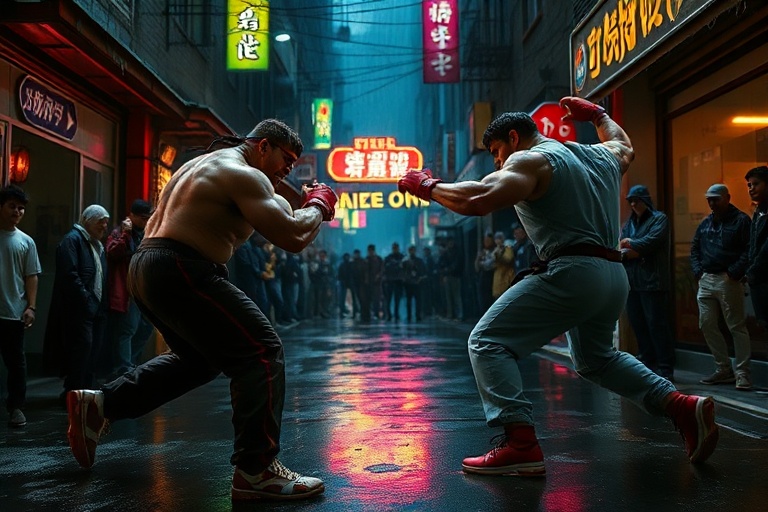
The Street Fighter franchise has carved an indelible mark on gaming culture since its 1987 debut. Created by Capcom, the series introduced players to a world of one-on-one combat featuring iconic characters like Ryu, Ken, Chun-Li, and Guile. While the games themselves became legendary, the franchise’s transition to film has been a more turbulent journey—one that reflects the challenges of adapting interactive storytelling to the linear format of cinema.
Early attempts to bring Street Fighter to the screen in the 1990s met with mixed results. The first live-action adaptation, Street Fighter (1994), starred Jean-Claude Van Damme as Guile and Raúl Juliá as the villainous M. Bison. The film leaned heavily into over-the-top action and campy villainy, earning a cult following despite its flaws. Critics at the time dismissed it as a shallow spectacle, but time has softened its reputation among fans who appreciate its unapologetic energy.
The 1994 Film: A Product of Its Time
The 1994 adaptation arrived during a golden era of martial arts cinema, when films like Mortal Kombat and Bloodsport dominated theaters. Street Fighter embraced this aesthetic, blending exaggerated fight choreography with a plot that loosely followed the game’s premise: a global tournament manipulated by a dictator-like warlord. The movie’s tone oscillated between serious drama and outright parody, a duality that still sparks debate among fans.
Raúl Juliá’s performance as M. Bison remains one of the film’s most memorable elements. His commanding presence and theatrical delivery turned the character into a pop culture icon, even overshadowing some of the film’s weaker aspects. The movie’s practical effects and stunts, though dated by today’s standards, were impressive for the era. It also introduced a cast of characters that, while not faithful to the games, captured the spirit of the franchise’s exaggerated world.
Critics were not kind upon release. Roger Ebert famously gave the film one star, criticizing its incoherent plot and reliance on spectacle over substance. Yet, for many gamers, the film’s flaws are part of its charm. It exists as a time capsule of 1990s action cinema, a reminder of how video game adaptations often prioritized style over narrative cohesion.
The Rise and Fall of CGI Experiments
Following the 1994 film, Capcom and developers largely steered clear of live-action adaptations for nearly two decades. The next major attempt came in 2009 with Street Fighter: The Legend of Chun-Li, a direct-to-video film that focused on the titular character. Unlike its predecessor, this movie aimed for a grittier, more grounded tone, but it failed to resonate with audiences. Critics panned its lifeless pacing and uninspired fight scenes, which lacked the dynamic energy of the games.
Digital animation offered another path. The 1999 animated film Street Fighter: The Animated Movie remains a fan favorite for its faithful adaptation of the source material and fluid animation. While not a live-action feature, it proved that Street Fighter could translate well to visual storytelling when given the right approach. The film’s success in Japan and among hardcore fans demonstrated that there was still demand for deeper, more thoughtful adaptations.
In the 2010s, rumors of a new live-action Street Fighter film surfaced repeatedly, often tied to Hollywood’s obsession with rebooting classic properties. One project, helmed by director Luc Besson, gained traction but ultimately stalled. The challenges were clear: balancing the games’ campy appeal with modern expectations for cinematic storytelling proved difficult. The franchise’s reliance on exaggerated characters and simplistic plots made it a tough sell for serious filmmakers.
Why a Modern Adaptation Faces Unique Challenges
Today, the gaming landscape has evolved dramatically. Franchises like Mortal Kombat and Uncharted have successfully transitioned to film, proving that video game adaptations can thrive when they embrace their interactive roots. Yet Street Fighter faces distinct hurdles. Its characters are deeply tied to a specific era of gaming—one defined by pixelated sprites and arcade cabinets. Modernizing them without losing their essence requires a delicate balance.
One potential path forward lies in an animated feature. Given the success of films like Detective Pikachu and The Super Mario Bros. Movie, animation offers a way to preserve the franchise’s visual style while expanding its narrative scope. A high-quality animated Street Fighter could explore character backstories, such as Ryu’s journey to master his “Satsui no Hado” or Chun-Li’s origins as an Interpol agent. Such an approach would allow the film to honor the games’ lore while appealing to both longtime fans and newcomers.
Another possibility is a limited series or anthology. Platforms like Netflix and Amazon Prime have embraced serialized storytelling, and a Street Fighter anthology could explore different characters’ perspectives. Imagine a series where each episode focuses on a different fighter, blending their game narratives with original lore. This format would allow for deeper character development and world-building, something live-action films often struggle to achieve.
Of course, live-action remains an option—if executed correctly. A director with a strong visual sense and a writer who understands gaming culture could revitalize the franchise. Films like Scott Pilgrim vs. The World have shown that video game adaptations can succeed by leaning into their inherent absurdity. A modern Street Fighter film might benefit from a similar approach, blending hyper-stylized action with heartfelt character moments.
The Future of Street Fighter on Screen
Capcom has remained cautious about greenlighting another live-action adaptation, but the franchise’s cultural footprint ensures it will never fade into obscurity. The games continue to evolve with titles like Street Fighter 6, which blends classic mechanics with modern accessibility. This ongoing relevance keeps the door open for future cinematic ventures.
For now, fans can revisit the 1994 film as a nostalgic artifact or dive into the animated series available on gaming-focused platforms. The franchise’s legacy is secure, but its future on screen remains unwritten. Whether through animation, streaming, or a bold live-action experiment, the next chapter of Street Fighter cinema will need to innovate rather than replicate past failures.
The key to success lies in embracing what makes Street Fighter unique: its blend of martial arts spectacle, exaggerated personalities, and deep but accessible lore. A film or series that captures that spirit—without relying solely on nostalgia or cheap thrills—could finally give the franchise the cinematic adaptation it deserves.
Key Takeaways for Fans:
- The 1994 Street Fighter film remains a cult classic despite its flaws.
- Animated adaptations like The Legend of Chun-Li and the 1999 movie have found more success.
- A modern live-action film would need to balance tone, character depth, and faithfulness to the source material.
- Animation or a streaming series could offer the most promising path forward.
For more on gaming adaptations and industry trends, explore our entertainment coverage.
The journey of Street Fighter from arcade to screen is far from over. With the right vision, the next adaptation could finally deliver the knockout punch the franchise deserves.