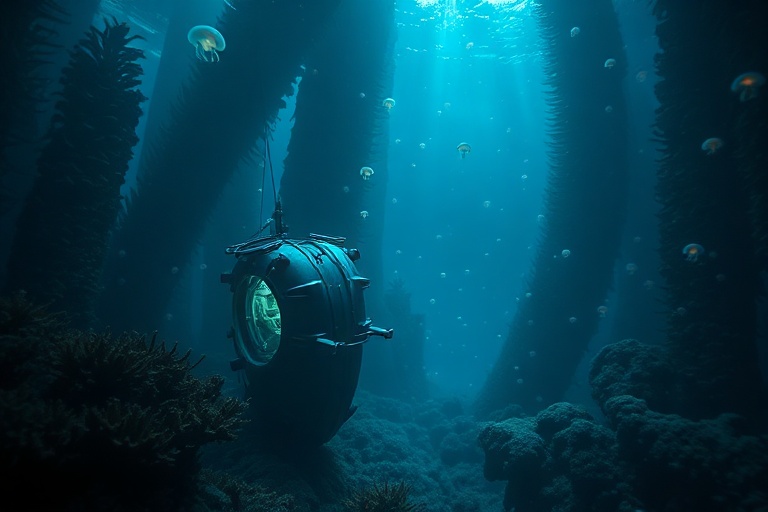
subnautica games
Survival games have long thrived on extreme environments, but few have crafted an underwater world as compelling and immersive as Subnautica. Developed by Unknown Worlds Entertainment, this first-person survival game dropped players into the uncharted waters of planet 4546B without a manual or clear objectives—just a single distress signal and the vast, crushing unknown. What followed was not just a game about staying alive, but about confronting isolation, curiosity, and the sheer wonder of an alien ecosystem.
Since its initial release in 2018, Subnautica has evolved from a niche survival title into a benchmark for environmental storytelling and atmospheric design. Its sequel, Subnautica: Below Zero, expanded the franchise by shifting focus to a different biome and introducing new mechanics while deepening the lore of the planet. Together, these games represent more than just underwater adventures—they are meditations on survival, discovery, and the human relationship with the unknown.
The Genesis of an Underwater Odyssey
Unknown Worlds Entertainment wasn’t new to survival games when it began developing Subnautica. The studio had made its name with Natural Selection and Natural Selection 2, both multiplayer shooters set in sci-fi environments. Yet, the leap to a solo survival experience set in an alien ocean was bold. The team wanted to create a world that felt alive—one where every ripple on the water’s surface and every distant sound mattered.
The result was a game where players are not just survivors, but explorers. The planet 4546B is a masterclass in environmental design. From the shallow kelp forests teeming with life to the crushing depths of the Lost River, each biome tells a story through its flora, fauna, and ruins. The game’s lack of a traditional HUD—relying instead on diegetic cues like oxygen levels displayed on a wrist-mounted scanner—reinforces immersion. Players learn to listen to the environment as much as they observe it.
This approach wasn’t just innovative—it was transformative. Subnautica proved that survival games didn’t need to be grounded in realism to feel real. They needed to be believable. The game’s success led to its inclusion in educational settings, where teachers use it to discuss ecosystems, pressure, and adaptation. It also inspired a wave of underwater survival games, though none have matched its narrative depth or environmental richness.
Mechanics That Foster Connection and Tension
Survival mechanics in Subnautica are carefully balanced to create tension without frustration. Players must manage hunger, thirst, oxygen, and temperature, but these needs are woven into the world rather than displayed as abstract numbers. Need food? Hunt a peeper. Thirsty? Boil some algae. Cold? Build a heater. The game teaches through failure, rewarding persistence with progress.
One of the most striking aspects is how movement and physics reinforce immersion. Swimming isn’t just a means of travel—it’s a skill. Players must learn to conserve oxygen, avoid aggressive creatures like the aggressive Reaper Leviathan, and navigate treacherous currents. The lack of a minimap forces players to memorize landmarks, turning exploration into a tactile experience. There’s no hand-holding, no quest markers—just the player, the ocean, and the unknown.
The crafting system is equally thoughtful. Resources are scarce but logically distributed. Titanium, for instance, is found near geothermal vents, tying survival to exploration and observation. Building a base isn’t just about placing walls—it’s about understanding the environment, reinforcing structures against pressure, and positioning solar panels to maximize energy. These mechanics make survival feel meaningful, not punitive.
- Oxygen Management: Players must constantly monitor their environment, as oxygen is consumed by movement and limited in deeper zones.
- Creature Behavior: Sea creatures react to the player’s presence, with some fleeing and others attacking—adding unpredictability.
- Resource Scarcity: Materials are finite, forcing players to plan expeditions and prioritize needs.
- Base Building: Structures must withstand pressure and environmental hazards, requiring architectural foresight.
Psychological Depth Beneath the Surface
What truly elevates Subnautica is its psychological undercurrent. The game doesn’t just place players in danger—it makes them question their purpose. Early logs reveal the fate of the Degasi crew, whose fragmented messages hint at madness and despair. As players progress, they uncover the story of the Quarantine Enforcement Platform and the crash of the Aurora, all while battling their own sense of isolation.
This emotional layer is rare in survival games. Most titles focus on mechanics over narrative, but Subnautica uses survival as a vehicle for storytelling. The player isn’t just trying to stay alive—they’re trying to understand why they’re there. The game’s climax, where players confront the planet’s secrets, is less about combat and more about revelation. It’s a moment of quiet triumph, not just survival.
The sequel, Subnautica: Below Zero, builds on this foundation by shifting perspective to Robin, a scientist investigating a corporate cover-up. While the first game emphasized isolation, Below Zero explores themes of corporate exploitation and environmental ethics. The planet’s ecosystem is now under threat from industrial mining, and players must decide whether to preserve life or aid destruction. This moral dimension adds another layer to the franchise’s depth.
The Broader Impact and Legacy
The influence of Subnautica extends beyond gaming. It has become a case study in environmental storytelling, cited in academic discussions about virtual ecosystems and player agency. The game’s success also proved that niche survival titles could achieve mainstream recognition, paving the way for games like The Forest and Valheim.
Unknown Worlds Entertainment’s commitment to accessibility has further broadened its appeal. Subnautica is available across multiple platforms, including PC, consoles, and VR, with the latter offering an unparalleled sense of immersion. Mods have extended the game’s lifespan, adding new creatures, mechanics, and even storylines. The community-driven content ensures that Subnautica remains a living world long after its initial release.
Perhaps most importantly, Subnautica redefined what survival games could achieve. It demonstrated that survival isn’t just about scarcity—it’s about curiosity, wonder, and the quiet thrill of discovery. In an era dominated by fast-paced action and cinematic narratives, Subnautica offered something rare: a game that rewards patience, observation, and introspection.
A Glimpse into the Future
With the success of the franchise, speculation about a third game has grown. Fans eagerly await news of new biomes, creatures, and storylines. What’s clear is that Unknown Worlds has established a template for immersive survival experiences—one where the environment is as much a character as any protagonist. Whether through sequels, spin-offs, or spiritual successors, the legacy of Subnautica will likely endure for years to come.
For players, the journey beneath the waves remains a transformative experience. To play Subnautica is to confront the unknown, not with weapons or tools, but with curiosity and adaptability. It’s a reminder that survival isn’t just about enduring—it’s about exploring, learning, and ultimately, understanding.
And that’s a lesson worth diving into.
For more on survival games and their evolution, explore our Gaming and Technology sections.