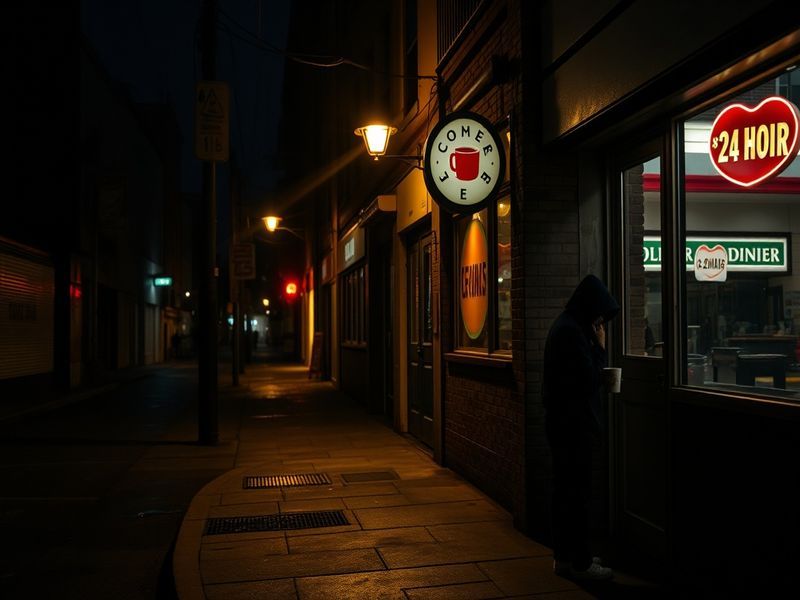
When the sun sets and most of the planet slips into sleep, a parallel universe awakens. Late night is more than just a time—it’s a cultural phenomenon that reshapes cities, economies, and human behavior across continents. From Tokyo’s neon-lit streets to Berlin’s underground clubs, from New York’s 24-hour diners to Mumbai’s late-night chai stalls, the night belongs to those who thrive when the world dims its lights.
This rhythm of nocturnal activity predates electricity, but modern life has transformed it into something far more complex. The late-night economy now represents trillions in revenue globally. It fuels industries from entertainment and hospitality to transportation and security. Yet, it also exposes contradictions in urban planning, public health, and social equity. To understand late night is to understand the pulse of contemporary society—its excesses, its vulnerabilities, and its hidden communities.
The Evolution of Late-Night Culture: From Survival to Spectacle
Historically, nighttime was a domain of danger and mystery. Before street lighting, darkness brought vulnerability. Night watchmen patrolled European cities, lanterns in hand, while in colonial cities like Calcutta and Jakarta, late-night movement was often restricted by curfews imposed by ruling powers. These restrictions weren’t just about control—they reflected real fears of crime and disorder in the absence of visibility.
Everything changed with the advent of electric light. Thomas Edison’s incandescent bulb didn’t just illuminate homes—it redefined time itself. By the early 20th century, cities began installing streetlights at scale, making nighttime navigation safer. The 1920s saw the rise of nightlife as a form of rebellion, especially in cities like Paris and Berlin, where cafés and cabarets stayed open past midnight, drawing artists, writers, and free spirits. Jazz Age New York became synonymous with the speakeasy, where the night pulsed with secret energy.
By the mid-20th century, late night had become a symbol of modernity. Drive-in theaters in the American South, 24-hour jazz clubs in Tokyo’s Shinjuku district, and late-night bookshops in London’s Soho all reflected a society that no longer accepted the night as a time of dormancy. The introduction of television in the 1950s and 1960s brought a new kind of late-night ritual: the talk show. Programs like Johnny Carson’s The Tonight Show turned the witching hour into prime-time entertainment, embedding night owls in a shared cultural experience.
Key Milestones in Late-Night Evolution
- 1880s: Electric street lighting debuts in major cities, reducing fear of nighttime movement.
- 1920s: Rise of jazz clubs and speakeasies in post-war cities, making nightlife a form of cultural resistance.
- 1950s: Television brings late-night programming into homes, creating a new kind of collective nighttime ritual.
- 1980s: Expansion of 24-hour convenience stores, diners, and cable TV (including MTV and CNN), normalizing constant activity.
- 2010s: The gig economy and food delivery apps (Uber Eats, DoorDash) make nighttime consumption effortless and expected.
Economic Engines and Social Anomalies: Who Runs the Night?
The late-night economy is vast and diverse. In the United States alone, it generates over $300 billion annually. Globally, cities like London, Shanghai, and São Paulo rely on nighttime activity for up to 30% of their GDP in certain sectors. But this economy doesn’t benefit everyone equally. Shift work—common in healthcare, transportation, and hospitality—often falls on the shoulders of marginalized communities, including immigrants and women. These workers sustain the night but rarely enjoy its luxuries.
Meanwhile, in cities like Berlin and Amsterdam, nightlife has become a cornerstone of urban identity and tourism. Berlin’s Berghain, a legendary nightclub, draws tens of thousands weekly, while Amsterdam’s coffee shops and bars operate on schedules that defy conventional time. These cities market themselves as “24-hour destinations,” selling not just alcohol or music, but an experience of limitless freedom.
But not all late-night spaces are inclusive. Gentrification has pushed out many traditional nightlife venues in favor of upscale lounges and corporate venues. In London, the closure of iconic pubs like The Old Blue Last in Shoreditch reflects a broader trend: the night is being sanitized, priced out of reach for working-class residents. The result is a paradox—cities want a vibrant nightlife for tourism and prestige, yet increasingly restrict access to those who built its reputation.
The Psychology of the Night: Why Some Thrive After Dark
Human biology favors sleep, but human culture rewards wakefulness. Chronobiologists distinguish between “larks” (morning people) and “owls” (night people), with the latter often facing social stigma for their natural rhythms. Yet, in creative fields—writing, music, visual arts—nighttime is mythologized as a space of clarity and inspiration. The quiet, the absence of interruption, the hum of the city at 3 a.m.—these become catalysts for thought.
Psychologists point to several factors that make the night appealing. Reduced sensory input can lead to heightened focus. The absence of daylight removes visual distractions, allowing introspection. For introverts and neurodivergent individuals, the night offers a reprieve from overstimulation. Studies show that creative breakthroughs often occur during non-peak cognitive hours, especially for those whose brains operate on non-standard schedules.
But the night also distorts perception. Sleep deprivation impairs judgment, fuels impulsivity, and increases the risk of accidents. Emergency rooms see spikes in psychiatric crises after midnight. Law enforcement reports higher rates of domestic violence and substance abuse during late hours. The night amplifies both creativity and crisis, making it a double-edged blade.
Global Nightscapes: How Different Cities Live After Sundown
Late night isn’t a monolith—it varies dramatically by geography, history, and social structure. In Tokyo, the night is structured and immersive. Pachinko parlors, izakayas, and karaoke bars operate in synchronized chaos. The city’s yatai (food stalls) reappear after midnight, serving ramen and yakitori to salarymen and night owls. Japan’s late-night culture is both hyper-organized and deeply ritualized, reflecting a society that values order even in excess.
In contrast, Mexico City’s nightlife is raw and communal. Plaza Garibaldi’s mariachi bands play until dawn. Cantinas overflow with laughter and debate. The night here is a space of connection, where strangers become friends over mezcal and street food. It’s a celebration of resilience, a refusal to let darkness silence culture.
In Dubai, the night is a spectacle of excess. The Burj Khalifa’s fountain show runs until midnight. Clubs like WHITE Dubai and Soho Garden host international DJs in air-conditioned palaces. But this glamour masks a strict social order. Alcohol is served in licensed venues, but public intoxication is punished. The night is controlled, curated, and commodified—accessible only to those with wealth or connections.
Meanwhile, in Mumbai, the night belongs to the street. From Mohammed Ali Road’s biryani stalls to Colaba’s Irani cafés, food becomes the glue of the city. The local train system runs all night during festivals, ferrying millions home. Here, late night isn’t about escape—it’s about survival, community, and the relentless rhythm of a city that never sleeps.
Comparative Late-Night Economies by Region
| Region | Dominant Industries | Cultural Tone | Key Challenges |
|---|---|---|---|
| North America | Hospitality, entertainment, gig economy | Fast-paced, commercialized, celebrity-driven | Worker exploitation, gentrification, addiction |
| Europe | Nightclubs, cultural venues, tourism | Creative, experimental, community-oriented | Regulation, noise complaints, rising costs |
| East Asia | Food stalls, karaoke, 24-hour services | Structured, ritualistic, family-inclusive | Work-life imbalance, sleep deprivation, social pressure |