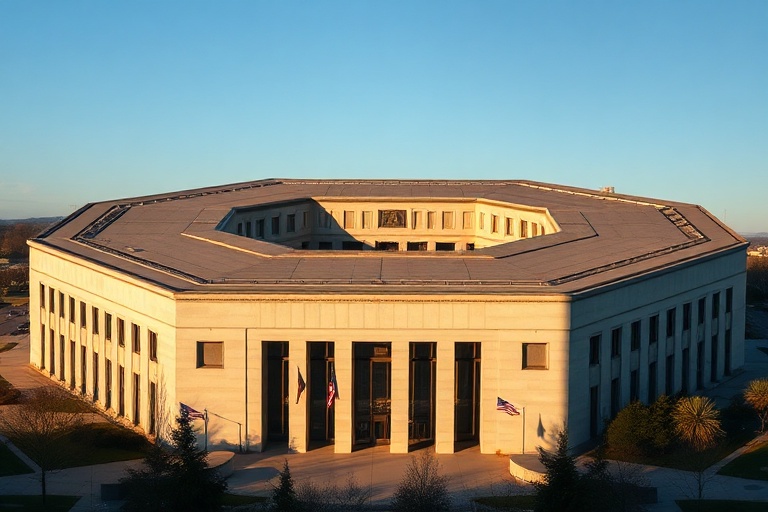
The Pentagon: America’s Defense Headquarters Explained
The Pentagon stands as one of the most recognizable and architecturally significant buildings in the world. Serving as the headquarters of the United States Department of Defense, this massive five-sided structure in Arlington, Virginia, has been a symbol of American military power since its completion in 1943. Its unique design and historical significance make it far more than just an office building—it’s a monument to defense strategy, engineering innovation, and geopolitical influence.
The Building’s Origins and Architectural Design
Construction of the Pentagon began in 1941, driven by the urgent need to consolidate the War Department’s scattered offices during World War II. The project was completed in just 16 months, an astonishing feat of engineering that required 15,000 workers and 680,000 tons of sand and gravel from the nearby Potomac River. The building’s distinctive five-sided shape wasn’t just an aesthetic choice—it was a practical solution to fit within the 287-acre site while maximizing office space.
The architect, George Bergstrom, designed the structure with an innovative system of five concentric pentagons connected by ten spoke-like corridors. Each of the five floors has five ring corridors, creating a total of 17.5 miles of corridors. The building’s exterior walls are made of reinforced concrete and clad in Indiana limestone, giving it a monumental appearance that reflects its military purpose.
Surprisingly, the Pentagon’s design incorporated several energy-efficient features decades before such concepts became mainstream. Its innovative heating and cooling systems, including underground steam pipes and a network of tunnels for utilities, helped reduce operational costs even during its early years of operation.
Function and Operations Within the Pentagon
The Pentagon serves as the nerve center for the United States military, housing approximately 26,000 employees including military personnel, civilian staff, and contractors. The building is home to the Office of the Secretary of Defense, the Joint Chiefs of Staff, and the military departments of the Army, Navy, Marine Corps, and Air Force. Its daily operations involve coordinating military operations, developing defense policies, and managing the vast resources of the world’s most powerful armed forces.
Within its walls, the Pentagon operates with remarkable efficiency despite its size. The building runs 24/7, with a dedicated cafeteria serving over 18,000 meals daily. Security measures are extensive, with multiple checkpoints, ID verification systems, and a comprehensive surveillance network. The building’s design includes several unique features like blast-resistant windows and reinforced stairwells added after the September 11 attacks.
The Pentagon’s organizational structure is equally impressive. Key components include:
- The Office of the Secretary of Defense, led by the civilian head of the Department of Defense
- The Joint Chiefs of Staff, comprising the senior uniformed leaders of each military branch
- Each military department’s headquarters, including the Army, Navy, Marine Corps, and Air Force
- Numerous defense agencies and field activities
This complex structure allows for seamless coordination between different branches of the military while maintaining civilian oversight—a fundamental principle of American democracy.
Historical Significance and Notable Events
The Pentagon has played a crucial role in virtually every major American military operation since World War II. During the Cold War, it served as the command center for nuclear strategy and global military operations. The Cuban Missile Crisis in 1962 saw intense activity within its walls as military leaders and policymakers made critical decisions that brought the world to the brink of nuclear war.
One of the most significant events in the Pentagon’s history occurred on September 11, 2001. American Airlines Flight 77 crashed into the building’s western side, killing 184 people and causing substantial damage. The attack transformed the Pentagon’s security protocols and led to the creation of the Department of Homeland Security. The damaged section was rebuilt with enhanced security features while preserving the original architectural style.
The Pentagon also served as a temporary home for the Department of Defense after the attack on the World Trade Center, demonstrating its resilience and continued functionality even under extreme conditions. The building’s response to the crisis became a model for emergency preparedness and continuity of operations planning.
Visiting the Pentagon: Public Access and Tours
While much of the Pentagon remains restricted access, the building does offer limited public tours. Free guided tours are available to individuals and groups, including students, military personnel, and foreign dignitaries. These tours provide insight into the building’s history, architecture, and operations while highlighting its role in national defense.
Tour highlights typically include the Pentagon Memorial, which honors the 184 victims of the 9/11 attack. The memorial features 184 illuminated benches, each inscribed with a victim’s name and arranged according to their ages at the time of death. Visitors can also see the Hall of Heroes, which commemorates Medal of Honor recipients.
Security restrictions mean that visitors must plan ahead for tours. Advance registration is required through the Pentagon’s official website, and all visitors over 16 must present government-issued photo identification. Photography is permitted in most areas, though certain sections remain off-limits to maintain operational security.
For those unable to visit in person, the Pentagon offers virtual tours and a comprehensive museum experience. The building’s official website provides extensive information about its history, architecture, and current operations, making it possible to explore this iconic structure from anywhere in the world.
Understanding Military Structure Through the Pentagon
The Pentagon’s organization provides a clear window into how the United States military operates. Understanding its structure helps explain the complex relationships between different branches and how decisions are made at the highest levels of defense policy. For those interested in military careers or defense contracting, the jobs section on Dave’s Locker offers valuable insights into opportunities within this vast organization.
Many defense contractors and military suppliers operate in the Arlington area, creating a unique ecosystem of defense-related businesses. The Pentagon’s influence extends far beyond its walls, shaping the local economy and providing career opportunities across multiple sectors.
Architectural Influence Beyond Defense
The Pentagon’s innovative design has influenced architecture beyond military buildings. Its efficient use of space and innovative structural systems have been studied by architects worldwide. The building’s ability to house thousands of workers in a relatively compact structure while maintaining operational efficiency continues to inspire modern commercial architecture.
For those interested in architectural history or engineering marvels, the technology section on Dave’s Locker features articles about innovative structures and engineering achievements that have shaped our built environment.
The Pentagon stands as a testament to American ingenuity, resilience, and military power. Its unique design, historical significance, and operational complexity make it far more than just a government building—it’s a symbol of national defense and a monument to the people who serve in the armed forces. From its rapid construction during World War II to its role in modern military operations, the Pentagon continues to evolve while maintaining its core purpose: protecting American interests at home and abroad.