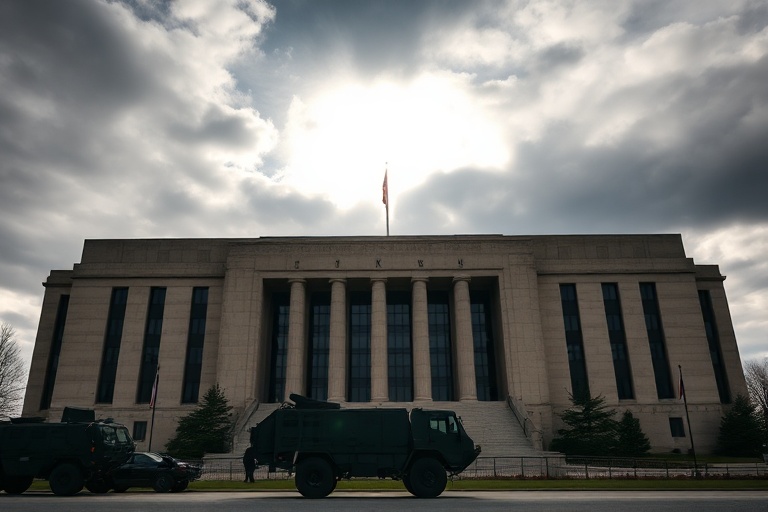
The Pentagon: History, Function, and Global Influence Explained
The Pentagon stands as one of the most recognizable—and misunderstood—structures in the world. Its five-sided silhouette is instantly associated with American military power, but its significance extends far beyond its architectural design. As the headquarters of the United States Department of Defense, the building represents the operational heart of the nation’s defense strategy, intelligence operations, and global military engagements. Yet, its history, construction, and even its name carry stories that often go untold.
The Origins and Construction of an Icon
The Pentagon’s story begins in the early days of World War II. By 1941, the U.S. War Department had outgrown its aging headquarters in downtown Washington, D.C., and needed a centralized location to coordinate the nation’s rapidly expanding military efforts. The solution came in the form of a massive, innovative design that could be built quickly and efficiently. Groundbreaking began on September 11, 1941—exactly 60 years before the terrorist attacks that would later target the building.
The construction itself was a marvel of engineering. Completed in just 16 months, the Pentagon was built using a novel hexagonal design that minimized the distance between offices, reducing the need for long commutes within the building. Workers used an astonishing 680,000 tons of sand dredged from the Potomac River, which was then mixed with concrete to create the structure’s distinctive walls. At the time of its completion, it was the largest office building in the world, covering 6.5 million square feet and housing 25,000 employees. Even today, its sheer scale remains impressive—it has three times the floor space of the Empire State Building.
A Symbol of Resilience and Rebirth
The Pentagon’s resilience has been tested more than once. On September 11, 2001, American Airlines Flight 77 crashed into the western side of the building, killing 184 people and causing a partial collapse of the structure. The attack was a devastating blow, but the Pentagon’s response demonstrated the very principles it was built to uphold. Within hours, rescue teams were on-site, and the damaged section was quickly stabilized. The restoration process was equally swift, with repairs completed in just one year. The rebuilt section now features a memorial to the victims, including 184 individual benches, each inscribed with a name and aligned to correspond to the victim’s age on that tragic day.
Inside the Pentagon: Structure and Function
The Pentagon’s layout is designed for maximum efficiency. The five-sided structure is divided into five concentric rings labeled A through E, with corridors radiating outward like spokes on a wheel. Each of the five floors—plus two basement levels—serves a specific purpose. The upper floors house the offices of the Secretary of Defense, the Joint Chiefs of Staff, and other high-ranking officials. Meanwhile, the lower levels contain secure meeting rooms, communication hubs, and critical infrastructure like the National Military Command Center, which serves as the nerve center for global military operations.
Security within the Pentagon is as meticulous as its design. Access is tightly controlled, with visitors required to pass through multiple checkpoints, including metal detectors and armed guards. Even employees must navigate a labyrinth of ID checks and biometric screenings. The building operates 24/7, with shifts of military personnel, civilian employees, and contractors working around the clock to ensure the continuity of defense operations. Despite its imposing presence, the Pentagon is not just a fortress; it’s a dynamic workspace where policy is shaped, intelligence is analyzed, and decisions with global implications are made daily.
The Role of the Pentagon in Global Affairs
The Pentagon’s influence extends far beyond the borders of the United States. As the headquarters of the Department of Defense, it oversees a budget of over $700 billion annually, making it one of the largest employers in the world. The building is the epicenter of military planning, from the deployment of troops to the development of advanced weaponry. Its reach is global, with military bases, intelligence operations, and diplomatic engagements spanning every continent except Antarctica.
One of the Pentagon’s most critical functions is its role in intelligence gathering and analysis. The Defense Intelligence Agency (DIA), headquartered within the Pentagon, is responsible for providing military intelligence to policymakers and military leaders. The building also houses the National Security Agency (NSA), which is tasked with signals intelligence and cybersecurity. Together, these agencies work to anticipate threats, monitor adversaries, and protect national security interests. The Pentagon’s reach into intelligence operations underscores its role as a cornerstone of American power, not just militarily but also strategically.
The Pentagon’s Cultural and Historical Legacy
Beyond its operational significance, the Pentagon has woven itself into the cultural fabric of America. It has been featured in countless films, books, and television shows, often depicted as a symbol of authority, secrecy, or even villainy. Movies like Dr. Strangelove and Top Gun have used the Pentagon as a backdrop for satirical or dramatic narratives, while documentaries like The Pentagon Wars have explored its bureaucratic complexities. The building’s imposing presence and storied history make it a compelling subject for storytelling, reinforcing its place in the public imagination.
The Pentagon also serves as a venue for historical moments that shape the nation. It was here that decisions were made to launch the Gulf War in 1991, to invade Afghanistan in 2001, and to conduct the raid that killed Osama bin Laden in 2011. These events, and many others, have cemented the Pentagon’s reputation as a place where history is not just recorded but actively shaped. Its walls have witnessed pivotal moments in American foreign policy, from the Cold War to the War on Terror, making it a living archive of the nation’s military and political evolution.
A Tourist Destination and Architectural Landmark
Despite its primary function as a military headquarters, the Pentagon is also a popular tourist destination. The Pentagon Memorial, dedicated to the victims of the 9/11 attacks, draws visitors from around the world. The memorial features 184 illuminated benches, each representing a life lost, arranged according to the victim’s age. The outdoor space is serene and reflective, offering a stark contrast to the building’s usual atmosphere of urgency and intensity. Guided tours of the Pentagon are available to the public, providing a rare glimpse into the inner workings of one of the world’s most powerful institutions.
The Pentagon’s architectural design has also earned it a place in architectural history. Its innovative hexagonal layout was a response to the need for efficiency, but it also created a structure that is both functional and aesthetically striking. The building’s exterior is clad in limestone, giving it a timeless appearance that blends seamlessly with the surrounding landscape. Its five-sided shape is not just a design choice; it’s a testament to the ingenuity of its creators, who sought to build a structure that could serve both practical and symbolic purposes.
The Future of the Pentagon
The Pentagon of today faces challenges that its original architects could never have anticipated. The rise of cyber warfare, the proliferation of drones, and the increasing complexity of global conflicts have forced the Department of Defense to adapt rapidly. The Pentagon is at the forefront of these changes, investing heavily in new technologies like artificial intelligence, autonomous systems, and quantum computing. These advancements are not just about enhancing military capabilities; they’re about redefining the very nature of warfare in the 21st century.
Another critical challenge is the Pentagon’s role in addressing domestic and international crises. From natural disasters to humanitarian emergencies, the Department of Defense often plays a pivotal role in response efforts. The building’s leadership must balance the demands of global military engagements with the needs of American citizens, a task that requires both strategic foresight and operational flexibility. The Pentagon’s ability to adapt to these evolving challenges will determine its relevance in the decades to come.
As the Pentagon continues to evolve, so too does its relationship with the public. In an era of increasing transparency and scrutiny, the building faces pressure to open its doors further, both literally and figuratively. Initiatives like the Pentagon’s public tours and memorials are steps in this direction, but the institution must also grapple with questions of accountability, ethics, and the ethical implications of its actions. The Pentagon’s future will be shaped not just by its technological advancements but by its willingness to engage with the public and address the concerns of a changing world.
The Pentagon remains a symbol of American power, but its story is far from static. From its rapid construction in the 1940s to its resilience in the face of tragedy, the building embodies the nation’s capacity for innovation, adaptability, and perseverance. As it navigates the complexities of the modern era, the Pentagon will continue to serve as both a fortress and a forum—a place where decisions are made, history is written, and the future is shaped.
For those interested in exploring more about the institutions that shape global events, visit our News and Analysis sections for in-depth coverage of related topics.