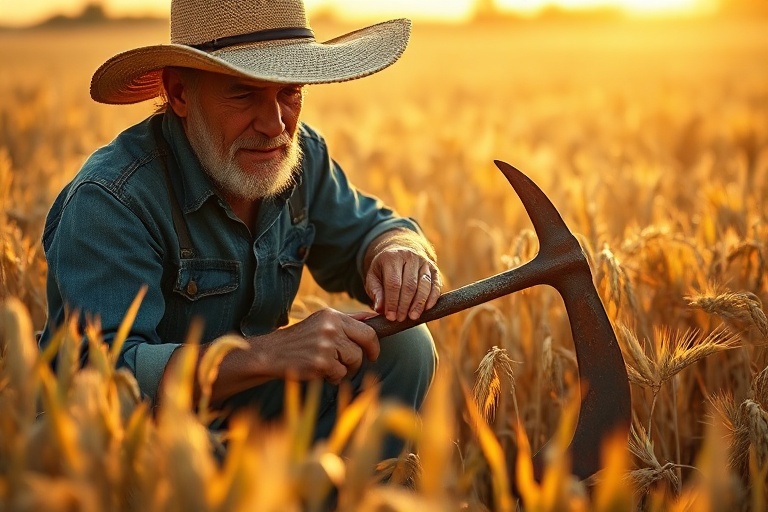
Why Farmers Are the Backbone of Modern Society
The Foundation of Civilization
Long before cities rose from the earth and technology reshaped daily life, human survival depended on a single profession: farming. The shift from nomadic hunting and gathering to settled agricultural communities marked the dawn of civilization itself. Farmers didn’t just grow food; they laid the groundwork for culture, economy, and governance. Without their labor, the pyramids wouldn’t have been built, empires wouldn’t have expanded, and modern society as we know it would not exist.
Today, the role of the farmer has evolved far beyond subsistence. In an age of globalization and automation, agriculture remains the backbone of human sustenance. Yet, despite feeding billions, farmers often operate in the shadows of public awareness. Their work is both ancient and cutting-edge—merging traditional knowledge with drone technology, soil science, and sustainable innovation. The challenges they face—climate volatility, market pressures, and labor shortages—are reshaping how we think about food security and rural life.
The Modern Farmer’s Toolkit
The image of a farmer in overalls bending over rows of crops with a pitchfork is increasingly outdated. Modern agriculture is a high-tech industry where precision matters. Farmers now rely on a sophisticated toolkit that includes:
- GPS and drone technology: Drones monitor crop health, soil moisture, and pest infestations with real-time data. GPS-guided tractors plant seeds with centimeter-level accuracy, reducing waste and increasing yield.
- Data analytics: Farm management software tracks weather patterns, market prices, and equipment performance. This allows farmers to make informed decisions about planting, irrigation, and harvesting.
- Biotechnology: Genetically modified crops resist drought, pests, and disease, helping farmers adapt to changing climates. CRISPR gene editing is being explored to create crops with higher nutritional value.
- Renewable energy integration: Solar panels power irrigation systems. Biogas digesters convert livestock waste into energy. These innovations reduce costs and environmental impact.
Economic and Environmental Pressures
Farming is not just a way of life—it’s a high-stakes economic endeavor. The average farm in the United States operates on razor-thin margins, with net farm income fluctuating year to year. Input costs—fertilizer, fuel, machinery—are rising faster than crop prices. Meanwhile, global competition from large-scale agribusinesses puts small and mid-sized farms at a disadvantage. The result? A consolidation trend where fewer farms control more land, raising concerns about food sovereignty and rural community decline.
Environmental challenges add another layer of complexity. Farmers are both victims and stewards of climate change. Rising temperatures, unpredictable rainfall, and extreme weather events disrupt growing seasons. Yet, agriculture itself contributes significantly to greenhouse gas emissions through livestock methane, fertilizer runoff, and land-use change. The push for sustainability has led to practices like cover cropping, no-till farming, and regenerative agriculture—methods that restore soil health and sequester carbon. These approaches require investment and education, but they offer long-term resilience.
Policy and Public Perception
Government policies play a pivotal role in shaping the future of farming. Subsidies, trade agreements, and conservation programs influence what farmers grow and how they grow it. For decades, commodity subsidies favored large-scale production of corn, soy, and wheat—crops with high yield but low nutritional value. This system contributed to the obesity epidemic and environmental degradation. Recent shifts toward supporting organic, local, and diversified farming aim to realign incentives with health and sustainability goals.
Public perception of farming is often divided. On one hand, there’s romanticism—the farmer as a noble steward of the land. On the other, there’s criticism: monoculture farming depletes soil, factory farming raises ethical concerns, and agricultural runoff pollutes waterways. These contradictions reflect deeper tensions in modern society: the desire for cheap, abundant food versus the demand for ethically produced, environmentally friendly options. Farmers are caught in the middle, expected to produce more with fewer resources while meeting increasingly complex consumer expectations.
The Future of Farming: Challenges and Opportunities
The next decade will test the adaptability of farmers worldwide. Climate change is accelerating, with projections of more frequent droughts, floods, and heatwaves. Supply chain disruptions—like those seen during the COVID-19 pandemic—highlight the fragility of global food systems. Yet, within these challenges lie opportunities for innovation. Vertical farming, hydroponics, and lab-grown meat are emerging as alternatives to traditional agriculture. While these technologies won’t replace field farming entirely, they offer solutions for urban areas and regions with limited arable land.
Another promising trend is the rise of farmer cooperatives and direct-to-consumer models. By banding together, small farmers can negotiate better prices, share equipment, and access larger markets. Community-supported agriculture (CSA) programs allow consumers to buy shares in a farm’s harvest, providing farmers with upfront capital and fostering a direct connection to their customers. These models not only improve profitability but also rebuild trust in the food system.
The human element of farming remains irreplaceable. Technology can optimize yields and reduce waste, but it cannot replace the intuition, experience, and passion of those who work the land. Farmers are problem-solvers, innovators, and conservationists. They understand the rhythm of the seasons in a way no algorithm ever could. As society grapples with food security, climate change, and rural decline, the role of the farmer will only grow in importance.
What Needs to Change
For farming to thrive in the 21st century, several systemic changes are necessary:
- Investment in research and education: Public and private funding should support agricultural science, from drought-resistant crops to soil health initiatives. Extension programs that teach sustainable practices must be expanded.
- Fair economic policies: Subsidies should reward diversity, conservation, and local food systems rather than prioritize a handful of commodity crops. Risk management tools, like crop insurance, need to be more accessible.
- Infrastructure improvements: Rural broadband access is essential for modern farmers to use data-driven tools. Reliable transportation networks reduce the cost of getting goods to market.
- Consumer awareness and support: Shoppers must recognize the true cost of food. Paying a little more for sustainably produced, locally grown food can help farmers adopt better practices without sacrificing their livelihoods.
Farmers are the original environmentalists, the original entrepreneurs, and the original innovators. Their work sustains us all. As we move toward a more uncertain future, their role will only become more vital. Supporting farmers isn’t just about food—it’s about securing the foundation of our society.
For more insights into how technology is reshaping industries, visit our Technology category. To explore how global trends intersect with daily life, check out our News section.
Conclusion: Honoring the Hands That Feed Us
The farmer’s life is one of relentless labor, deep responsibility, and quiet resilience. Behind every meal, every grocery store shelf, and every food bank donation are the hands of farmers—calloused, weathered, and committed to feeding the world. Their challenges are immense, but so are their contributions. By recognizing their role, supporting their work, and advocating for policies that enable their success, we honor the profession that makes civilization possible.
In an era of rapid change, one thing remains constant: we all depend on farmers. The least we can do is ensure they have the tools, respect, and opportunities to continue their vital work.