Why Subnautica Became a Global Gaming Phenomenon
What Is Subnautica and Why It Captivates Millions
Subnautica is more than a survival game set in an alien ocean—it’s an immersive experience that blends exploration, storytelling, and environmental themes into a seamless underwater adventure. Developed by Unknown Worlds Entertainment and released in 2018, the game thrusts players into the role of Ryley Robinson, the lone survivor of a spacecraft crash on planet 4546B, a water-covered world teeming with both beauty and peril. With no hand-holding, players must scavenge for resources, craft equipment, and navigate the vast, uncharted depths to uncover the planet’s secrets while evading—or sometimes coexisting with—its alien inhabitants.
The game’s appeal is universal. In Japan, where survival games often emphasize precision and strategy, Subnautica resonated with players for its methodical resource management and serene yet tense atmosphere. European gamers, known for their appreciation of atmospheric storytelling, praised its cinematic world-building and emotional narrative arc. Meanwhile, in North America, where survival games frequently dominate indie and AAA markets alike, Subnautica stood out for its accessibility and depth, appealing to both casual players and hardcore enthusiasts. This global reach underscores how Subnautica transcends cultural boundaries by focusing on core human experiences: survival, discovery, and the unknown.
The Design Philosophy Behind an Alien Ocean
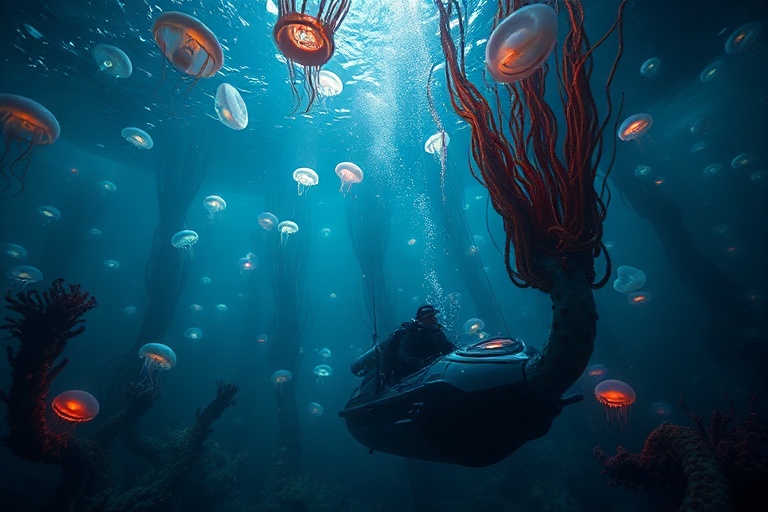
At the heart of Subnautica’s success lies its meticulously crafted underwater world. The game’s developers drew inspiration not just from science fiction classics like The Abyss and Sphere, but also from real-world marine biology and deep-sea exploration. The result is an alien ocean that feels eerily plausible—bioluminescent flora, towering kelp forests, and schools of alien fish create a sense of wonder, while the crushing darkness and lurking predators instill a constant undercurrent of tension.
Culturally, the game taps into humanity’s dual fascination with and fear of the deep sea. The ocean has long been a symbol of the unknown, a theme explored in myths from Polynesian navigation to Western maritime legends. Subnautica leverages this archetype, presenting a world where every dive could reveal something beautiful or something deadly. The game’s art style—vibrant yet alien, organic yet synthetic—further enhances its immersive quality, making it a standout in both indie and mainstream gaming circles. Critics and players alike have noted how the game’s design encourages slow, deliberate exploration, rewarding curiosity with narrative payoffs and breathtaking vistas.
The Role of Survival Mechanics in Player Engagement
Survival games often hinge on their mechanics, and Subnautica strikes a delicate balance between challenge and accessibility. Players must monitor oxygen levels, manage hunger and thirst, and craft tools using limited resources—elements that echo survival games like The Forest and Rust. However, Subnautica distinguishes itself through its emphasis on environmental storytelling. Rather than relying solely on tutorials or explicit guidance, the game teaches players through exploration. A damaged lifepod yields clues. A flickering light in the distance suggests a safe haven. The gradual reveal of the planet’s lore, through PDA logs and scattered notes, creates a sense of personal discovery that few games achieve.
This approach has made Subnautica particularly popular in educational settings. Teachers in STEM-focused curricula have used the game to discuss marine biology, pressure physics, and even ethics in survival scenarios. In South Korea, where gaming is both a hobby and a competitive field, Subnautica has been highlighted for its potential to teach problem-solving and resource management—skills valued in both academics and esports. The game’s mechanics, while simple in concept, offer deep strategic layers, allowing players to adapt their playstyle based on their surroundings and priorities.
Subnautica’s Cultural Impact and Community Legacy
Beyond its commercial success, Subnautica has fostered a vibrant, global community. Modding has played a significant role, with players creating everything from new biomes and creatures to quality-of-life improvements. The game’s modding scene is particularly active in Europe, where communities on platforms like Nexus Mods and Steam Workshop collaborate across languages and time zones. In Russia, for instance, modders have developed localized versions of the game, complete with translated text and culturally relevant modifications, further expanding its reach.
One of the most notable aspects of Subnautica’s legacy is its ability to unite players around shared experiences. Online forums and social media platforms are filled with stories of players overcoming their fears of the deep, solving puzzles together, or simply marveling at the game’s beauty. Streaming platforms like Twitch have amplified this effect, with creators using the game to engage audiences in real time. In China, where gaming culture is rapidly evolving, Subnautica has been both a commercial success and a cultural touchstone, often cited in discussions about immersive storytelling in video games. The game’s absence of microtransactions and its focus on a complete, polished experience have also earned it praise in an industry often criticized for exploitative monetization practices.
The Expansion: Subnautica: Below Zero
In 2021, Unknown Worlds Entertainment released Subnautica: Below Zero, a standalone expansion that continues the story of Robin, a character introduced in the original game. Set in the frozen polar regions of 4546B, Below Zero shifts the focus from open-water survival to more confined, tense environments. The expansion was well-received for its improved graphics, deeper narrative, and refined mechanics, proving that the Subnautica universe still had room to grow.
Culturally, Below Zero resonated particularly with players who had grown attached to the original game’s characters and world. The expansion’s story delves deeper into the fate of the planet’s indigenous species, the Leviathans, and the ethical dilemmas of survival. This narrative depth has made it a favorite among players who appreciate games with strong environmental themes—a topic of increasing relevance in today’s world. The expansion’s success also highlights how Subnautica has evolved from a single game into a franchise, one that continues to push the boundaries of what survival games can achieve.
Why Subnautica Matters in the Gaming Landscape
Subnautica stands as a testament to the power of atmospheric storytelling and environmental design in gaming. In an era where many titles prioritize graphics or multiplayer over substance, Subnautica offers something rare: a world that feels alive, a story that unfolds naturally, and a challenge that is as rewarding as it is daunting. Its global appeal lies not just in its gameplay, but in its ability to evoke curiosity, awe, and even a touch of existential reflection—a quality that has cemented its place in gaming history.
For aspiring game developers, Subnautica serves as a masterclass in world-building. Its success demonstrates that immersion isn’t solely about visual fidelity or complex mechanics, but about creating an environment that players want to explore and understand. The game’s emphasis on exploration over hand-holding has also influenced other titles, from No Man’s Sky to Valheim, proving that there is a hunger for games that trust players to discover their own stories.
As gaming continues to evolve, Subnautica remains a benchmark for what the medium can achieve. It’s a game that invites players to look beneath the surface—not just of an alien ocean, but of the human experience itself. Whether you’re a seasoned survival gamer or someone looking for a unique adventure, Subnautica offers an experience that is as unforgettable as the depths it asks you to brave.
Where to Experience Subnautica
Subnautica and Subnautica: Below Zero are available on multiple platforms, including PC, PlayStation, Xbox, and Nintendo Switch. The games can be purchased through digital storefronts like Steam, the PlayStation Store, and Xbox Live, as well as in physical retail locations. For those interested in diving deeper into the franchise, Unknown Worlds Entertainment frequently updates the games with new content and community-driven features.
If you’re looking for similar experiences, consider exploring other underwater-themed games like The Riftbreaker or survival titles with strong environmental storytelling, such as Raft. Each offers a unique take on survival and exploration, but none quite capture the sense of wonder and isolation that Subnautica delivers.