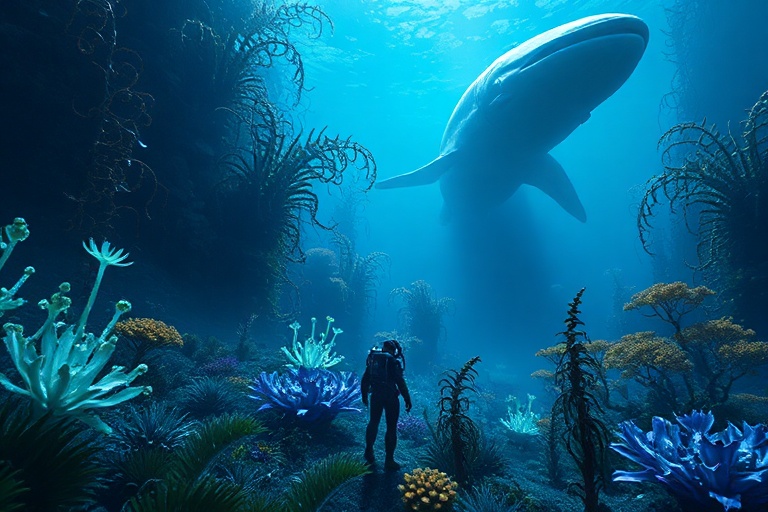
How Subnautica Games Redefined Survival Gaming Worldwide
Since its release in 2018, Subnautica has redefined the survival genre in gaming, immersing players in an alien underwater world where every breath counts and the unknown lurks beyond every reef. Developed by Unknown Worlds Entertainment, this open-world survival game drops players onto an uncharted ocean planet with nothing but a damaged spacesuit and the will to survive. Its sequel, Subnautica: Below Zero, expanded the narrative and refined the mechanics, further cementing the franchise’s reputation as a masterclass in atmospheric storytelling and environmental design.
The games have resonated globally, not just for their gameplay but for their ability to evoke a sense of awe and isolation. Players from Tokyo to Toronto have marveled at the game’s handcrafted biomes, from kelp forests to crushing abyssal trenches. The franchise’s success reflects a broader cultural fascination with exploration and the unknown, themes that transcend borders and languages.
The Evolution of Survival Gameplay
Subnautica stands apart from typical survival games by eliminating arbitrary objectives in favor of organic progression. Players must manage oxygen, temperature, and hunger while navigating a hostile environment. The game’s genius lies in its pacing: early sections teach basic survival through trial and error, while later stages reward curiosity with breathtaking discoveries. This structure mirrors real-world exploration, where patience and preparation often determine success.
Globally, survival games have surged in popularity, with titles like Rust and The Forest dominating player bases. However, Subnautica distinguishes itself through its underwater setting, a choice that transforms survival mechanics into a uniquely claustrophobic experience. The pressure of the deep, the eerie silence, and the sudden appearance of leviathans create an unparalleled tension that resonates across cultures. In Japan, where horror and survival games have deep roots, Subnautica has been praised for its psychological dread, while Western audiences often highlight its visual splendor.
- Resource scarcity: Players scavenge derelict ships and ruins for materials, mirroring real-life survival scenarios.
- Base-building: Constructing underwater habitats teaches spatial planning and risk assessment.
- Narrative integration: Survival isn’t just about mechanics—it’s tied to uncovering the planet’s mysteries.
The sequel, Subnautica: Below Zero, introduced new mechanics like vehicle upgrades and a more structured story while retaining the original’s core tension. This evolution reflects a global trend in game design, where sequels often refine rather than reinvent. Yet, Below Zero also expanded the franchise’s reach by incorporating more emotional storytelling, a choice that resonated with players in Europe and North America alike.
Cultural Impact and Global Reception
Subnautica’s influence extends beyond gaming circles. Its success on platforms like Technology and Entertainment sections has sparked discussions about the role of immersion in modern media. Critics in South Korea and Germany have lauded the game for its environmental themes, drawing parallels to real-world ocean conservation efforts. Meanwhile, educators in Australia have used Subnautica to teach students about marine biology, proving its versatility as a cultural touchstone.
The franchise’s global appeal is evident in its player demographics. Data from Steam and console platforms shows strong engagement from North America, Europe, and East Asia, with particularly high interest in countries with rich gaming traditions like Japan and South Korea. The games’ lack of reliance on text-heavy exposition makes them accessible to non-English speakers, further broadening their audience.
In Latin America, where gaming culture is rapidly growing, Subnautica has been celebrated for its accessibility and replayability. Streaming platforms like Twitch have amplified this reach, with creators in Brazil and Mexico showcasing the game’s most harrowing moments to millions of viewers. This grassroots promotion has helped the franchise thrive in regions where AAA titles often struggle to gain traction.
Design Philosophy: Why It Works Across Borders
The success of Subnautica can be attributed to its meticulous design philosophy, which prioritizes player agency and environmental storytelling. Unlike many survival games that rely on punishing difficulty, Subnautica encourages experimentation. Players can choose to craft weapons, build bases, or simply explore, and the game adapts to their choices. This flexibility has made it a favorite among casual and hardcore gamers alike.
Visually, the game’s handcrafted biomes are a testament to the power of environmental design. From the bioluminescent caves of Below Zero to the crushing darkness of the Subnautica Leviathan’s domain, each area feels distinct and alive. This attention to detail has drawn comparisons to films like Avatar and The Abyss, further cementing the franchise’s cultural relevance.
Technically, Subnautica pushes hardware limits with its dynamic lighting, particle effects, and physics simulations. This commitment to visual fidelity has earned it accolades in gaming communities worldwide, from modders in the U.S. to console players in Europe. The game’s modding community has also played a key role in its longevity, with creators adding new biomes, creatures, and even entire storylines.
The Future of Subnautica and Survival Games
With rumors of a third entry in the franchise swirling, fans are left to wonder what Unknown Worlds Entertainment will do next. Given the success of Below Zero, a return to the planet of 4546B seems likely, though a prequel set in a different ocean world could offer fresh challenges. Whatever the case, the franchise’s legacy is secure as a benchmark for survival game design.
Globally, survival games continue to evolve, with titles like Valheim and The Long Dark pushing the genre forward. However, Subnautica remains a touchstone for what the genre can achieve. Its blend of exploration, storytelling, and environmental design has set a new standard, one that developers worldwide are still trying to match.
For players, the appeal of Subnautica lies in its ability to transport them to a world where every decision matters. Whether you’re a veteran gamer or a newcomer to the genre, the franchise offers an experience that is as rewarding as it is challenging. As gaming continues to grow as a global medium, Subnautica stands as a shining example of how a well-crafted game can transcend borders and captivate audiences everywhere.
For those looking to dive deeper into survival games or explore other immersive titles, be sure to check out Dave’s Locker Gaming section, where you’ll find reviews, news, and community discussions tailored to every type of player.