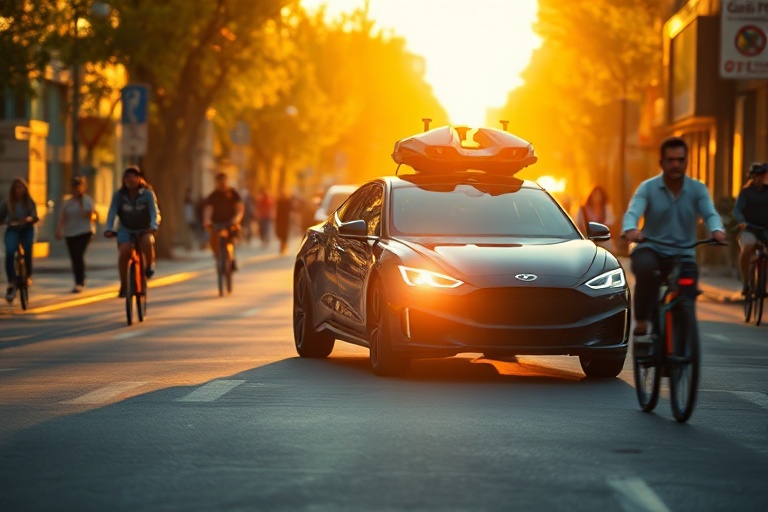
The automotive industry stands at the precipice of a revolution. Self-driving cars, once a futuristic fantasy confined to sci-fi films, are now a tangible reality reshaping how we think about transportation. Yet, this technological leap is not without its complexities. As autonomous vehicles inch closer to mainstream adoption, they bring with them a host of ethical, regulatory, and practical challenges that demand careful consideration.
Companies like Tesla, Waymo, and Cruise have already logged millions of miles on public roads, demonstrating the potential of AI-driven mobility. But the journey from prototype to widespread use is fraught with hurdles. What does the current landscape look like, and where is this technology headed?
The Current State of Autonomous Driving Technology
Today’s self-driving cars rely on a combination of sensors, cameras, radar, and advanced machine learning algorithms to interpret their surroundings. These systems process vast amounts of data in real time, enabling vehicles to make split-second decisions about speed, direction, and obstacle avoidance. Yet, despite these advancements, fully autonomous vehicles—those capable of operating without human intervention—remain a rarity.
Most commercially available systems, such as Tesla’s Autopilot and GM’s Super Cruise, fall under Level 2 or Level 3 automation, meaning they can handle certain driving tasks but still require human oversight. True Level 4 or Level 5 autonomy, where a car can drive itself under all conditions without any human input, is still years away from widespread deployment.
The challenges are multifaceted. Weather conditions like heavy rain or snow can disrupt sensor performance, while unpredictable human behavior on the road poses a constant challenge. Additionally, the ethical dilemma of programming vehicles to make life-and-death decisions in unavoidable accident scenarios remains unresolved.
Key Milestones in Self-Driving Car Development
- 2004: DARPA’s Grand Challenge sparks early interest in autonomous vehicle research.
- 2012: Nevada becomes the first state to issue a license for a self-driving car.
- 2016: Tesla’s Autopilot system debuts, offering advanced driver-assistance features.
- 2020: Waymo launches a fully autonomous ride-hailing service in Phoenix, Arizona.
- 2023: Cruise and Waymo expand operations, facing both regulatory scrutiny and public skepticism.
The Broader Implications of Autonomous Vehicles
The rise of self-driving cars extends far beyond convenience—it could fundamentally alter urban planning, public transportation, and even societal norms. One of the most significant potential benefits is the reduction in traffic accidents, which claim over a million lives globally each year. Autonomous vehicles, proponents argue, could drastically lower collision rates by eliminating human error, the leading cause of crashes.
Economic ripple effects are also inevitable. The trucking industry, for instance, could see a seismic shift as autonomous semi-trucks reduce labor costs and improve efficiency. However, this transition risks displacing millions of professional drivers, necessitating workforce retraining programs and social safety nets.
Environmental considerations add another layer of complexity. Electric autonomous vehicles could reduce emissions, but increased ride-sharing and empty miles traveled (vehicles repositioning without passengers) might counteract some gains. Policymakers and manufacturers must collaborate to ensure sustainability remains a priority.
The Regulatory and Ethical Dilemmas
Perhaps the most contentious aspect of self-driving cars is the regulatory landscape. Governments worldwide are grappling with how to balance innovation with safety. The absence of standardized federal guidelines in the U.S. has led to a patchwork of state laws, creating legal ambiguities for companies testing autonomous systems.
Ethically, the “trolley problem” looms large. If a self-driving car must choose between swerving into a pedestrian or maintaining course and risking the passenger’s life, how should it be programmed? These hypothetical scenarios highlight the need for transparent ethical frameworks that the public can trust.
Public perception further complicates adoption. High-profile accidents involving autonomous vehicles, such as Uber’s 2018 fatal crash in Arizona, have fueled skepticism. While these incidents are rare, they underscore the importance of rigorous testing and transparent communication from companies developing the technology.
What’s Next for Self-Driving Cars?
The path forward for autonomous vehicles is not a straight line but a series of incremental advancements. Short-term goals include expanding geofenced autonomous ride-hailing services in major cities, improving sensor reliability, and refining AI decision-making algorithms. Over the long term, fully autonomous vehicles may become the norm, but only if regulatory frameworks, public trust, and technological reliability align.
For consumers, the transition will likely be gradual. Hybrid models—where cars offer increasing levels of autonomy—may dominate the market before full autonomy becomes viable. Meanwhile, cities will need to adapt infrastructure to accommodate self-driving cars, from redesigned traffic systems to dedicated lanes and charging stations.
One thing is certain: the self-driving revolution is underway, and its impact will be felt across industries, economies, and daily life. The question is not whether autonomous vehicles will dominate the roads, but how society will adapt to this transformative technology.
For those eager to stay updated on the latest developments in automotive innovation, Dave’s Locker Technology section offers comprehensive coverage. Additionally, our Automotive category provides deeper insights into the evolving landscape of vehicle technology.