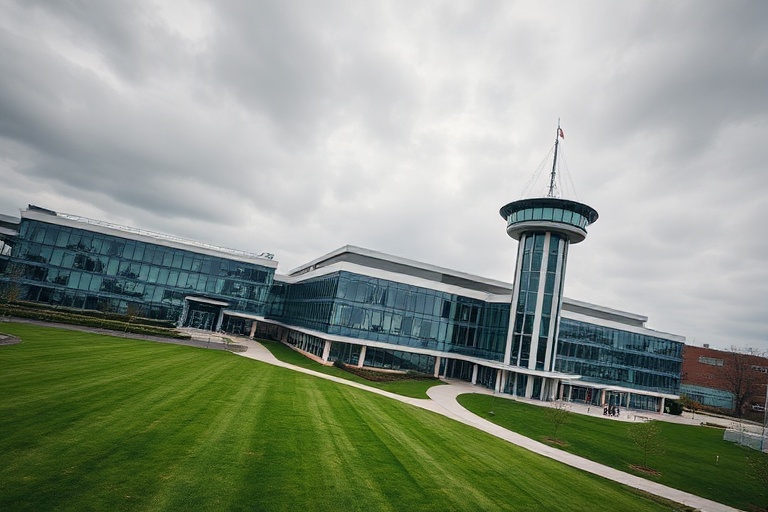
Cranfield University: A Leader in Engineering and Global Research
Nestled in the English countryside just 50 miles northwest of London, Cranfield University has quietly cultivated a reputation as one of the world’s premier postgraduate institutions. While its name may not carry the same immediate recognition as older universities like Oxford or Cambridge, Cranfield’s specialized focus on science, engineering, and technology has positioned it as a critical player in addressing some of the 21st century’s most pressing challenges.
The university’s origins trace back to 1946, when it was founded as the College of Aeronautics. Over the decades, it has evolved from a niche aerospace training center into a multidisciplinary research powerhouse, now home to over 5,000 students from more than 100 countries. What sets Cranfield apart is its unconventional approach to higher education—one that emphasizes industry collaboration, hands-on research, and real-world problem-solving over traditional academic structures.
A Unique Educational Model
Unlike most universities, Cranfield operates without an undergraduate program. Instead, it dedicates its resources entirely to master’s and doctoral candidates, along with professional development courses for industry leaders. This focused mission allows the university to maintain close ties with businesses, governments, and research institutions worldwide.
The university’s campus is a blend of cutting-edge research facilities and historic charm. The iconic Cranfield Innovation Centre, for example, houses startups and spin-offs from the university’s research, while the National Flying Laboratory Centre operates a fleet of aircraft equipped for in-flight data collection—a testament to Cranfield’s aviation heritage. These resources aren’t just for show; they provide students with unparalleled opportunities to engage in applied research that directly influences industries ranging from aerospace to healthcare.
Cranfield’s emphasis on industry integration is perhaps its most defining feature. The university’s partnerships span sectors like defense, energy, automotive, and agriculture, ensuring that its research remains relevant and impactful. For instance, its work with Rolls-Royce on jet engine efficiency has led to measurable reductions in fuel consumption and emissions, while collaborations with the UK’s National Health Service have advanced medical device technologies.
Key Strengths of Cranfield University
- Specialized Expertise: Cranfield focuses exclusively on postgraduate education and research, allowing it to excel in fields like aerospace, defense, and sustainability.
- Industry Collaboration: Over 80% of research projects involve external partners, bridging the gap between academia and real-world application.
- Global Reach: With students and alumni in more than 100 countries, Cranfield’s influence extends far beyond its Bedfordshire campus.
- State-of-the-Art Facilities: From wind tunnels to medical simulation labs, Cranfield provides resources typically found only in large corporations or government agencies.
Research That Shapes the Future
Cranfield’s research output is as diverse as it is influential. The university is home to several globally recognized research centers, including the Cranfield Water Science Institute, which develops technologies for water purification in developing nations, and the Centre for Competitive Creative Design, which explores sustainable manufacturing processes.
One of Cranfield’s most notable contributions lies in its work on climate resilience. The university’s researchers have pioneered methods for monitoring carbon emissions using satellite data, while its agricultural programs have introduced drought-resistant crop varieties to farmers in sub-Saharan Africa. These efforts underscore Cranfield’s commitment to using science as a tool for social and environmental progress.
In the realm of aviation, Cranfield has long been a leader in aircraft design and safety. The university’s crash test facility is one of the few in Europe capable of simulating high-speed impacts, providing critical data for aircraft manufacturers and regulatory bodies. Meanwhile, its work on unmanned aerial vehicles (UAVs) has applications in everything from disaster relief to precision agriculture.
But Cranfield’s impact isn’t limited to technical fields. The university’s School of Management is consistently ranked among the top business schools in the UK, offering programs that blend traditional MBA curricula with a focus on innovation and sustainability. Graduates from this program often go on to lead multinational corporations or launch their own ventures, further amplifying Cranfield’s influence.
The Broader Implications of Cranfield’s Model
Cranfield’s success raises important questions about the future of higher education. In an era where universities are often criticized for being disconnected from industry needs, Cranfield’s model offers a compelling alternative. By prioritizing applied research and direct industry engagement, the university demonstrates how academia can remain relevant in a rapidly changing world.
This approach also highlights the growing importance of specialized institutions. While traditional universities offer broad-based education, institutions like Cranfield fill a critical niche by providing deep expertise in high-demand fields. This is particularly relevant in sectors like engineering and technology, where rapid advancements require continuous innovation and adaptation.
Moreover, Cranfield’s global reach underscores the importance of international collaboration in solving complex problems. Whether through joint research projects or international student exchanges, the university’s work fosters cross-cultural understanding and knowledge sharing—a necessity in an interconnected world.
However, Cranfield’s model is not without its challenges. The university’s narrow focus on postgraduate education limits its accessibility to undergraduate students, which may deter some prospective applicants. Additionally, its heavy reliance on industry funding could potentially influence research priorities, raising concerns about academic independence.
Despite these challenges, Cranfield’s contributions to society are undeniable. From advancing aviation safety to developing sustainable agricultural practices, the university’s work has far-reaching implications that extend well beyond its campus. As the world grapples with challenges like climate change, energy scarcity, and global pandemics, institutions like Cranfield will play an increasingly vital role in shaping the solutions of tomorrow.
Why Cranfield Matters Today
In a higher education landscape dominated by large, generalist universities, Cranfield stands out as a model of specialization and industry integration. Its success demonstrates that academic excellence is not solely the domain of institutions with centuries-old traditions. Instead, it can be achieved through targeted investment, strategic partnerships, and a relentless focus on real-world impact.
For students seeking a graduate education that bridges the gap between theory and practice, Cranfield offers an unparalleled experience. For researchers looking to collaborate with industry leaders, the university provides access to resources and expertise that are hard to find elsewhere. And for society at large, Cranfield’s work serves as a reminder of the power of education to drive innovation and progress.
As the world continues to evolve, institutions like Cranfield will become even more critical. In fields where rapid technological advancement outpaces traditional education models, specialized institutions like Cranfield will lead the charge in developing the skills and knowledge needed to tackle tomorrow’s challenges. Whether through cutting-edge aerospace research or sustainable development initiatives, Cranfield is proving that higher education can be both rigorous and relevant—capable of making a difference in the world.
For those interested in exploring Cranfield’s programs or learning more about its research, the university’s website offers a wealth of resources. Prospective students can also connect with alumni networks to gain insights into the unique opportunities available at this distinctive institution.
Explore more about higher education and its evolving role in society by visiting our Education and Technology categories.