Why the Carnival Spirit Endures Across Cultures and Centuries
What Defines the Carnival Spirit Across Continents
The carnival spirit is more than just colorful costumes and rhythmic beats—it is a living expression of cultural identity, resilience, and collective joy. From the sun-soaked streets of Rio de Janeiro to the historic plazas of Venice, carnivals around the world share a common pulse: they are moments when communities step outside the ordinary to celebrate life, heritage, and creativity.
These celebrations often trace their roots to ancient traditions. Many carnivals evolved from pagan festivals marking the end of winter or the onset of harvest. Over centuries, they absorbed religious influences, particularly around Lent in Christian Europe, transforming into vibrant pre-fasting rituals. Today, each carnival carries its own story—layered in history, faith, and social change.
The Caribbean: Where Rhythm and Resistance Collide
The Caribbean carnival, most famously in Trinidad and Tobago, is a dynamic fusion of African, European, and indigenous influences. After emancipation, formerly enslaved Africans transformed colonial masquerade balls into defiant, rhythm-driven street festivals. The result? A powerful expression of freedom and cultural reclamation.
Key elements define the Caribbean carnival spirit:
- Soca Music: A high-energy genre born from calypso and soul, designed to move crowds in the sweltering heat.
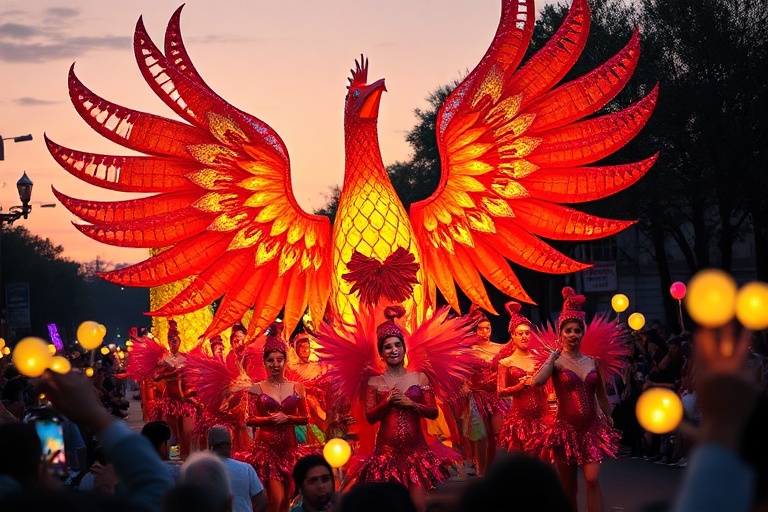
- Masquerade (Mas): Elaborate costumes that tell stories, often critiquing social or political issues through satire and symbolism.
- Steelpan Bands: Handcrafted instruments made from oil drums, creating melodies that echo through the streets at dawn on Carnival Monday.
- J’ouvert: The pre-dawn opening act, where revelers cover themselves in paint, mud, or oil, embodying a raw, primal energy.
Carnival in Trinidad isn’t just a festival—it’s a cultural lifeline. Schools close. Businesses pause. Generations gather, not just to dance, but to affirm identity. As one elder masquerader put it, “Carnival is our heartbeat. If we lose it, we lose ourselves.”
Europe’s Timeless Masquerades: From Venice to Basel
While Caribbean carnivals pulse with modern rebellion, Europe’s celebrations often preserve ancient elegance and secrecy. Venice’s Carnevale is perhaps the most iconic, where masked figures drift through cobblestone alleys under flickering lantern light. Originating in the 12th century, it was designed to blur social hierarchies—nobles and commoners alike could hide behind anonymity and flirt, scheme, or create anonymously.
Venice’s masks, once tools of intrigue, are now art forms: delicate porcelain, gilded leather, and intricate lace. The spirit here is one of mystery and transformation. It’s less about collective euphoria and more about personal reinvention—stepping into a role, if only for a night.
Contrast that with Basel, Switzerland, where the three-day Fasnacht carnival is a marathon of music and craftsmanship. Gigantic lanterns depicting political satire are paraded through the night by brass bands playing oom-pah rhythms. Here, the carnival spirit is communal, participatory, and deeply intellectual. Lyrics are written in local dialects; floats are hand-built over months. It’s a living newspaper set to music.
What ties these European celebrations together is their role as cultural archives. They preserve not only artistry but also dissent. In times of censorship or upheaval, carnivals have historically been safe spaces for critique. Even today, in Venice and Basel, the masked figures whisper truths that might otherwise go unheard.
Brazil’s Global Stage: Rio’s Carnival as a Cultural Ambassador
No carnival captures global imagination like Rio de Janeiro’s. Since the 18th century, when Portuguese immigrants brought entrudo street games, Rio’s Carnival has grown into a multi-billion-dollar spectacle watched by millions worldwide. It is both a local tradition and a global brand—exporting Brazilian culture, samba, and joy to screens from Tokyo to Los Angeles.
The Rio carnival is a carefully orchestrated performance. Samba schools—social clubs with year-long rehearsals—compete in the Sambadrome, their floats and costumes judged on creativity, rhythm, and narrative. The competition is fierce, but so is the community pride. Each school represents a neighborhood, a history, a struggle.
- Mangueira: A school rooted in Afro-Brazilian identity, known for vibrant green-and-pink costumes and songs that celebrate Black heroes.
- Portela: One of the oldest, with a legacy of innovation in costume design and social themes.
- Beija-Flor: Famous for its theatrical flair, often interpreting global myths or environmental crises.
But Rio’s carnival is more than the parade. The street parties—blocos—bring the spirit into everyday life. From the bohemian streets of Santa Teresa to the beaches of Copacabana, strangers become friends under the sway of samba. The energy is infectious. The message is clear: joy is not a luxury—it’s a right.
This cultural export has shaped perceptions of Brazil worldwide. Yet, it’s also sparked debate. Some argue that commercialization risks diluting the carnival’s grassroots soul. Others see it as a necessary evolution—using global platforms to uplift marginalized voices. Either way, Rio’s carnival remains a benchmark, influencing celebrations from New Orleans to London.
Carnival as a Mirror of Society
Across the globe, carnival serves as a mirror. It reflects social hierarchies, historical wounds, and collective dreams. In Haiti, Kanaval in Port-au-Prince blends Vodou rhythms with political protest, turning grief into art. In Germany, Cologne’s Karneval embraces satire with parades mocking politicians. In Notting Hill, London, the Caribbean carnival celebrates diasporic identity, a defiant reclaiming of space.
What makes the carnival spirit endure is its adaptability. It absorbs new influences—electronic beats in Jamaica’s Bacchanal, digital floats in digital parades—while staying rooted in tradition. It survives pandemics, economic crises, and cultural erasure. Why? Because it answers a deep human need: to gather, to create, to feel alive.
Perhaps the carnival spirit is best summed up not in grand spectacles, but in small moments. A grandmother stitching a costume late into the night. A child’s first masquerade mask. A stranger offering a cold drink to a weary dancer. These are the threads that weave the fabric of celebration.
Why Carnival Still Matters Today
In an increasingly fragmented world, carnivals remind us of our shared humanity. They are spaces where joy is not performative but essential. Where history is not buried but danced upon. Where identity is not fixed but fluid.
As societies grapple with polarization and isolation, the carnival spirit offers a blueprint: come together, celebrate difference, and affirm life. Whether through samba, satire, or silent masks, the message is universal: joy is revolutionary.
So when the music starts and the colors swirl, remember—you’re not just watching a carnival. You’re witnessing the oldest form of cultural survival: the art of collective joy.
To explore more global traditions that blend rhythm and resistance, visit our Culture section. For deeper analysis on how music shapes identity, check out our feature on Music.