Founding Principles and Historical Significance
The Yale School of Medicine, established in 1810, stands as one of the oldest and most prestigious medical institutions in the United States. Its origins trace back to the New Haven Medical Society, which sought to formalize medical education in a region hungry for scientific advancement. Unlike many contemporary schools that emerged from European models, Yale developed its own distinctive approach, blending rigorous scientific training with humanistic values—a tradition that persists today.
The school’s early curriculum emphasized bedside teaching and hands-on clinical experience, a radical departure from the lecture-heavy models of the time. This emphasis on practical learning laid the groundwork for Yale’s reputation as a pioneer in medical education reform. By the late 19th century, the school had already begun integrating laboratory science into its programs, a move that positioned it at the forefront of the Flexner Report era, which reshaped medical education nationwide.
The Flexner Report and Institutional Evolution
The 1910 Flexner Report, which evaluated and standardized medical education in the U.S., had a profound impact on Yale. While some institutions struggled to adapt, Yale thrived under the new requirements, expanding its research facilities and faculty. The report’s call for higher academic standards aligned perfectly with Yale’s existing trajectory, accelerating its growth into a research powerhouse.
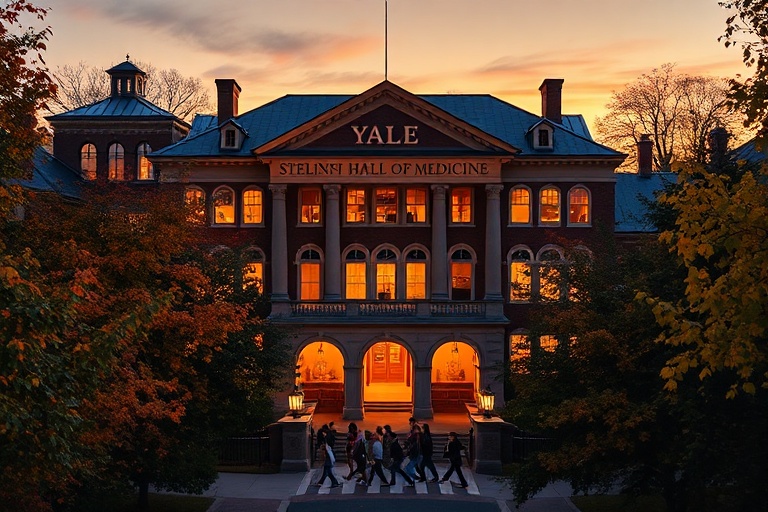
This period also saw the school’s first major fundraising campaign, which enabled the construction of the Sterling Hall of Medicine in 1925. The building, funded by a $10 million gift from John W. Sterling, became a symbol of Yale’s commitment to medical innovation and remains a cornerstone of its campus today.
Pioneering Research and Breakthroughs
Yale School of Medicine has long been synonymous with groundbreaking research. Its faculty and alumni have contributed to some of the most significant medical advancements of the 20th and 21st centuries. From the development of the first successful chemotherapy treatment for childhood leukemia in the 1950s to the discovery of the genetic basis of diseases like cystic fibrosis and Fragile X syndrome, Yale’s impact on global health is undeniable.
Neuroscience and Mental Health Innovations
Yale has played a pivotal role in neuroscience, particularly in understanding and treating mental health disorders. The school’s Child Study Center, founded in 1911, was among the first institutions to approach child psychology through a scientific lens. Today, Yale’s Department of Psychiatry is a leader in research on depression, schizophrenia, and addiction, with faculty members like Dr. John Krystal advancing our understanding of how ketamine can rapidly alleviate severe depression.
The university’s collaboration with the Yale New Haven Hospital has also led to the creation of the Yale Center for Clinical Investigation, which bridges the gap between laboratory discoveries and patient care. This translational research model ensures that scientific breakthroughs are rapidly applied to real-world medical challenges.
Global Health Initiatives
Beyond its domestic contributions, Yale School of Medicine has made significant strides in global health. The school’s Office of Global Health works in over 50 countries, focusing on issues like infectious disease control, maternal health, and healthcare access. Programs such as the Yale Global Health Leadership Institute train future leaders in health policy and management, equipping them to tackle systemic challenges in low-resource settings.
One notable example is Yale’s partnership with the World Health Organization (WHO) to combat antimicrobial resistance. Researchers at Yale have identified novel strategies to slow the spread of resistant bacteria, a growing threat to global health security. These efforts underscore Yale’s commitment to addressing health disparities on a worldwide scale.
Cultural Influence and Educational Philosophy
Yale School of Medicine’s influence extends beyond research and clinical practice; it has shaped the very culture of medical education. The school’s emphasis on interdisciplinary learning encourages students to explore the intersections of medicine with fields like ethics, law, and public policy. This holistic approach is reflected in its curriculum, which includes mandatory courses in medical humanities and social medicine.
Humanism in Medicine
The Yale Program in Medical Ethics, founded in 1985, remains a model for integrating ethical considerations into medical training. Courses like “Narrative Medicine” teach students to view patients as individuals with unique stories, fostering empathy and improving patient outcomes. This philosophy has influenced medical schools worldwide, from Harvard to institutions in Europe and Asia.
The school’s commitment to humanism is also evident in its admissions process, which values diversity in backgrounds and perspectives. Yale actively recruits students from non-traditional paths, including those with degrees in the humanities or social sciences, recognizing that diverse viewpoints enrich the medical field.
Notable Alumni and Their Contributions
Yale School of Medicine has produced some of the most influential figures in modern medicine. Its alumni include Nobel laureates, pioneers in public health, and leaders in medical education. Below are a few standout examples:
- Dr. Joseph E. Murray (Class of 1943): The first surgeon to perform a successful organ transplant (kidney) in 1954, Murray received the Nobel Prize in Physiology or Medicine in 1990 for his groundbreaking work in transplantation biology.
- Dr. Irwin M. Arias (Class of 1959): A leader in liver disease research, Arias discovered the genetic basis of several metabolic disorders, including Rotor syndrome. His work has saved countless lives through improved diagnostic techniques.
- Dr. Vivian Pinn (Class of 1967): The first African American woman to chair a major academic department of pathology in the U.S., Pinn later became the first director of the Office of Research on Women’s Health at the NIH, advocating for gender equity in medical research.
- Dr. Paul Farmer (Class of 1990): Co-founder of Partners In Health, Farmer revolutionized global health delivery by treating infectious diseases in resource-poor settings. His work in Haiti, Rwanda, and Peru has inspired a generation of global health practitioners.
These alumni exemplify Yale’s tradition of producing leaders who not only excel in their fields but also drive societal change. Their careers highlight the school’s dual focus on academic excellence and social responsibility.
Challenges and Future Directions
Despite its storied history, Yale School of Medicine faces modern challenges that require innovative solutions. One of the most pressing is the rising cost of medical education. Tuition at Yale, like many top-tier institutions, has soared in recent decades, raising concerns about accessibility and student debt. In response, the school has increased financial aid packages and launched initiatives to reduce the financial burden on students.
Addressing Healthcare Disparities
Another critical challenge is the persistent issue of healthcare disparities in the U.S. and globally. Yale is tackling this through its Center for Community Engagement and Health Equity, which partners with local organizations to improve health outcomes in underserved communities. Projects like the Yale New Haven Hospital’s “Eat Well” program, which combats food insecurity, demonstrate the school’s commitment to addressing root causes of poor health.
The Role of Technology in Medical Education
Technology is reshaping medical education, and Yale is at the forefront of this transformation. The school has integrated virtual reality (VR) into its anatomy curriculum, allowing students to explore the human body in immersive detail. Additionally, Yale’s collaboration with tech companies has led to the development of AI-driven diagnostic tools, which are being tested in clinical settings.
Looking ahead, Yale is also exploring the potential of personalized medicine, leveraging genomic data to tailor treatments to individual patients. This approach aligns with the school’s long-standing emphasis on precision and innovation in medicine.
Conclusion: A Legacy of Impact and a Vision for the Future
Yale School of Medicine’s journey from a small New England institution to a global leader in medical education and research is a testament to its enduring vision. Founded on principles of scientific rigor and humanism, the school has consistently adapted to meet the evolving needs of society, from the Flexner Report era to the challenges of the 21st century.
Its alumni, research breakthroughs, and educational innovations have left an indelible mark on the medical world. As Yale continues to push the boundaries of what is possible in healthcare, it remains a beacon of excellence, inspiring future generations of physicians, researchers, and public health leaders. The school’s commitment to addressing global health disparities, leveraging technology, and fostering interdisciplinary collaboration ensures that its influence will endure for decades to come.
For those interested in exploring similar institutions that blend tradition with innovation, Dave’s Locker’s Education section offers insights into other top medical schools and their unique contributions to the field.