Backrooms Movie: From Internet Myth to Global Horror Phenomenon
The Backrooms movie phenomenon didn’t begin with a Hollywood greenlight or a studio pitch. It emerged from the collective imagination of internet users who transformed an eerie concept into a cultural touchstone. What started as a simple creepypasta about endless, yellow-lit office spaces soon evolved into a multimedia sensation, culminating in entertainment projects that blurred the line between online myth and cinematic reality.
The Backrooms mythos taps into something primal—the fear of the unknown, the uncanny spaces we’ve all walked through without noticing. It’s not just about horror; it’s about the unsettling realization that reality might have hidden layers we never consider. This psychological undercurrent explains why the Backrooms resonated so deeply across different cultures, adapting seamlessly into local fears and urban legends worldwide.
The Origins: From Creepypasta to Global Obsession
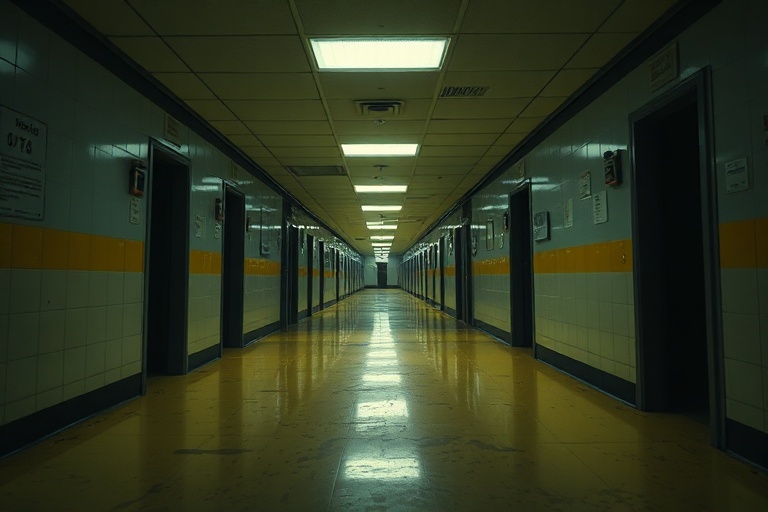
The Backrooms concept first appeared on 4chan’s /x/ board in 2018, where an anonymous user described a “non-Euclidean space” filled with the hum of fluorescent lights and the smell of wet carpet. The post included a short, looping video clip that showed a hallway stretching into infinity, punctuated by the occasional glitch or flicker. Within days, the idea spread to Reddit, YouTube, and Discord, where users expanded the lore with new levels, entities, and survival strategies.
Unlike traditional horror franchises, the Backrooms grew organically. Fans created gaming mods, ARGs (alternate reality games), and even ASMR experiences to deepen the immersion. The lack of a centralized creator allowed the myth to evolve in unpredictable ways, ensuring it remained fresh and relevant. By 2020, the Backrooms had infiltrated mainstream consciousness, with memes, TikTok trends, and fan art keeping the concept alive long after its initial surge.
This decentralized growth is a hallmark of internet-born horror. Unlike studio-driven franchises, which rely on polished production values and marketing campaigns, the Backrooms thrived on ambiguity and user participation. It was—and remains—collectively owned by its audience, a rare feat in the digital age.
The Cultural Ripple Effect: How the Backrooms Adapted Worldwide
The Backrooms’ universal themes made it easily translatable across cultures. In Japan, the concept merged with urban legends like the “Hako-onna” (box woman) or the “Kodokushi” (lonely death) phenomenon, creating localized versions where the Backrooms became a purgatory for those who died alone. Meanwhile, in Brazil, the Backrooms intersected with the “Sala Preta” (black room) myth, a space where people disappear after staring too long at a mirror.
In Europe, the Backrooms took on a more bureaucratic tone, with some users describing it as an endless office complex where paperwork never ends. This version resonated in countries like Germany and Sweden, where the mundane horror of endless bureaucracy is a shared cultural experience. The adaptability of the Backrooms—shifting from a simple horror trope to a multifaceted myth—demonstrates its power as a modern folklore vehicle.
Even in countries with less internet penetration, the Backrooms found a foothold. In India, for example, the concept was repurposed into local horror stories where the Backrooms became a space haunted by spirits of the dead, reflecting the country’s rich tradition of ghost lore. This cross-cultural fertilization proved that the Backrooms were more than just a meme—they were a new form of global storytelling.
The Challenges of Bringing the Backrooms to the Screen
Given the Backrooms’ viral success, it was inevitable that Hollywood would attempt to capitalize on it. In 2023, a Kickstarter campaign for an official Backrooms film raised over $5 million, making it one of the most-funded horror projects in crowdfunding history. However, the transition from internet myth to cinematic reality has not been without controversy.
Fans have expressed concerns about the commercialization of the Backrooms, fearing that a studio production might strip away the mystery that made the concept so compelling. The Backrooms’ strength lies in its ambiguity—a place that is simultaneously familiar and alien, comforting and terrifying. A big-budget film risks over-explaining the lore, turning the unknown into something mundane.
There’s also the challenge of visualizing the Backrooms. The original concept relied on low-budget videos and text descriptions to create its eerie atmosphere. Translating that into live-action footage without losing the unsettling vibe is a daunting task. Early test footage from the Kickstarter project received mixed reactions, with some praising the atmosphere and others criticizing the lack of scares.
Yet, the Backrooms’ transition to film also presents an opportunity. A well-made adaptation could introduce the concept to new audiences, ensuring its longevity. The key will be balancing the need for visual spectacle with the restraint that made the Backrooms so effective in its early days.
What’s Next for the Backrooms?
The Backrooms show no signs of disappearing. If anything, the concept is evolving in new directions. Independent filmmakers continue to produce Backrooms-inspired shorts, while video game developers experiment with Backrooms-themed games. The most recent trend is the rise of “Backrooms tourism,” where creators livestream themselves exploring user-generated Backrooms levels, often incorporating local folklore into the experience.
There’s also the question of what happens when the Backrooms inevitably inspire copycats. Already, similar internet myths like the “Smiling Man” or the “Reverse Wiki” have emerged, each borrowing from the Backrooms’ playbook. This raises an interesting question: Is the Backrooms a singular phenomenon, or is it the first of many internet-born horror concepts to achieve global recognition?
One thing is certain: the Backrooms have already left an indelible mark on internet culture. They represent a new era of storytelling, where the audience is as much a creator as the original author. Whether it remains a niche creepypasta or becomes a mainstream franchise, the Backrooms have already achieved something remarkable—they’ve turned fear into a shared global experience.
The Backrooms in Popular Culture: A Timeline
- 2018: The Backrooms origin post appears on 4chan’s /x/ board.
- 2019: Reddit’s r/backrooms community expands the lore, adding new levels and entities.
- 2020: YouTube creators begin producing Backrooms videos, including animated shorts and gameplay mods.
- 2021: The Backrooms inspire ARGs and interactive experiences, blurring the line between fiction and reality.
- 2022: TikTok trends and memes introduce the Backrooms to Gen Z audiences.
- 2023: A Kickstarter campaign for an official Backrooms film raises over $5 million.
- 2024: Independent game developers and filmmakers continue to explore the Backrooms mythos in new ways.
The Backrooms are more than just a horror story—they’re a testament to the power of collective imagination. In a world where mainstream entertainment often feels formulaic and predictable, the Backrooms offer something raw and unpredictable. They remind us that the most compelling stories aren’t always the ones with the biggest budgets or the most polished execution. Sometimes, the best stories are the ones we tell ourselves.