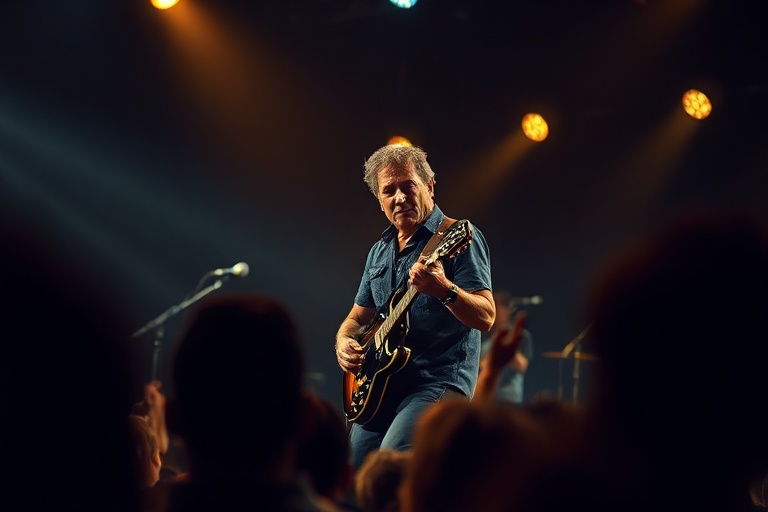
The curtain rose at Madison Square Garden on a chilly October evening, but the energy inside was anything but frigid. Bruce Springsteen and the E Street Band took the stage for another late-night show, proving once again why they remain one of rock’s most enduring acts. With no opening act and a full two-and-a-half-hour setlist, the night belonged entirely to Springsteen and his bandmates. What unfolded was a masterclass in live performance, blending decades-old anthems with surprising new selections.
The show kicked off with one of Springsteen’s most recognizable tracks, “The Rising,” a song that still feels urgent and vital even 20 years after its release. It set the tone for the evening: a mix of celebration, nostalgia, and the kind of grit that has defined Springsteen’s career from the beginning. The crowd—a mix of lifelong fans and younger listeners discovering his music for the first time—roared in approval, their voices merging into a single, powerful chorus.
A Setlist That Defied Expectations
What made this performance particularly noteworthy was the setlist’s balance between the expected and the unexpected. Springsteen has played Madison Square Garden dozens of times, and longtime fans know what to anticipate. Yet this night featured a few curveballs that kept even the most seasoned attendees on their toes.
“Thunder Road” opened the main set, a choice that felt both classic and fresh. The song’s opening lines—“The screen door slams, Mary’s dress waves”—sent shivers through the arena as Springsteen delivered them with the same urgency he did in 1975. Later in the set, he surprised the crowd with a rare performance of “Seeds,” a track from his 2020 album Letter to You. The song’s melancholic yet hopeful tone stood in stark contrast to the high-energy numbers that surrounded it, proving Springsteen’s ability to shift moods effortlessly.
The band was in top form, with Steven Van Zandt’s guitar work and Max Weinberg’s steady drumming providing the backbone for Springsteen’s raspy vocals. Patti Scialfa’s backing harmonies added depth to the performance, particularly on “Tenth Avenue Freeze-Out,” where her contributions were impossible to ignore. Even in his 70s, Springsteen’s stamina was remarkable, bounding across the stage with the same fire that defined his early days.
Standout Moments That Defined the Night
No Springsteen show is complete without a moment that stops the crowd in its tracks, and this performance delivered. Midway through the set, he launched into “Jungleland,” a song that has become a centerpiece of his live shows. The sax solo, played by Jake Clemons, was a highlight, its haunting melody echoing through the arena. Springsteen’s own guitar work on the song’s outro was equally impressive, a solo that felt both spontaneous and perfectly executed.
Another unforgettable moment came during “Backstreets,” a song often reserved for special occasions. The band slowed the tempo, allowing Springsteen to deliver the lyrics with a vulnerability that’s rare in his live performances. The crowd responded with a reverent silence, hanging on every word as if hearing the song for the first time.
The evening also featured a poignant cover of Tom Petty’s “American Girl,” a nod to Springsteen’s admiration for his late friend and fellow rock icon. The band stripped the song down to its essentials, letting the melody shine. It was a reminder of Springsteen’s ability to pay tribute without ever losing sight of his own voice.
The Crowd: A Sea of Generations
One of the most striking aspects of Springsteen’s late-night shows is the diversity of the audience. Grandparents in their 70s sang along to songs they grew up with, while teenagers discovered the magic of Born to Run for the first time. The crowd wasn’t just a fanbase; it was a community, united by a shared love of music that transcends age and background.
During “Dancing in the Dark,” the arena transformed into a dance floor, with fans young and old swaying to the beat. The song’s upbeat tempo and infectious energy made it the night’s unofficial anthem, a moment where the audience became as much a part of the performance as the band itself.
Springsteen’s banter between songs also played a key role in connecting with the crowd. He joked about the passage of time, referencing his age with self-deprecating humor while also expressing gratitude for the enduring support of his fans. “You’re still here,” he quipped at one point, a statement that drew laughter and applause. It was a reminder that his connection to the audience is as much about shared history as it is about the music.
Why Springsteen’s Late Shows Still Matter
In an era where streaming has made music more accessible than ever, live performances remain a sacred experience. Springsteen’s late-night shows, in particular, offer something rare: a chance to witness a living legend at the peak of his powers. There’s no autocorrect for live music, no algorithm to dictate the setlist. Every show is a gamble, a roll of the dice that could yield magic or miss a beat. But when it works—as it did on this night—the rewards are immeasurable.
For musicians, Springsteen’s longevity is a masterclass in adaptability. He hasn’t just survived the changing tides of the music industry; he’s thrived by staying true to his roots while embracing new sounds. His late shows are a testament to his refusal to rest on his laurels, a willingness to take risks that keeps his music fresh and relevant.
For fans, these performances are a pilgrimage, a chance to be part of something bigger than themselves. Whether it’s the first time hearing “Born in the U.S.A.” or the 50th time, the experience never loses its power. Springsteen’s music has always been about the stories we tell ourselves and the communities we build around them. A late-night show at Madison Square Garden is more than a concert; it’s a ritual.
What’s Next for Springsteen and the E Street Band?
As the night drew to a close with a rousing rendition of “Born to Run,” it was impossible not to wonder what’s next for Springsteen and his band. With rumors of new music swirling and a tour that shows no signs of slowing down, one thing is certain: the Boss isn’t going anywhere. His late-night shows are a reminder that rock ‘n’ roll isn’t dead—it’s just waiting for the next generation of fans to discover its power.
For those who missed this performance, take heart. Springsteen’s live shows are a reminder that great music never truly ends; it just waits for the next curtain call. And if you’re lucky enough to catch one of his late-night performances, prepare to be changed. That’s the magic of Bruce Springsteen.
For more on legendary live performances and the artists who define them, check out our Entertainment and Music categories on Dave’s Locker.