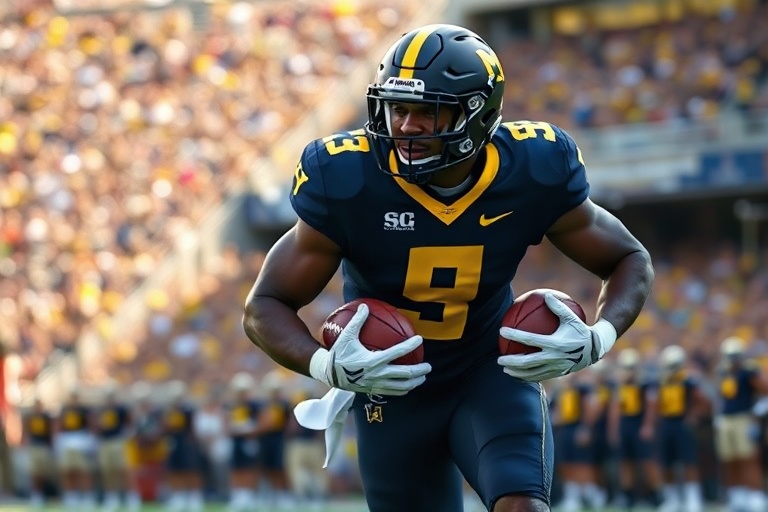
Charles Woodson Jr: Heisman Winner, Super Bowl Champion, NFL Legend
Charles Woodson Jr.: The Legacy of a Gridiron Icon
Charles Woodson Jr. carved his name into sports history long before he ever stepped onto an NFL field. Born on October 7, 1976, in Fremont, California, Woodson’s journey from a standout high school athlete to one of football’s most decorated defensive backs is a story of relentless determination and unmatched skill. His career spanned 18 seasons, during which he became the first and only player to win both the Heisman Trophy as a defensive back and a Super Bowl ring, cementing his place among the all-time greats.
Woodson’s impact extended beyond individual accolades. He redefined the role of a cornerback, blending physicality with football IQ in a way few could match. His ability to read quarterbacks, disrupt passing lanes, and deliver bone-jarring hits made him a nightmare for opposing offenses. As the NFL evolved, Woodson adapted, transitioning from a lockdown corner to a versatile defensive leader, proving his longevity in a league that often chews up players before their 40th birthdays.
The Making of a Heisman Winner
Woodson’s collegiate career at the University of Michigan was nothing short of legendary. Under head coach Lloyd Carr, he became the first primarily defensive player to win the Heisman Trophy in 1997, a testament to his dominance on the field. That season, he recorded 62 tackles, 15 passes defended, and seven interceptions, while also contributing as a punt returner with a 34.8-yard average. His versatility forced defenses to account for him in every facet of the game.
Woodson’s most iconic moment came in the 1997 game against Ohio State, where he famously hurdled an Ohio State player to complete a 37-yard punt return for a touchdown. The play became an instant highlight and symbolized his fearless playing style. That season, Michigan went 12-0 and won the national championship, with Woodson’s play earning him first-team All-American honors and the Jim Thorpe Award as the best defensive back in college football.
His college success set the stage for a professional career that would only add to his legend, but it also highlighted a rare blend of athleticism and instincts that few players possess. Woodson’s ability to elevate his game in critical moments became a hallmark of his career, a trait that would define his NFL tenure.
A Trailblazing NFL Career
Drafted fourth overall by the Oakland Raiders in 1998, Woodson wasted no time proving he belonged in the pros. His rookie season saw him record five interceptions and 84 tackles, earning him NFL Defensive Rookie of the Year honors. Over the next seven seasons in Oakland, he established himself as one of the league’s premier cover corners, earning four Pro Bowl selections and two first-team All-Pro nods.
Woodson’s tenure with the Raiders coincided with the team’s resurgence in the early 2000s. Playing in the shadow of the iconic “Tough Enough” mantra, he embodied the physical, in-your-face style that defined the Silver and Black. His leadership was instrumental in Oakland’s 2002 AFC Championship run, a season that culminated in a heartbreaking loss to the Tampa Bay Buccaneers in Super Bowl XXXVII. Despite the defeat, Woodson’s performance—including an interception in the game—solidified his reputation as an elite player.
In 2006, Woodson left Oakland for the Green Bay Packers, a move that would redefine the latter stages of his career. Green Bay, a franchise known for its storied history and passionate fanbase, provided Woodson with the platform to showcase his skills on a larger stage. His arrival coincided with a shift in the Packers’ defensive philosophy, one that emphasized versatility and adaptability. Woodson thrived in this environment, transitioning from a pure cornerback to a hybrid defensive back/safety role that maximized his football IQ and playmaking ability.
Woodson’s tenure in Green Bay was nothing short of spectacular. He earned four more Pro Bowl selections, was named NFL Defensive Player of the Year in 2009, and helped lead the Packers to victory in Super Bowl XLV. That championship made him one of only a handful of players to win both a Heisman and a Super Bowl, a feat that underscores his place in football immortality.
The Global Influence of Charles Woodson
Woodson’s impact transcended the borders of the United States, resonating with football fans worldwide. His career coincided with the NFL’s efforts to expand its global footprint, and Woodson became one of the league’s most recognizable ambassadors. His style, charisma, and success made him a figure of admiration in countries where American football was still growing in popularity, from Japan to Germany.
In an era where social media began to shape athletes’ public personas, Woodson embraced the platform to connect with fans on a personal level. His candid interviews, humorous social media posts, and unfiltered commentary on the state of the game endeared him to a new generation of sports enthusiasts. He became a voice for players, advocating for their rights and challenging the status quo in a league often criticized for its one-sided labor practices.
Woodson’s influence extended beyond the field into the cultural fabric of the sport. He represented a bridge between the old-school physicality of football and the modern, analytics-driven approach that began to take hold in the 2010s. His ability to adapt while maintaining his competitive edge made him a model for players transitioning into the latter stages of their careers.
The global appeal of Woodson’s career was further amplified by his appearances in international games, including the NFL International Series. These games not only showcased his talent to international audiences but also reinforced his status as a global icon of the sport. For many young athletes outside the United States, Woodson became a symbol of what was possible through hard work, dedication, and a relentless pursuit of excellence.
Life After Football: A Lasting Legacy
Woodson retired from the NFL in 2015 after 18 seasons, leaving behind a legacy that few can match. His post-football career has been equally impressive, as he transitioned into broadcasting, philanthropy, and business. Woodson joined ESPN as an analyst, bringing his insights and candor to the network’s coverage of college and professional football. His commentary is marked by a no-nonsense approach, often challenging conventional wisdom and offering fresh perspectives on the game.
Beyond broadcasting, Woodson has dedicated himself to philanthropic efforts, particularly in his hometown of Fremont, California. He founded the Charles Woodson Foundation, which focuses on empowering underserved youth through education, mentorship, and athletic programs. His commitment to giving back reflects the values instilled in him by his parents and coaches, who emphasized the importance of community and service.
Woodson has also ventured into business, leveraging his brand to launch successful ventures. His partnership with Nike on signature football cleats highlighted his influence in the sports apparel industry, while his appearances in commercials and endorsements have solidified his status as a marketable icon. Woodson’s business acumen demonstrates his ability to translate his on-field success into opportunities beyond the gridiron.
As he enters the next phase of his life, Woodson’s legacy continues to grow. He remains a sought-after speaker, mentor, and ambassador for the sport he loves. His story serves as an inspiration to athletes and non-athletes alike, proving that success is not just about talent but also about character, adaptability, and a commitment to making a difference.
For those who followed his career, Charles Woodson Jr. will always be remembered as one of the greatest defensive backs in NFL history. His journey from a small-town kid with big dreams to a Heisman winner, Super Bowl champion, and global icon is a testament to the power of perseverance and passion. As football continues to evolve, Woodson’s legacy serves as a reminder of what it means to leave an indelible mark on the game.
For fans seeking more on the evolution of defensive play in the NFL, visit our Sports category for deeper analysis and historical context. To explore the impact of college football legends on the professional game, check out our selection of articles in the Analysis section.