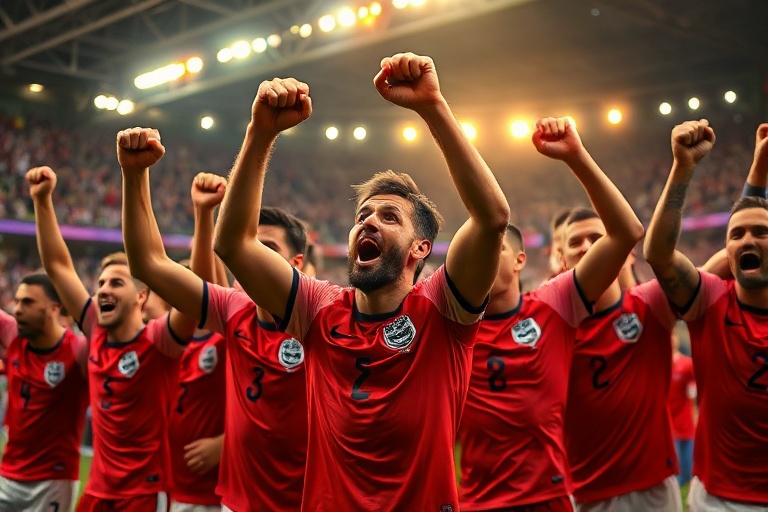
England’s relationship with the FIFA World Cup has been a rollercoaster of emotions—moments of exhilaration followed by years of frustration. The national team, often criticized for its defensive frailties and mental fragility, has nonetheless left an indelible mark on the tournament’s history. From the iconic 1966 victory to the near-misses of recent decades, England’s World Cup story is one of sporadic brilliance and persistent imperfection. This article explores the highs, lows, and pivotal turning points that have defined England’s journey in the world’s most prestigious football competition.
The Golden Era: 1966 and Beyond
No discussion of England’s World Cup history can begin without mentioning 1966. Hosted on home soil, the Three Lions claimed their first and only World Cup title under the leadership of Alf Ramsey. The final against West Germany remains one of football’s most dramatic encounters, decided by Geoff Hurst’s iconic hat-trick in extra time. That victory cemented England’s place in football folklore, but it also set a standard that would prove impossible to replicate in the immediate decades that followed.
The 1970 and 1982 World Cups saw England reach the quarter-finals and second group stage respectively, but the team struggled to progress further. The 1990 World Cup in Italy marked a turning point, with Bobby Robson’s side reaching the semi-finals—a run that included a dramatic penalty shootout victory over Cameroon in the quarter-finals. Though England fell to West Germany on penalties again, the campaign restored a sense of pride and belief that had been lacking for years.
Key Figures from England’s Golden Era
- Geoff Hurst – The only player to score a hat-trick in a World Cup final, Hurst remains a legend of English football.
- Bobby Charlton – A midfield maestro whose leadership and vision defined England’s 1966 and 1970 campaigns.
- Bryan Robson – Known as “Captain Marvel,” Robson was the driving force behind England’s 1982 and 1990 resurgences.
The Modern Struggle: Near-Misses and Heartbreak
The turn of the millennium brought renewed optimism, with England frequently touted as dark horses for the World Cup. However, the reality has often fallen short of expectations. The 2002 World Cup in South Korea and Japan saw Sven-Göran Eriksson’s side reach the quarter-finals, buoyed by a golden generation featuring David Beckham, Michael Owen, and Steven Gerrard. A 2-1 defeat to Brazil in the quarter-finals ended their campaign, but it was a valiant effort that hinted at greater things to come.
The 2006 World Cup in Germany was another tournament of promise, with England reaching the quarter-finals again. Wayne Rooney’s emergence as a world-class striker added to the excitement, but a controversial defeat to Portugal on penalties—once more—ended their hopes. The 2010 World Cup in South Africa saw a dismal group-stage exit, while the 2014 tournament in Brazil was equally forgettable, with England crashing out at the group stage for the first time since 1958.
The 2018 World Cup in Russia marked a resurgence under Gareth Southgate. A young, resilient England side reached the semi-finals for the first time since 1990, with memorable victories over Colombia in the round of 16 and Sweden in the quarter-finals. Though they fell to Croatia in the semi-finals, the tournament rejuvenated English football and sparked a wave of optimism ahead of Euro 2020.
Tactical Evolution and Managerial Impact
England’s World Cup campaigns have often been defined by the managers who led them. Alf Ramsey’s pragmatic 4-4-2 system in 1966 revolutionized English football, while Bobby Robson’s disciplined approach in 1990 laid the groundwork for future success. Sven-Göran Eriksson’s tenure saw a shift toward a more attacking style, though his tenure was marred by inconsistent results. Fabio Capello’s brief stint in 2010-2012 failed to inspire, but Roy Hodgson’s Euro 2012 campaign showed glimpses of progress before the 2014 World Cup disaster.
Gareth Southgate’s appointment in 2016 marked a turning point. His emphasis on youth development, mental resilience, and tactical flexibility revitalized the national team. The 2018 World Cup campaign saw England play with a newfound confidence, while Euro 2020 demonstrated their ability to grind out results in high-pressure situations. Southgate’s calm demeanor and man-management skills have been pivotal in shifting England’s culture from one of underachievement to one of belief.
Tactical Innovations Under Southgate
- Three-at-the-Back – A shift to a back three provided greater defensive stability and allowed full-backs to push forward.
- Pressing and Transition Play – England improved their ability to win the ball back quickly and transition into attack.
- Set-Piece Improvement – A focus on set-piece delivery led to crucial goals in major tournaments.
The Future: What Lies Ahead for England?
As England prepare for the 2026 World Cup in the United States, Canada, and Mexico, the nation’s expectations are higher than ever. The core of the 2018 and 2022 squads—players like Harry Kane, Jordan Pickford, and Bukayo Saka—remains competitive, while a new generation led by Jude Bellingham and Phil Foden is emerging. The challenge for Southgate and his successors will be to maintain this momentum and finally deliver on the promise that has eluded England for over half a century.
The 2022 World Cup in Qatar was a mixed bag for England. A strong group-stage performance was followed by a disappointing quarter-final exit to France. While the team showed resilience, questions remain about their ability to handle the biggest stages. The transition from a golden generation to the next will be critical in determining England’s future success.
For fans, the hope is that England can build on the progress made in recent years. Whether it’s through tactical innovation, improved youth development, or simply a bit of luck, the dream of lifting the World Cup once more remains alive. Until then, the journey continues—one tournament at a time.
Key Areas for England’s Future Development
- Youth Integration – Ensuring young talents like Kobbie Mainoo and Jarrod Bowen are given opportunities to shine.
- Defensive Solidity – Addressing the recurring issues at the back that have cost England dearly in big games.
- Mental Fortitude – Strengthening England’s ability to handle pressure in knockout-stage matches.
The legacy of England’s World Cup campaigns is one of unfulfilled potential, but also of resilience and occasional brilliance. As the Three Lions look to the future, the lessons of the past must guide their path forward. Whether it’s in 2026 or beyond, the hope is that England can finally write the next chapter in their World Cup story—a chapter that ends with glory rather than heartbreak.
For those looking to dive deeper into England’s football history, explore our Sports and Analysis sections for more in-depth coverage.