Published: June 10, 2024 | Last updated: June 10, 2024
The FA Cup Final is one of English football’s most cherished traditions, blending history with high-stakes competition. Yet behind the spectacle lies a carefully crafted schedule designed to balance tradition, broadcast demands, and fan accessibility. The kick-off time for the FA Cup Final has evolved over decades, reflecting broader changes in television rights, stadium logistics, and viewer habits. Understanding these shifts offers insight into how England’s oldest football competition adapts to the modern era.
The Historical Kick-Off Times: From Afternoon Beginnings to Evening Finals
For much of the FA Cup Final’s history, the match began in the early afternoon. The first final at the original Wembley Stadium in 1923, famously known as the “White Horse Final,” kicked off at 3:45 pm. This timing reflected the era’s norms: working-class fans could travel to London on Saturday afternoons without disrupting their weekly routines, and daylight provided optimal viewing conditions for both spectators and early media coverage.
By the mid-20th century, the kick-off time had settled around 3:00 pm. This tradition persisted through the 1980s, even as football’s commercial landscape began to change. However, the rise of satellite television in the 1990s and 2000s introduced a new consideration: broadcast schedules. Broadcasters sought later kick-offs to maximize prime-time audiences and advertising revenue, leading to a gradual shift.
- 1923–1980s: Standard 3:00 pm kick-off
- 1990s: Occasional 3:30 pm starts to accommodate TV demands
- 2000s: More frequent late-afternoon starts (e.g., 4:00 pm)
- 2010s–present: Predominantly 5:00 pm kick-offs
In 2012, the FA Cup Final moved to a 5:00 pm kick-off—a decision that aligned with BBC and BT Sport’s broadcasting strategies. This shift was not without controversy, as purists argued it disrupted the match’s traditional rhythm. Yet it also reflected the reality of modern football: where global audiences, multi-platform broadcasting, and commercial partnerships dictate scheduling.
Why 5:00 pm? The Business and Broadcast Behind the Decision
The 5:00 pm kick-off is now the standard for the FA Cup Final, but its adoption was driven by more than just tradition. Broadcasting rights play a central role. The BBC’s Match of the Day and BT Sport (later TNT Sports) have invested heavily in live football, and a 5:00 pm start allows for peak evening viewership in the UK and international markets like Asia and the Middle East.
Moreover, the timing accommodates travel and viewing habits. Fans traveling to Wembley from across the country can arrive in the late afternoon, enjoy pre-match activities, and still return home at a reasonable hour. For those watching at home, the 5:00 pm start provides a clear window between lunch and dinner, enhancing family viewing.
There are also commercial benefits. A later kick-off means clubs and the FA can schedule related events—such as fan zones, sponsor activations, and media interviews—throughout the afternoon, creating a full-day experience rather than a single-match spectacle. This aligns with the broader trend in sports entertainment, where events are designed as immersive experiences rather than isolated fixtures.
The Fan Experience: Balancing Accessibility and Atmosphere
While the 5:00 pm kick-off has its advantages, it also raises questions about accessibility. For younger fans or those with school or work commitments, a 5:00 pm start may limit attendance or viewing opportunities. However, the FA and Wembley Stadium have responded with initiatives such as discounted family tickets and school viewing programs.
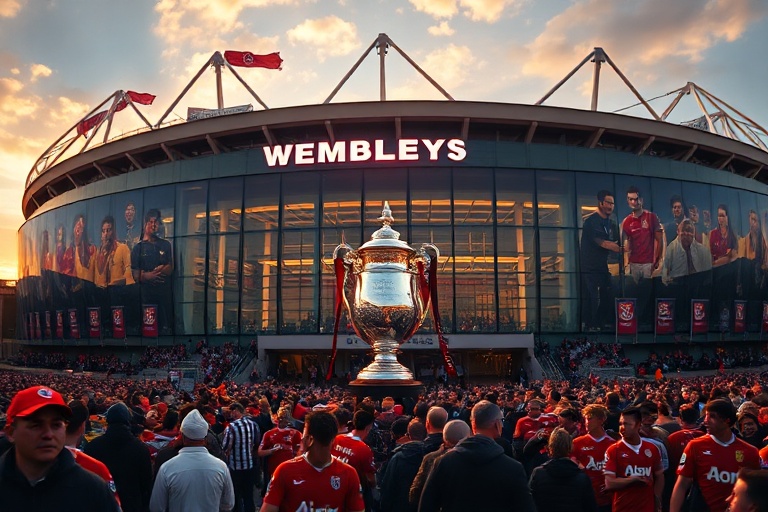
The atmosphere at a 5:00 pm FA Cup Final remains electric. The iconic Twin Towers (now replaced by the arch) and the modern Wembley bowl still create a cauldron of noise, with fans arriving hours early to soak in the pre-match buzz. The later start has not diminished the occasion’s prestige; if anything, it has amplified its reach. Social media buzz peaks in the hours leading up to the match, with fans sharing build-up content, predictions, and nostalgia.
For families, the timing strikes a balance. Parents can take children out of school early for the day, and the match’s conclusion around 7:00 pm allows for post-game celebrations or commutes home before late bedtimes. This is a far cry from the early 20th-century afternoons when fans relied on steam trains and limited transport options.
The Future of FA Cup Final Kick-Offs: What’s Next?
As football continues to evolve, so too may the timing of the FA Cup Final. Several factors could influence future decisions:
- Global Expansion: With Premier League clubs increasingly targeting Asian markets, a later kick-off (e.g., 6:00 pm or 7:00 pm) could maximize live viewership during prime time in those regions.
- Streaming and On-Demand: The rise of digital platforms like DAZN and Amazon Prime may reduce the pressure for a fixed kick-off time, allowing for more flexibility in scheduling.
- Fan Feedback: While tradition holds weight, the FA has shown a willingness to adapt based on fan surveys and engagement metrics. If demand grows for earlier or later starts, changes could follow.
- Technology and Safety: Wembley’s advanced infrastructure allows for night matches with enhanced lighting and crowd management, reducing concerns about visibility or safety.
One potential compromise could be a rotating schedule, where the final alternates between a 3:00 pm and 5:00 pm kick-off to honor tradition while meeting modern needs. Alternatively, the FA might experiment with a 4:30 pm start to bridge the gap between old and new expectations.
Regardless of the outcome, the FA Cup Final’s kick-off time remains a microcosm of football’s broader evolution. It’s a blend of heritage and pragmatism, where nostalgia collides with the demands of a globalized, digital-first audience. The 5:00 pm start may not be perfect, but it reflects the ongoing negotiation between what football was and what it is becoming.
Key Takeaways: What Fans Should Know About FA Cup Final Kick-Off Times
- Consistency: Since 2012, the FA Cup Final has consistently kicked off at 5:00 pm, providing stability for broadcasters and fans alike.
- Broadcast Influence: The shift to 5:00 pm was driven by television rights and advertising revenue, not tradition alone.
- Fan Accessibility: While later starts may pose challenges for some, the FA has introduced initiatives to ensure families and younger fans can participate.
- Global Reach: The timing maximizes international viewership, particularly in Asia and the Middle East, where football’s popularity is surging.
- Future Flexibility: Changes in streaming, fan engagement, and commercial strategies could lead to further adjustments in the coming years.
Conclusion: A Tradition in Motion
The FA Cup Final’s kick-off time is more than a logistical detail—it’s a symbol of how tradition and modernity coexist in football. The 5:00 pm start may not have the same historical resonance as a 3:00 pm afternoon affair, but it ensures the final remains relevant in an era dominated by global audiences and digital consumption.
As the FA continues to navigate the pressures of commercialization and fan expectations, the kick-off time will likely remain a topic of debate. Yet one thing is certain: the FA Cup Final’s ability to adapt while preserving its soul is what keeps it alive in the hearts of generations of fans. Whether at 3:00 pm or 5:00 pm, the magic of Wembley on FA Cup Final day endures.
For more on the history of English football and its evolving traditions, explore our Sports and Analysis sections.