The Colorado River, a lifeline for 40 million people across seven states and Mexico, is at the center of a high-stakes federal intervention. After years of declining water levels, the Biden administration has rolled out an emergency plan to stabilize the river’s reservoirs. This move comes as Lake Mead and Lake Powell, the river’s two largest reservoirs, hover near historically low levels. The federal drought plan, announced in 2023 and refined in early 2024, aims to balance water allocations while preventing catastrophic shortages for millions of users.
At its core, the plan focuses on mandatory cuts to water usage in Arizona, Nevada, and California—the Lower Basin states—as well as voluntary reductions in the Upper Basin states of Colorado, Utah, Wyoming, and New Mexico. The federal government has positioned itself as the final arbiter in a decades-old conflict over water rights, but the plan’s success hinges on cooperation from states that have historically resisted federal mandates. With climate change exacerbating drought conditions, the urgency of these measures cannot be overstated.
Why the Colorado River Is in Crisis
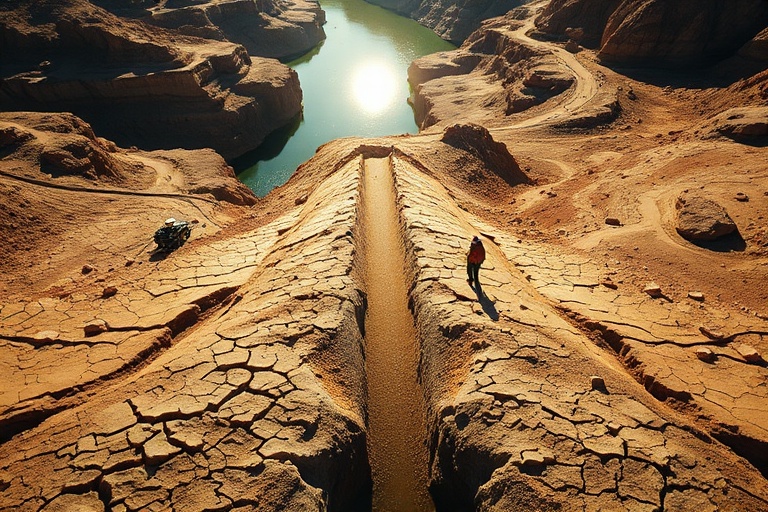
The Colorado River’s decline is the result of a combination of factors: over-allocation, prolonged drought, and the accelerating effects of climate change. The river’s flow has dropped by nearly 20% over the past two decades, even as demand from cities, agriculture, and tribal nations has increased. Federal data shows that Lake Mead, the largest reservoir in the U.S., is now filled to just 28% of capacity, while Lake Powell is at 34%. These levels threaten hydroelectric power generation, which supplies electricity to millions.
Compounding the issue is the 2007 Interim Guidelines, which allocated more water than the river could reliably provide. The guidelines, designed to last until 2026, have failed to account for the severity of the current drought. The federal drought plan attempts to address this by accelerating cuts and introducing tiered reductions based on reservoir levels. However, the plan’s effectiveness depends on whether states can meet their targets without triggering legal disputes over water rights.
Key Contributors to the Crisis
- Over-allocation: The Colorado River Compact of 1922 promised more water than the river could sustain, particularly during wet years.
- Prolonged drought: The Southwest has experienced one of the driest periods in over 1,000 years, reducing snowpack and river flows.
- Climate change: Rising temperatures have increased evaporation rates and reduced snowmelt, further straining the river’s supply.
- Agricultural demand: Agriculture, which consumes 80% of the river’s water, has been slow to adopt conservation measures despite incentives.
The Federal Government’s Role in Water Management
The federal government’s involvement in the Colorado River’s management is not new, but its approach has evolved from mediation to direct intervention. The Bureau of Reclamation, the agency responsible for managing the river’s reservoirs, has historically relied on voluntary agreements among states. However, with reservoir levels continuing to drop, the Biden administration has taken a more assertive stance. In April 2024, the Department of the Interior announced additional cuts to water deliveries, including a 5% reduction for Nevada and a 7% reduction for Arizona. California, the largest user of Colorado River water, has agreed to voluntary cuts under a separate agreement.
One of the most controversial aspects of the federal plan is the use of financial incentives to encourage conservation. The Inflation Reduction Act allocated $4 billion to drought mitigation efforts, including $1.2 billion specifically for the Colorado River. This funding is being used to pay farmers to fallow fields, cities to replace turf grass, and tribes to develop water-saving infrastructure. While these programs have shown early success, critics argue that they do not address the underlying issue of over-allocation.
Another challenge is the legal framework governing the river. The 1922 Compact and subsequent agreements divide the river’s water among states, but these agreements do not account for tribal water rights or environmental needs. The federal plan attempts to balance these competing demands by prioritizing tribal water rights and environmental flows, but legal challenges are inevitable. For example, the Navajo Nation has filed lawsuits asserting its right to Colorado River water, a claim that could further complicate the federal plan.
State-by-State Responses to the Federal Plan
The federal drought plan has elicited mixed reactions from the states that depend on the Colorado River. Arizona, which faces some of the steepest cuts, has been at the forefront of conservation efforts. The state has invested in groundwater recharge projects and water recycling programs, but it remains heavily reliant on Colorado River water for agriculture. Nevada, which has already reduced its reliance on the river through conservation measures, has agreed to further cuts under the plan. California, the largest user, has committed to voluntary reductions but has resisted mandatory cuts, citing senior water rights.
In the Upper Basin states, the response has been more cautious. Colorado, Utah, Wyoming, and New Mexico have historically resisted federal intervention, preferring to manage their water resources through interstate compacts. However, the federal plan’s requirement for Upper Basin states to contribute to conservation efforts has sparked debate. Some states have argued that their water use is already sustainable, while others have proposed pilot programs to reduce demand. For example, Colorado has launched a program to pay farmers to reduce irrigation, but the scale of these efforts remains insufficient to offset the river’s decline.
State-Specific Challenges
- Arizona: Faces the steepest cuts (up to 50% in some areas) and must balance agricultural needs with urban demand.
- Nevada: Has reduced its reliance on the river through conservation but remains vulnerable to further cuts.
- California: Holds senior water rights but faces pressure to contribute more to conservation efforts.
- Colorado: Struggles to reconcile its historical water rights with the need for conservation in the face of climate change.
- Utah: Has expanded its use of the river in recent years but now faces restrictions on new developments.
What’s Next for the Colorado River?
The federal drought plan is a critical step toward stabilizing the Colorado River, but it is not a permanent solution. The plan’s measures are temporary, designed to last until 2026 when the next set of guidelines are scheduled to be negotiated. In the meantime, the states must continue to reduce their water use while addressing the long-term challenges of climate change and over-allocation. The Biden administration has signaled that it is willing to take further action if necessary, including declaring a water shortage under the 1902 Reclamation Act. Such a declaration would trigger even steeper cuts, particularly for California, which holds the most senior water rights.
For the Colorado River to survive, a collaborative approach is essential. This means not only reducing water use but also investing in new technologies, such as desalination and water recycling, and rethinking the region’s reliance on agriculture. The federal plan provides a framework for these efforts, but its success depends on the willingness of states, tribes, and local governments to work together. Without meaningful action, the river’s reservoirs could reach a point of no return, triggering a regional water crisis with far-reaching consequences.
The stakes could not be higher. The Colorado River sustains cities from Denver to Los Angeles, powers hydroelectric dams that supply millions of homes, and supports ecosystems that are home to endangered species. The federal drought plan is an acknowledgment that the status quo is unsustainable, but it is only the first step in a long journey toward resilience. The choices made in the next few years will determine whether the Colorado River can continue to serve as a vital resource for generations to come.
Resources and Further Reading
For those interested in learning more about the Colorado River drought and the federal response, the following resources provide additional context and analysis:
- Water Management: Explore articles on the science and policy behind the Colorado River’s decline.
- Climate Policy: Learn how federal and state policies are addressing the broader impacts of climate change on water resources.
- Bureau of Reclamation: The federal agency’s official updates on reservoir levels, water allocations, and drought mitigation efforts. (www.usbr.gov)
- Colorado River Basin States: Each state’s official drought response plan and conservation initiatives. (www.coloradoriverdistrict.org)
Conclusion: A Turning Point for the Colorado River
The federal drought plan for the Colorado River represents a turning point in the management of one of the West’s most critical resources. While the plan’s immediate measures are necessary to prevent further decline, the long-term survival of the river depends on a fundamental shift in how water is allocated and used. This shift will require innovation, collaboration, and sacrifice from all stakeholders—states, tribes, farmers, cities, and federal agencies. The Colorado River’s crisis is not just a regional issue; it is a national challenge that demands urgent and sustained action.
As the federal government, states, and local communities grapple with these challenges, one thing is clear: the status quo is no longer an option. The choices made today will determine whether the Colorado River can continue to provide for the millions who depend on it. For now, the federal drought plan offers a lifeline, but the real work has only just begun.