Giro d’Italia: The Race That Defines Cycling’s Soul
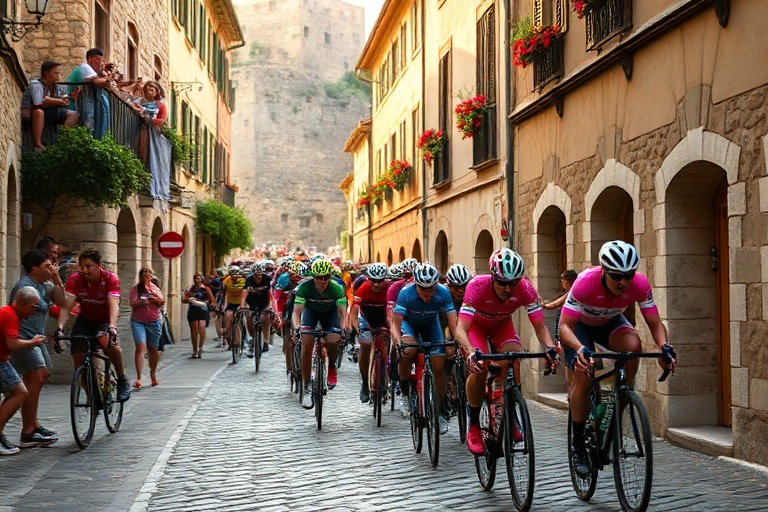
The Giro d’Italia is more than a race—it is a three-week odyssey through the soul of Italy, a test of human endurance that unfolds against the dramatic backdrop of the Alps and the sun-drenched villages of the peninsula. Since its inception in 1909, the race has grown from a nationalist experiment into one of cycling’s most storied Grand Tours, second only to the Tour de France in prestige and tradition.
Unlike its French counterpart, which often meanders through flat plains, the Giro is defined by relentless climbs, cobbled roads, and unpredictable weather. It’s a race where suffering is not just expected—it’s celebrated. The Giro is where legends are forged, reputations are made and broken, and where the very essence of cycling’s romantic struggle comes to life.
A Brief History: From Nationalism to Global Prestige
The Giro was born in 1909, not as a sporting event, but as a tool of national pride. Italy’s cycling federation, Gazzetta dello Sport, launched the race to boost newspaper sales and counter the dominance of French cycling. The first edition featured 8 stages and 127 riders, many of whom rode on single-speed bikes with no support. Over time, the race evolved into a symbol of Italian identity, reflecting the country’s fragmented geography, volatile politics, and unyielding spirit.
By the 1950s, the Giro had become a stage for legends like Fausto Coppi and Gino Bartali, whose rivalry transcended sport and mirrored post-war Italy’s fractured society. The race’s iconic pink jersey, maglia rosa, was introduced in 1931, named after the pink pages of Gazzetta dello Sport. Over the decades, the Giro expanded beyond Italy’s borders, weaving through Switzerland, Slovenia, and even the Dolomites of Austria, cementing its reputation as a race of geographic and emotional extremes.
Key Moments That Defined the Giro
- 1949: Coppi’s Solo Escape on the Gavia – In a blizzard atop the Passo di Gavia, Coppi attacked alone, finishing 4 minutes ahead in the snow. It remains one of the most mythic moments in cycling history.
- 1988: The Pirate and the Pink Jersey – Andrew Hampsten, a young American, claimed the maglia rosa in a snowstorm on the Gavia, becoming the first non-European to win the Giro.
- 2018: Chris Froome’s Unlikely Victory – Froome overcame a 3-minute deficit in the final week, riding aggressively on the slopes of the Colle delle Finestre to secure a historic win.
- 2020: The Race in a Pandemic – Held in October under strict health protocols, the Giro became a symbol of resilience, won by Tao Geoghegan Hart in a rare three-way final.
The Modern Giro: A Race of Strategy and Survival
Today, the Giro is a global spectacle, broadcast to millions worldwide and attracting the best riders from Team Ineos, Jumbo-Visma, and Bora-Hansgrohe. Yet, despite its modern trappings—carbon frames, power meters, and data analytics—the Giro retains its raw character. The race’s unpredictable weather, treacherous descents, and relentless climbs ensure that no two editions are alike.
Unlike the Tour de France, where time trials often decide the winner, the Giro is won in the mountains. The Cima Coppi, awarded to the first rider over the highest point of the race (often the Stelvio or Gavia), is one of cycling’s most coveted prizes. These climbs are not just physical challenges—they are psychological battles, where riders must summon courage, tactics, and sheer willpower to survive.
The 2024 route, for instance, features five summit finishes and multiple double ascents of iconic climbs like the Mortirolo and the Zoncolan. Such terrain favors climbers like Tadej Pogačar and Geraint Thomas, riders who can dance on the edge of exhaustion without falling over.
Why the Giro Matters Beyond the Race
The Giro is more than a sporting event—it is a cultural institution. It showcases Italy’s regional diversity, from the rice fields of the Po Valley to the olive groves of Calabria. Each stage tells a story: a village celebrating its patron saint, a family offering water to exhausted riders, or a local band playing opera as the peloton passes.
Economically, the Giro is a boon for host towns. Small municipalities invest heavily in infrastructure, hoping the race’s global exposure will boost tourism. In 2023, the Giro’s passage through Sicily generated an estimated €10 million in local revenue. Meanwhile, the race’s pink jersey has become a marketing phenomenon, emblazoned on everything from pasta boxes to luxury watches.
But the Giro’s greatest legacy may be its role in preserving cycling’s soul. In an era dominated by power meters and marginal gains, the Giro reminds fans why they fell in love with the sport. It’s a race where tactics matter as much as physiology, where cunning can triumph over brute strength, and where a single day in the saddle can make or break a career.
A Final Thought: The Giro’s Enduring Spirit
The Giro d’Italia endures because it captures something essential about cycling—and about life. It is a journey of suffering and transcendence, where the weakest moments often lead to the greatest triumphs. Whether it’s a rider attacking alone on a remote mountain pass or a fan holding a sign that reads “Forza Italia,” the Giro is a celebration of human perseverance.
For those who follow the race, the Giro is not just a sporting event—it’s a pilgrimage. A chance to witness history unfold in real time, to feel the pulse of a nation through the rhythm of pedals and the roar of tifosi. And as long as there are mountains to climb and dreams to chase, the Giro will continue to ride on.
To dive deeper into the world of professional cycling and its cultural impact, explore our Sports section and Analysis archives.