How Street Fighter Movie Transformed Gaming Into Film Gold
The transition of video game franchises into live-action films has rarely been smooth. Yet, when Street Fighter arrived in theaters in 1994, it didn’t just defy expectations—it redefined what a video game adaptation could be. Directed by Steven E. de Souza, this adaptation of Capcom’s legendary beat ’em up series became a cult classic, blending over-the-top action with a surprisingly human story. It proved that video games weren’t just for the screen anymore; they could thrive on the silver screen too.
More than three decades later, its legacy endures not just among gamers, but in the broader conversation about how pop culture adapts interactive worlds for passive viewing. The film’s balance of spectacle and character-driven drama offers lessons that modern adaptations still struggle to match. Let’s explore how Street Fighter carved its place in cinematic history—and what it tells us about the evolving relationship between games and movies.
The Origins: From Arcade to Action Hero
Capcom’s Street Fighter debuted in 1987 as a competitive fighting game where players controlled martial artists battling across the globe. Its sequel, Street Fighter II, launched in 1991 and became a global phenomenon, selling millions of cabinets and home consoles. The game’s colorful characters—Ryu, Ken, Chun-Li, Guile, and the villainous M. Bison—became household names in gaming circles.
As gaming culture grew, Hollywood took notice. The early 1990s saw a wave of adaptations, from Super Mario Bros. to Mortal Kombat, but most stumbled in translation. Street Fighter, however, benefited from a strong script and a cast that embraced the material. Jean-Claude Van Damme played Guile, a role that played to his strengths as an action star, while Raúl Juliá brought depth and charisma to the role of M. Bison. The film’s cast didn’t just perform—they elevated the source material.
What set Street Fighter apart was its tone. It balanced campy humor with genuine stakes. The plot—centered on a UN-sanctioned mission to stop M. Bison’s Shadaloo organization—allowed room for both martial arts choreography and a human drama about redemption and sacrifice. The film didn’t try to be a literal translation of the game; it became a spiritual successor that honored the spirit of competition and camaraderie at the heart of Street Fighter.
Why It Worked: The Formula for Success
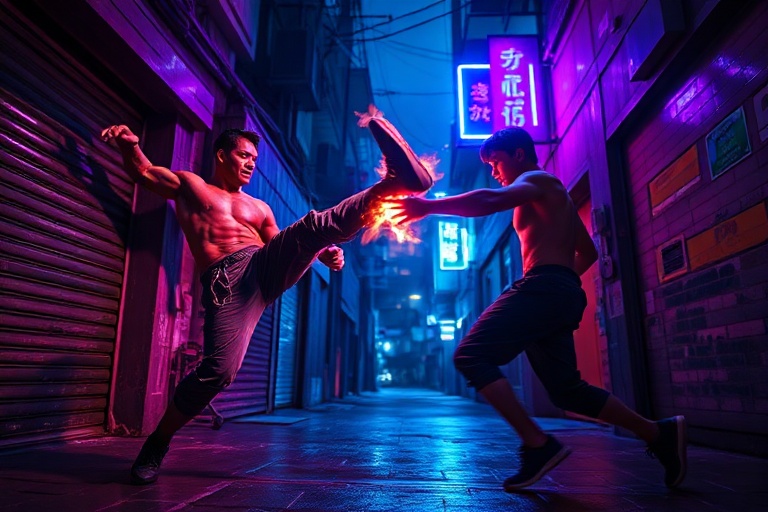
Several key elements contributed to the film’s enduring appeal. First, it respected its audience. While not a box office juggernaut in its time, it resonated deeply with gamers who saw their favorite characters come to life. Second, it embraced the exaggerated, almost theatrical style of the game itself. The fights were loud, colorful, and acrobatic—closer to pro wrestling than traditional martial arts cinema.
The film also benefited from strong performances. Raúl Juliá’s portrayal of M. Bison remains one of the most memorable villain turns in action cinema. His final moments—dying in the arms of his adversary—added emotional weight to what could have been a one-dimensional antagonist. Meanwhile, Van Damme’s Guile embodied the everyman hero, a soldier trying to save his team while navigating personal loss.
Another crucial factor was timing. The early 1990s were the golden age of action cinema, with stars like Van Damme, Sylvester Stallone, and Arnold Schwarzenegger dominating the box office. Street Fighter tapped into that energy, delivering high-octane action with a sense of fun. It didn’t take itself too seriously, which allowed the film to stand out in a crowded field of adaptations that often stumbled under the weight of their own ambition.
Key Elements That Made Street Fighter Work
- Character Depth: Villain and hero both had arcs that gave the story emotional weight.
- Stylized Action: Fights were exaggerated and theatrical, matching the game’s tone.
- Strong Cast: Jean-Claude Van Damme and Raúl Juliá brought star power and authenticity.
- Respect for Source Material: It honored the game’s spirit without being a direct adaptation.
- Balanced Tone: Campy humor didn’t undermine the drama; it enhanced it.
The Broader Impact: How a Game Became a Movie Icon
Street Fighter didn’t just succeed as a standalone film—it helped shift the cultural conversation about video game adaptations. Before it, most attempts were either dismissed as cash grabs or doomed by poor execution. After it, studios took notice that gamers were a passionate audience worth courting. While later adaptations like Mortal Kombat (1995) and Lara Croft: Tomb Raider (2001) followed, few captured the same balance of action, humor, and heart.
The film also highlighted the potential for video game aesthetics to influence mainstream cinema. Its use of bright colors, exaggerated movements, and over-the-top violence foreshadowed later trends in action filmmaking, from Kill Bill to the John Wick series. The idea that a game could inspire cinematic style—not just content—was groundbreaking.
Moreover, Street Fighter demonstrated that video game narratives could work on screen. The film’s focus on teamwork, rivalry, and personal growth gave the characters depth that resonated beyond the arcade. This approach laid the groundwork for modern adaptations that prioritize story over spectacle, such as Detective Pikachu (2019) or The Super Mario Bros. Movie (2023).
Legacy and Lessons for Modern Adaptations
Today, the Street Fighter franchise continues to thrive in animation, comics, and gaming, but its 1994 film remains a touchstone. It proved that video game adaptations could be both commercially viable and artistically valid. Its success challenged the stigma that games were too niche or too chaotic to translate to film.
For modern filmmakers, Street Fighter offers a blueprint: respect the source, prioritize character, and don’t shy away from the medium’s inherent fun. It’s a reminder that adaptation isn’t about replication—it’s about reinvention. The best video game movies don’t try to mimic the game; they capture its essence and expand upon it.
As the gaming industry continues to grow—with films like Sonic the Hedgehog and Uncharted drawing massive audiences—Street Fighter remains a case study in how to do it right. It didn’t just adapt a game; it created something new, something that stood on its own in theaters and in memory.
A Final Thought
The enduring appeal of Street Fighter lies in its authenticity. It never pretended to be anything other than what it was: a high-energy action movie inspired by a beloved game. In an era where adaptations often feel formulaic or cynical, that honesty feels revolutionary. Street Fighter didn’t just capture the hearts of gamers—it captured the imagination of a generation, proving that the line between game and film wasn’t a barrier, but a bridge.
For more on classic action films and gaming culture, visit our Entertainment and Gaming sections.