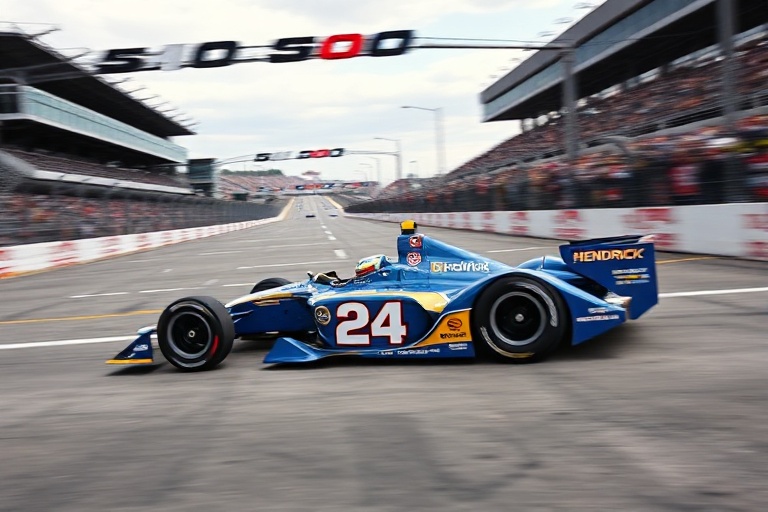
indy 500
The Indianapolis 500: A Global Celebration of Speed, Tradition, and Engineering Excellence
The Indianapolis 500, often referred to simply as the Indy 500, stands as one of the most iconic and enduring events in motorsport. Held annually at the Indianapolis Motor Speedway in Indiana, this race is more than just a sporting spectacle—it is a cultural institution that blends history, innovation, and sheer human endurance. With a legacy stretching back to 1911, the Indy 500 has grown from a fledgling American motorsport event into a globally recognized phenomenon, attracting drivers, teams, and fans from every corner of the world.
The race’s significance extends far beyond the confines of the oval track. It serves as a testament to the evolution of automotive technology, a stage for legendary rivalries, and a symbol of the unyielding pursuit of speed. For many, the Indy 500 represents the pinnacle of open-wheel racing, a discipline that has shaped the careers of champions and inspired generations of motorsport enthusiasts. Its influence can be seen in the way it has shaped racing circuits worldwide, from Monza in Italy to Suzuka in Japan, each borrowing elements of the Indy 500’s unique blend of danger, strategy, and spectacle.
The Origins and Evolution of the Indy 500
The Indianapolis Motor Speedway was constructed in 1909 as a test track for the burgeoning American automotive industry. Its original purpose was modest: to provide a venue where manufacturers could push the limits of their vehicles. However, by 1911, the track’s owners decided to host a 500-mile race, inspired by European Grand Prix events but designed to showcase American engineering and driving skill. The first race in 1911 was won by Ray Harroun in the Marmon Wasp, a car that introduced the rearview mirror—a revolutionary innovation at the time.
In the decades that followed, the Indy 500 evolved alongside the automotive industry. The introduction of superchargers in the 1920s, the adoption of rear-engine designs in the 1960s, and the shift to turbocharged engines in the 1970s and 1980s reflected broader trends in car manufacturing. The race also became a proving ground for technological advancements, such as aerodynamic wings and energy-absorbing barriers, many of which were later adopted in consumer vehicles for safety.
By the late 20th century, the Indy 500 had cemented its status as a global event. Drivers from Europe, South America, and Australia began to dominate the field, bringing with them diverse racing styles and strategies. The race’s international appeal was further solidified in 1993 when Nigel Mansell, a Formula 1 world champion, crossed over to IndyCar and won the race in his first attempt. This crossover success highlighted the Indy 500’s role as a bridge between different motorsport disciplines.
A Cultural Phenomenon with Global Reach
The Indy 500 is more than just a race; it is a cultural touchstone that resonates across continents. In the United States, it is a Memorial Day tradition, a day of family gatherings, picnics, and patriotic displays. The event’s association with the unofficial start of summer in America has embedded it in the national consciousness, much like the Kentucky Derby or the Super Bowl. Yet, its appeal is not confined to the U.S. In countries like Brazil, Italy, and Japan, the Indy 500 is followed with equal fervor, often drawing larger television audiences than some domestic sporting events.
The race’s global fanbase is a reflection of its accessibility. Unlike some motorsport events that require a deep understanding of technical regulations, the Indy 500 is relatively straightforward: 200 laps around a 2.5-mile oval, with the first driver to cross the finish line declared the winner. This simplicity, combined with the high-speed drama that unfolds on the track, makes it an easy sport to appreciate. The annual Indianapolis 500 Parade, featuring floats, marching bands, and celebrity appearances, further cements the event’s place in popular culture, drawing crowds that rival those of major parades in cities like New York or London.
The Indy 500 also serves as a platform for cultural exchange. Teams from around the world bring their own traditions and innovations to the race. For example, Italian teams often incorporate elements of La Festa della Repubblica into their pre-race ceremonies, while Brazilian drivers frequently arrive with samba rhythms playing in their motorhomes. These cultural nuances add layers of richness to the event, making it a melting pot of global motorsport culture.
The Engineering Behind the Speed
At the heart of the Indy 500’s allure is the engineering prowess required to compete at such a high level. The cars that tackle the Indianapolis Motor Speedway are marvels of modern engineering, designed to achieve speeds exceeding 230 mph while maintaining the utmost precision and safety. The chassis, typically built by manufacturers like Dallara or Riley Technologies, is a blend of carbon fiber and aluminum, engineered to withstand the immense G-forces generated during cornering. The aerodynamics are finely tuned, with wings and underbody diffusers generating downforce to keep the cars glued to the track.
Engine technology is another critical factor. Since 2012, IndyCar has standardized the use of a 2.2-liter V6 twin-turbocharged engine, designed to deliver a balance of power and reliability. These engines, built by manufacturers like Chevrolet and Honda, produce around 700 horsepower but are constrained by regulations to ensure competitive parity. The fuel used in the cars is a blend of ethanol and gasoline, a choice made in part to emphasize sustainability—a nod to the growing global focus on environmental responsibility in motorsport.
The tires are perhaps the most scrutinized component of an IndyCar. Firestone, the official tire supplier, produces specialized rubber compounds for the Indianapolis Motor Speedway, each designed to perform optimally in the unique conditions of the track. The choice of tire compound can make or break a driver’s race strategy, leading to intense debates among teams about when to pit for fresh rubber. Pit stops themselves are a spectacle, with crews executing lightning-fast tire changes and fuel refills in under 10 seconds—a testament to the precision and teamwork required in IndyCar racing.
Legendary Moments and Iconic Drivers
The history of the Indy 500 is filled with moments that have transcended the sport. One of the most legendary is the 1967 race, where Parnelli Jones drove his Sears Allstate Special to victory despite a fire in the engine compartment. Jones’ ability to control the car while battling smoke and flames became the stuff of racing folklore. Another unforgettable moment came in 1991, when Rick Mears won his fourth Indy 500, tying the record set by A.J. Foyt, Al Unser Sr., and Bobby Unser. Mears’ victory cemented his status as one of the greatest drivers in the history of the race.
The list of drivers who have left their mark on the Indy 500 reads like a who’s who of motorsport. A.J. Foyt, the only driver to win the race in both a front-engine and rear-engine car, remains a towering figure in American racing. Similarly, Al Unser Sr. holds the record for the most career starts in the Indy 500, with 27 appearances. More recently, drivers like Hélio Castroneves and Takuma Sato have added their names to the pantheon of legends, with Castroneves becoming the first driver to win the race four times in the 21st century.
The women of the Indy 500 have also made significant contributions. In 2005, Danica Patrick became the first woman to lead a lap in the race and finished fourth, a performance that sparked a new wave of interest in women’s participation in motorsport. Her success paved the way for other female drivers, such as Simona de Silvestro and Pippa Mann, who have since competed at the highest level of IndyCar racing.
A Lasting Legacy and the Future of the Indy 500
The Indianapolis 500’s enduring appeal lies in its ability to adapt while staying true to its roots. In recent years, the race has embraced technological advancements such as hybrid engines and advanced telemetry, ensuring that it remains relevant in an era dominated by electric vehicles and autonomous driving. The Indianapolis Motor Speedway has also invested in sustainability initiatives, including solar-powered energy sources and water conservation programs, reflecting a broader shift in motorsport toward environmental responsibility.
Looking ahead, the Indy 500 faces both challenges and opportunities. The rise of Formula 1 in the United States, fueled by the introduction of the Miami Grand Prix and the Las Vegas Grand Prix, has intensified competition for the attention of motorsport fans. However, the Indy 500’s unique blend of tradition, accessibility, and high-speed drama sets it apart. The race’s ability to attract new generations of fans through initiatives like the IndyCar iRacing Challenge, which allows gamers to compete in virtual versions of the Indianapolis Motor Speedway, ensures that its legacy will endure.
The Indianapolis 500 is more than a race; it is a celebration of human ingenuity, a showcase of global unity, and a testament to the enduring allure of speed. As it approaches its second century, the Indy 500 stands ready to write the next chapter in its storied history, continuing to inspire drivers, engineers, and fans around the world.
Key Takeaways for Fans and Enthusiasts
For those looking to dive deeper into the world of the Indy 500, here are a few essential insights:
- History and Tradition: The Indy 500 is steeped in history, with traditions like the singing of Back Home Again in Indiana and the release of thousands of balloons after the race. These rituals connect the event to its past while creating a sense of continuity for future generations.
- Technological Innovation: The race has been a proving ground for automotive technology, from rearview mirrors to hybrid engines. Understanding the engineering behind the cars adds a new layer of appreciation for the sport.
- Global Appeal: While rooted in American culture, the Indy 500 has a worldwide following. Drivers from over 20 countries have competed in the race, making it a truly international event.
- Community and Culture: The Indy 500 is more than just a sporting event; it is a cultural phenomenon that brings together communities from all walks of life. Whether through the Indianapolis 500 Parade or the annual concert series at the track, the event fosters a sense of belonging among its fans.
For those eager to explore the world of motorsport further, the Sports section on Dave’s Locker offers a wealth of articles on racing, technology, and the athletes who define the sport. Whether you’re