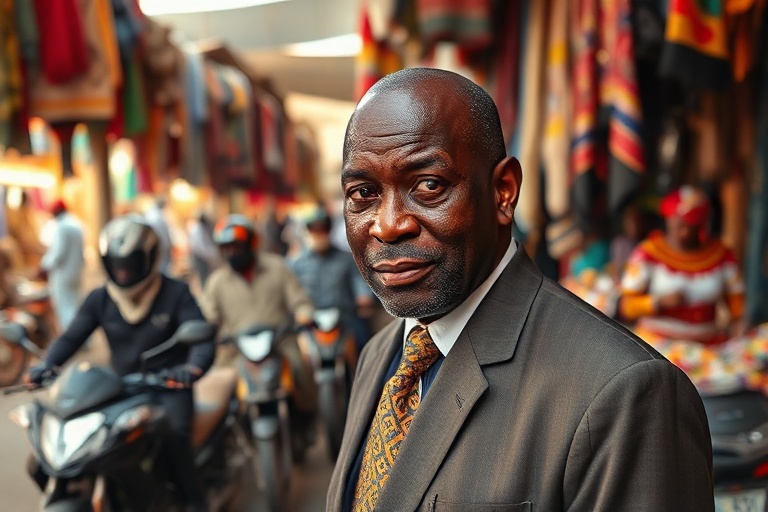
kabore
Roch Marc Christian Kaboré’s political career represents one of the most consequential periods in Burkina Faso’s modern history. Serving as president from 2015 until his removal in a 2022 coup, Kaboré’s tenure spanned a decade of intense political transformation, marked by both democratic progress and deepening security crises. His leadership began with high hopes following the 2014 popular uprising that ended Blaise Compaoré’s 27-year rule, yet it ended in disappointment as insurgent violence surged and public trust eroded. The story of Kaboré is not just one of personal ambition or political failure—it is a reflection of the broader struggles of a nation caught between democratic ideals and the harsh realities of terrorism, poverty, and institutional fragility.
This article explores Kaboré’s rise to power, his political philosophy and governance, the security challenges that defined his presidency, and the circumstances surrounding his downfall. We also examine his legacy and what it means for Burkina Faso’s future in a region increasingly threatened by extremist violence.
From Political Prisoner to President: The Rise of Roch Kaboré
Kaboré’s political journey began long before he became president. Born in 1957 in Ouagadougou, he studied economics and public finance in France before returning to Burkina Faso to work in banking. His entry into politics came in 1989 when he was appointed Minister of State for Transport and Communications under President Blaise Compaoré. However, his alignment with Compaoré’s regime ended in 2002 when he was jailed for alleged involvement in a coup plot—an experience that later became a defining narrative in his political identity.
After being acquitted and released in 2005, Kaboré co-founded the Congress for Democracy and Progress (CDP), Compaoré’s ruling party. Yet, as tensions grew over Compaoré’s attempt to extend term limits in 2014, Kaboré broke away, forming the People’s Movement for Progress (MPP) in 2014. This new party positioned itself as a reformist alternative, advocating for transparency, youth inclusion, and a break from the authoritarian past.
In November 2015, Kaboré won the presidential election with 53.5% of the vote in a peaceful transition, becoming Burkina Faso’s first democratically elected president after a popular revolt. His victory was seen as a triumph of democratic renewal, a moment when a new generation of leaders could steer the country toward stability and prosperity.
His inauguration on December 29, 2015, was attended by regional leaders and celebrated as a historic step forward for a country long ruled by military strongmen and entrenched elites. Kaboré’s message was clear: Burkina Faso would no longer be defined by its past, but by its potential.
Governance, Reform, and the Weight of Expectations
Kaboré’s presidency began with a strong emphasis on democratic governance and anti-corruption. He prioritized constitutional reform, including the removal of the prime minister’s role from the constitution—seen as a move to strengthen presidential authority. He also launched the “National Plan for Economic and Social Development” aimed at reducing poverty and improving infrastructure.
His government introduced policies to decentralize power, promote women’s participation in politics, and invest in education and healthcare. Notably, Kaboré championed the “Burkina Faso 2020” initiative, a long-term vision to modernize the economy and improve living standards. In 2018, he launched the “Free Healthcare for Women and Children” program, which provided free care for expectant mothers and children under five—a policy still praised today for its impact on maternal and infant mortality rates.
Yet, despite these reforms, public dissatisfaction grew. Economic growth averaged around 6% annually, but benefits were unevenly distributed, and youth unemployment remained stubbornly high at over 15%. Corruption scandals, including the embezzlement of millions in public funds, tarnished his administration’s reputation. Critics argued that Kaboré’s technocratic approach lacked the urgency needed to address deep-rooted inequality and the looming security crisis.
The 2018 Global Corruption Barometer ranked Burkina Faso among the most corrupt countries in West Africa. While Kaboré created anti-corruption agencies, their effectiveness was questioned. The disconnect between policy announcements and lived experience eroded trust, setting the stage for the disillusionment that would later fuel his downfall.
The Security Crisis: A Leadership Test Kaboré Could Not Pass
No challenge defined Kaboré’s presidency more than the escalating jihadist insurgency. When he took office in 2015, Burkina Faso was largely peaceful. By 2022, the country had become the epicenter of West Africa’s fastest-growing Islamist insurgency, with over 2,000 civilians killed and nearly two million displaced.
The crisis began in 2016 with attacks by Ansarul Islam in the northern Sahel region, followed by incursions from groups linked to Al-Qaeda and the Islamic State. Kaboré responded by expanding military cooperation with France through Operation Barkhane and later the G5 Sahel force. He also launched the “National Reconciliation and Social Cohesion Plan” to address grievances in marginalized communities.
However, critics argue these measures were insufficient and slow to materialize. The military, long neglected under Compaoré, struggled to adapt to asymmetric warfare. Reports of human rights abuses by security forces, including extrajudicial killings and arbitrary detentions, further alienated local populations.
As violence spread from the north to the east and center, Kaboré faced a growing chorus of demands for stronger action. Protests erupted in late 2021, with citizens accusing his government of incompetence, inaction, and even complicity. The final blow came in January 2022, when gunmen ambushed a military convoy near Solhan, killing over 100 soldiers—the deadliest attack in Burkina Faso’s history.
Days later, on January 24, 2022, Kaboré was ousted in a military coup led by Lieutenant Colonel Paul-Henri Sandaogo Damiba. The junta cited the government’s “inability to protect the nation” as the primary justification. Kaboré’s removal marked the second coup in eight months in West Africa, signaling a broader democratic backslide across the Sahel.
Key Events in Burkina Faso’s Security Decline (2016–2022)
- 2016: First major attack by Ansarul Islam in the north.
- 2019: Ouagadougou terror attack kills 20 at a hotel and café.
- 2020: Over 1,000 civilians killed in insurgency-related violence.
- 2021: Military mutinies in Kaya and Ouagadougou demand better equipment.
- 2022: Solhan massacre kills 132 soldiers—leading to Kaboré’s ousting.
The Coup Aftermath and Kaboré’s Legacy
Since the coup, Burkina Faso has been ruled by military juntas that have promised swift action against terrorism. Yet, violence has continued to rise under the transitional government, with civilian deaths increasing by nearly 40% in 2023. The new leadership has also restricted civic freedoms, arrested journalists, and expelled international forces, raising concerns about long-term stability.
For Kaboré, the legacy is mixed. Supporters credit him with preserving democratic norms during a turbulent era. He avoided the kind of constitutional manipulation seen elsewhere in Africa and respected term limits—albeit after initially considering a third bid. His commitment to regional peacekeeping, including Burkina Faso’s participation in ECOWAS missions, also earned praise.
Yet, his presidency ultimately failed to protect the country’s security or deliver on the promise of inclusive growth. Many Burkinabè now view the 2015 revolution not as a liberation, but as a missed opportunity—a cautionary tale of how democratic transitions can falter when faced with existential threats.
Kaboré himself remains in exile in Côte d’Ivoire, where he has lived since the coup. He has avoided public political statements, but his presence looms large in debates about Burkina Faso’s future. Some analysts suggest his return could reignite democratic hopes, while others believe the country has moved beyond his era.
What is certain is that Kaboré’s story is a mirror to the challenges facing fragile democracies in the Sahel. His rise and fall reflect the tension between democratic aspirations and the brutal realities of state fragility in an age of terrorism. Whether Burkina Faso can reclaim its democratic path—or whether military rule becomes the new norm—remains one of Africa’s most pressing questions.
What Comes Next for Burkina Faso?
Burkina Faso stands at a crossroads. The military government has promised to restore security and hold elections by 2025, but skepticism runs deep. The junta has aligned with other regional juntas under the “Alliance of Sahel States,” breaking from former allies like France and seeking support from Russia’s Wagner Group.
Meanwhile, civil society organizations continue to demand accountability and a return to constitutional order. Groups like the Balai Citoyen movement, which played a key role in the 2014 uprising, are calling for dialogue and inclusive governance. International partners, including the African Union and ECOWAS, have urged restraint and a clear transition roadmap.
One thing is clear: Burkina Faso’s next chapter will not be written by a single leader, but by the collective will of its people and the choices of a new generation. The lessons of Kaboré’s presidency—his strengths and failures—offer essential guidance for whoever emerges to lead the country forward.
As the world watches the Sahel, Burkina Faso’s journey reminds us that democracy is not a destination, but a daily struggle. And in an era of rising extremism and shifting global alliances, the cost of failure is measured not just in lost elections, but in lost lives.
For deeper insights into Burkina Faso’s political evolution, explore our News and Polit