el nino
El Niño represents one of Earth’s most influential climate phenomena, a periodic warming of Pacific Ocean waters that disrupts atmospheric circulation globally. While rooted in the tropical Pacific, its effects ripple across continents, altering rainfall patterns, temperatures, and extreme weather events from Southeast Asia to the Americas. The term originates from Spanish, meaning “the little boy,” a reference to the Christ child, as Peruvian fishermen historically noticed its onset around December.
This cyclical event occurs every two to seven years, with varying intensity. Its counterpart, La Niña, involves cooler-than-average ocean temperatures and often follows El Niño, creating a seesaw effect in global weather systems. Understanding El Niño requires examining ocean-atmosphere interactions, historical impacts, and the growing role of climate change in amplifying its consequences.
The Science Behind El Niño
At its core, El Niño stems from changes in the trade winds that normally blow westward across the tropical Pacific, pushing warm surface water toward Indonesia and Australia. During an El Niño event, these winds weaken or even reverse direction. This allows the warm water to slosh eastward, piling up along the coasts of Peru and Ecuador.
The redistribution of heat disrupts the Walker Circulation, a massive atmospheric loop that drives weather patterns across the tropics. As warm water shifts eastward, thunderstorms and rainfall follow, shifting from the western Pacific to the central and eastern Pacific. This displacement triggers a cascade of atmospheric responses:
- Drought in Australia and Southeast Asia: Reduced rainfall leads to water shortages, crop failures, and increased wildfire risks.
- Enhanced rainfall in South America: Countries like Peru and Ecuador face flooding, landslides, and infrastructure damage.
- Disrupted fisheries: The shift in warm water displaces nutrient-rich upwellings, devastating anchovy populations vital to Peru’s fishing industry.
- Altered jet streams: Changes in atmospheric circulation affect weather patterns over North America, influencing winter storm tracks and temperature anomalies.
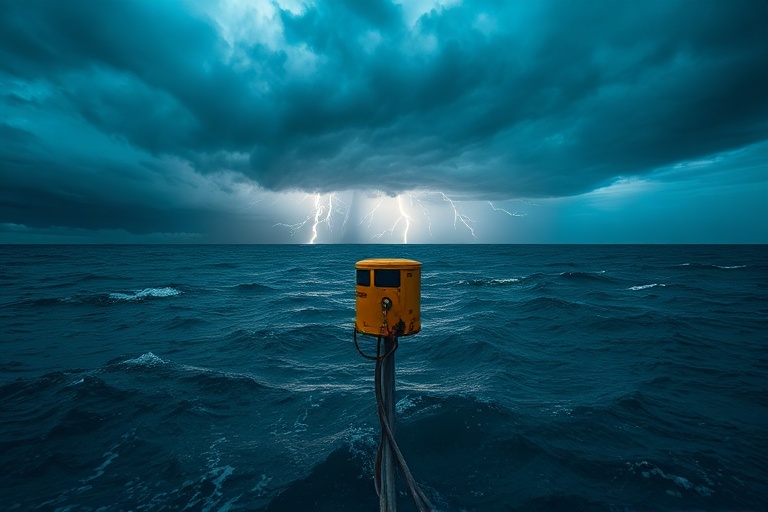
Satellite data and ocean buoys now allow scientists to monitor El Niño’s development with greater precision. The National Oceanic and Atmospheric Administration (NOAA) issues advisories when ocean temperatures in the Niño 3.4 region—a key monitoring zone in the central Pacific—rise 0.5°C above average for three consecutive months. However, predicting the strength and duration of an El Niño event remains challenging, as each occurrence behaves differently.
Historical Impact and Cultural Adaptations
El Niño has shaped human history in ways both dramatic and subtle. Indigenous communities in the Andes and Pacific Islands developed sophisticated oral traditions to track its patterns. The Moche civilization of ancient Peru, for instance, endured devastating floods during El Niño events, as evidenced by archaeological layers of sediment and debris in coastal ruins.
In the 20th century, El Niño gained global attention after the catastrophic 1982–83 event, which caused an estimated $8 billion in damages worldwide. The event triggered floods in Ecuador, droughts in southern Africa, and severe winter storms in the United States. This disaster spurred international cooperation in climate monitoring, leading to the establishment of the Tropical Ocean-Global Atmosphere (TOGA) program.
Culturally, El Niño has inspired art, literature, and even music. In Peru, the phenomenon is sometimes personified as “El Viejo,” an old man who brings chaos. In the Philippines, farmers traditionally consult almanacs based on lunar cycles to anticipate shifts in monsoon patterns. These adaptations highlight humanity’s long-standing relationship with climate variability.
El Niño and Climate Change: A Growing Concern
As global temperatures rise, scientists warn that El Niño events may become more frequent, intense, or erratic. Warmer ocean temperatures provide more energy for El Niño to develop, while shifting weather patterns could alter its global reach. Research published in Nature Climate Change suggests that extreme El Niño events could double in frequency by the end of the century under high-emission scenarios.
The implications are far-reaching. Small island nations in the Pacific, such as Tuvalu and Kiribati, face existential threats from rising sea levels and intensified storms linked to El Niño. Meanwhile, agricultural powerhouses like the United States and Brazil must adapt to volatile growing seasons. In sports, outdoor events like golf tournaments and marathons increasingly factor El Niño into scheduling to avoid extreme weather disruptions.
Governments and communities are responding with mitigation strategies. In California, water agencies ramp up conservation efforts ahead of predicted El Niño-driven storms. In Australia, farmers diversify crops to withstand droughts. International aid organizations pre-position supplies in regions prone to flooding or famine. Yet, challenges persist, particularly in developing nations with limited resources.
Looking Ahead: Preparing for the Next Chapter
The future of El Niño remains a subject of intense study. Advanced climate models, such as those used by the Intergovernmental Panel on Climate Change (IPCC), project that the Pacific will continue to warm, potentially altering El Niño’s behavior. Some models suggest a shift toward more frequent “Modoki” El Niños, where warming is concentrated in the central Pacific rather than the eastern Pacific, leading to different global impacts.
For policymakers, the lesson is clear: adaptability is key. Investing in early warning systems, resilient infrastructure, and sustainable agriculture can mitigate risks. For individuals, awareness of El Niño’s patterns—such as its tendency to peak during winter in the Northern Hemisphere—can inform decisions about travel, energy use, and disaster preparedness.
El Niño is more than a scientific curiosity; it is a reminder of our planet’s interconnected systems. As it continues to shape our world, understanding its nuances will be essential to navigating the challenges ahead. Whether through the lens of science, culture, or policy, El Niño challenges us to think globally—and act collectively.
For more insights into climate phenomena and their impacts, explore our Science and Analysis sections.