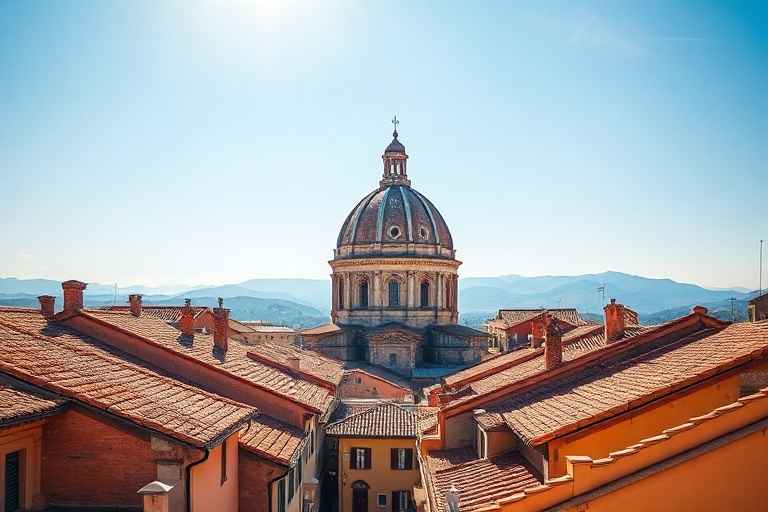
Tucked between the Po Valley and the Apennine Mountains in northern Italy, the city of Modena rarely dominates headlines the way Milan or Venice do. Yet this unassuming urban center has quietly cultivated a reputation as a cultural and industrial powerhouse. From its culinary achievements to its automotive legacy, Modena represents a convergence of tradition, innovation, and craftsmanship that continues to shape global perceptions of Italian excellence.
While the world often fixates on the glitz of fashion capitals or the sprawling tech hubs of Northern Europe, Modena thrives in the background—sustained by the quiet pride of its people and the uncompromising standards of its artisans. Its influence, though subtle, extends far beyond its cobbled streets, touching everything from high-end sports cars to world-renowned vinegar.
The Birthplace of Legends: Automotive and Engineering Excellence
Modena’s most visible contribution to global culture is its automotive heritage. Known as the “Engine Valley,” the province has given birth to some of the most revered names in the industry. Ferrari, Lamborghini, and Maserati were all founded here, their origins rooted in the mechanical ingenuity and entrepreneurial spirit of the region. Enzo Ferrari, born in nearby Modena, turned his obsession with racing into a brand synonymous with speed, luxury, and Italian craftsmanship.
Today, the Ferrari Museum in Maranello stands as a pilgrimage site for enthusiasts. Visitors don’t just see cars—they experience a philosophy of design where every curve, every engine note, and every detail is a celebration of human creativity. The museum’s exhibits trace the evolution of racing technology, from the 1947 125 S to the hybrid SF-24 of 2024, illustrating how Modena’s engineers have consistently pushed the boundaries of performance.
This legacy isn’t confined to supercars. Ducati, another Modena-based legend, has redefined motorcycling with its blend of design and performance. The company’s Bologna headquarters, just a short drive away, continues to innovate in chassis dynamics and electronics, proving that Modena remains a crucible of mechanical artistry.
Culinary Icons: Balsamic Vinegar and Tortellini
Modena’s influence isn’t limited to engines and exhaust notes. The city is also the spiritual home of two of Italy’s most celebrated culinary exports: Aceto Balsamico Tradizionale di Modena (ABTM) and tortellini. These aren’t just ingredients—they’re cultural artifacts, the result of centuries of refinement and regional pride.
Aceto Balsamico Tradizionale is produced under strict regulations. Made exclusively from cooked grape must, aged in wooden barrels for at least 12 years, and certified by a consortium of experts, this vinegar is a testament to patience and precision. The process begins with the Trebbiano and Lambrusco grapes, grown in the fertile soils around Modena. After pressing and cooking, the must is fermented and aged in a series of wooden barrels, each contributing unique flavors—cherry, oak, mulberry, and juniper. The result is a syrupy, complex condiment that elevates everything from risotto to strawberries.
Tortellini, too, is a point of pride. These tiny, ring-shaped pasta parcels are traditionally filled with a mixture of pork loin, prosciutto, mortadella, Parmigiano-Reggiano, and nutmeg. Legend has it they were inspired by the navel of Venus, a tale that speaks to the region’s love of storytelling and sensuality. Whether served in broth or dressed with cream and prosciutto, tortellini embodies the warmth and generosity of Emilian cuisine.
Key Elements of Modena’s Culinary Identity
- Aceto Balsamico Tradizionale di Modena (ABTM): Aged minimum 12 years, certified by the Consorzio di Tutela dell’Aceto Balsamico Tradizionale di Modena.
- Parmigiano-Reggiano: Produced in the neighboring province of Parma, this cheese is a staple in Modena’s pasta and risotto dishes.
- Lambrusco: A slightly sparkling red wine with a fruity profile, grown in the hills surrounding Modena and often paired with local cuisine.
- Zampone: A traditional sausage made from pork, fat, and spices, slow-cooked and sliced for a rich, savory experience.
- Balsamic Glaze: A reduced form of balsamic vinegar, used to add depth to salads, meats, and desserts.
Cultural Crossroads: Opera, Museums, and Living History
Modena’s historical significance stretches back to antiquity. As the Roman Mutina, it was a vital crossroads on the Via Aemilia, connecting the Adriatic coast to the Po Valley. Over the centuries, it became a center of learning, governance, and the arts. The Este family, who ruled Modena from the 13th to the 18th centuries, transformed the city into a Baroque jewel, commissioning churches, palaces, and theaters that still define its skyline.
Today, the city balances preservation with innovation. The Galleria Estense houses a stunning collection of Renaissance and Baroque art, including works by Correggio, Tintoretto, and Bernini. The Teatro Comunale Luciano Pavarotti, named after the legendary tenor born in Modena, hosts world-class opera performances, maintaining the city’s reputation as a cradle of musical genius.
Modena also embraces modernity. The Enzo Ferrari Museum, opened in 2012, is a sleek, contemporary space designed by architect Jan Kaplický. It contrasts with the historic Palazzo Ducale, where the Este family once held court, creating a dialogue between past and present that feels uniquely Modenese.
Why Modena Matters Beyond Its Borders
Modena’s story is one of quiet persistence. In an era dominated by digital disruption and global homogenization, it clings to tradition without stifling innovation. Its artisans refuse to cut corners, its chefs refuse to rush, and its engineers refuse to compromise. This ethos has made Modena a model for other regions seeking to preserve identity while embracing progress.
Consider the global slow food movement, which champions local ingredients, traditional techniques, and sustainable practices. Modena’s balsamic vinegar and tortellini are emblematic of this philosophy. They remind us that gastronomy isn’t just about sustenance—it’s about memory, community, and craft. Similarly, the automotive industry’s shift toward hybrid and electric vehicles has roots in Modena’s culture of innovation. Ferrari’s SF-90 Stradale, a plug-in hybrid supercar, proves that performance and sustainability can coexist.
Modena also challenges the notion that cultural influence requires scale. It doesn’t need skyscrapers or billion-dollar startups to matter. Instead, it thrives through authenticity, consistency, and the cumulative impact of countless small decisions—each barrel of balsamic vinegar aged a little longer, each tortellini pinched by hand, each engine tuned to perfection.
The city’s quiet success offers a lesson for other regions: greatness isn’t always loud. Sometimes, it’s found in the persistent hum of a lathe in a Maranello workshop, the slow drip of aged vinegar into a wooden spoon, or the first bite of a steaming tortellini in brodo on a winter’s day. These moments don’t go viral, but they endure.
Conclusion: The Enduring Allure of Modena
Modena may not be on every traveler’s bucket list, but those who venture off the beaten path often leave with a deeper appreciation for what Italy—and the world—does best. It’s a place where history isn’t just remembered; it’s lived. Where recipes are passed down through generations, and where every machine, every dish, every note of opera carries the weight of intention.
In a time when speed and scale often overshadow substance, Modena stands as a reminder of the value of doing things the right way. It’s a city that understands the power of restraint, the beauty of imperfection, and the magic of slow transformation. Whether you’re a gearhead, a foodie, or a lover of art, Modena offers something rare: a connection to the soul of Italy, unfiltered and unapologetic.
Perhaps that’s why, despite its understated presence, Modena continues to inspire. It doesn’t shout. It whispers—and those who listen are rewarded with a richness that lingers long after the last bite, the final note, or the final lap.
For those eager to explore Modena’s treasures, Dave’s Locker Food section offers curated guides to Italian culinary traditions, while Dave’s Locker Automotive dives deeper into the engineering marvels born in the Emilia-Romagna region.