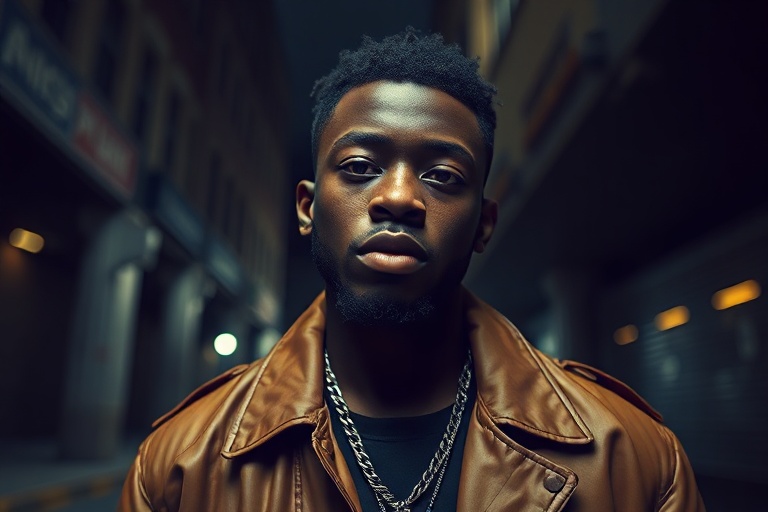
Ncuti Gatwa has emerged as one of the most compelling voices in modern entertainment, blending raw talent with an unmistakable presence that transcends borders. Born in Rwanda and raised in Scotland, Gatwa’s journey from theater to international stardom reflects a broader shift in how global audiences consume and celebrate diverse narratives.
His casting as the Fifteenth Doctor in Doctor Who marked a historic moment—not just for the franchise, but for representation in science fiction. Gatwa’s appointment followed a deliberate move by the BBC to diversify its creative leadership, signaling a commitment to redefining who gets to lead iconic roles. The ripple effects of that decision extend far beyond television, touching conversations about identity, opportunity, and cultural visibility in entertainment industries worldwide.
A Global Upbringing and Early Artistic Roots
Gatwa was born in Kigali, Rwanda, in 1992, but his family relocated to Edinburgh, Scotland, when he was just two years old. Growing up in a multicultural environment shaped his perspective early on. He has spoken openly about the challenges of navigating dual identities—feeling neither fully Rwandan nor entirely Scottish during his formative years. That duality, however, became a wellspring of creativity.
His passion for performance blossomed at the University of Edinburgh, where he studied acting. It was there that he began to hone his craft, performing in student productions and developing a style that blends intensity with vulnerability. His breakthrough came with the 2019 film Horrible Histories: The Movie – Rotten Romans, where he played a witty and mischievous centurion named Atti. Though the role was comedic, it showcased his knack for timing and charisma—traits that would later define his international appeal.
The Role That Changed Everything: Eric Effiong in Sex Education
Gatwa’s international recognition skyrocketed with his portrayal of Eric Effiong in Netflix’s Sex Education, a coming-of-age series set in a British high school. Eric, a flamboyant and self-assured gay teenager of Ghanaian descent, became a cultural touchstone. The character’s journey—from navigating family expectations to embracing his sexuality—resonated deeply with audiences across Africa, Europe, and North America.
What made Eric stand out wasn’t just his fashion or his sharp wit, but the authenticity Gatwa brought to the role. He drew from his own experiences as a Black queer man navigating predominantly white spaces, infusing the character with both humor and heartache. The show’s global success, particularly in regions where LGBTQ+ representation remains limited, underscored the demand for stories that reflect diverse lived experiences.
Gatwa’s performance earned him widespread acclaim, including a BAFTA Scotland Award for Best Actor in Television. More importantly, it positioned him as a bridge between Western and African storytelling traditions, proving that a Black, queer, African-British actor could carry a mainstream hit.
Breaking Barriers in Doctor Who and Beyond
In May 2022, the BBC announced Gatwa as the first Black actor—and the first actor of African descent—to play the Doctor in Doctor Who, the long-running British sci-fi series that has captivated audiences since 1963. The announcement was met with global celebration, but also sparked necessary conversations about representation in genre fiction.
Gatwa’s debut as the Fifteenth Doctor in December 2023 was more than a casting choice; it was a cultural reset. For decades, Doctor Who had been criticized for its lack of diversity, particularly in its lead roles. Gatwa’s casting, alongside the introduction of Yasmin Finney as a transgender companion, reflected a deliberate effort to evolve the show’s legacy.
- Cultural Impact: Gatwa’s Doctor became a symbol of progress, not just in the UK, but in countries like South Africa, Nigeria, and Kenya, where Doctor Who enjoys a devoted following.
- Fan Response: Social media erupted with fan art, cosplay, and discussions about what it meant to see a Black actor in a role once dominated by white men.
- Industry Ripple: His success has influenced other major franchises to reconsider who leads their stories, from Marvel to entertainment giants in Japan and South Korea.
Gatwa has spoken about the responsibility that comes with the role. “I want to show young people that they can see themselves in these stories,” he told The Guardian in 2023. “That they don’t have to wait for a savior. They can be the hero.” His words underscore a growing global movement: the demand for narratives that reflect the world as it truly is.
Cultural Ambassador and Advocate for Change
Beyond acting, Gatwa has used his platform to advocate for causes close to his heart. He is vocal about racial justice, LGBTQ+ rights, and the need for greater diversity behind the camera as well as in front of it. In interviews, he has highlighted the systemic barriers that still exist for actors of color, especially those from immigrant backgrounds.
Gatwa’s advocacy extends to fashion as well. Known for his bold, eclectic style, he has walked runways for major brands and collaborated with designers who prioritize sustainability. His red carpet appearances often feature African designers, amplifying voices from the continent’s fashion industry.
In 2023, he became the first actor of African descent to be featured on the cover of British GQ, where he discussed the intersection of identity, art, and activism. “Fashion is a form of storytelling,” he said. “And I want to tell stories that haven’t been told enough.”
The Future: What’s Next for Ncuti Gatwa?
With his star still rising, Gatwa shows no signs of slowing down. In addition to his Doctor Who commitments, he has several high-profile projects in development, including a role in the upcoming Wicked film adaptation and a rumored return to theater.
His influence is already being felt in new waves of storytelling. A generation of actors from Africa and the diaspora now see him as a trailblazer—a living example that talent, when paired with authenticity, can transcend borders.
Gatwa’s journey also invites a broader reflection on the role of art in shaping identity. In a world where representation is often commodified, his work reminds us that true diversity isn’t just about visibility—it’s about power. Who gets to tell the stories, who gets to lead, and who gets to decide what stories matter.
As he continues to redefine what it means to be a global star, one thing is clear: Ncuti Gatwa isn’t just an actor. He’s a cultural force—one whose impact will be measured not just in awards or box office numbers, but in the lives he inspires.