Nürburgring 24 Hours: The Ultimate Endurance Racing Challenge
The Nürburgring 24 Hours: Racing’s Most Grueling Endurance Test
The Nürburgring 24 Hours is more than a race—it’s a rite of passage for drivers, teams, and manufacturers alike. Held annually on the Nordschleife, the 25.37-kilometer circuit in Germany’s Eifel Mountains, this event pushes machines and humans to their absolute limits. Unlike traditional endurance races, the Nürburgring demands precision, adaptability, and sheer stamina from everyone involved.
What began as a proving ground for German engineering in 1970 has evolved into a global spectacle, attracting over 200,000 spectators each year. The race is broadcast in over 100 countries, and its reputation for unpredictability—from sudden weather shifts to mechanical failures—has cemented its status as motorsport’s ultimate test. For many, finishing the Nürburgring 24 Hours is a badge of honor; winning it is the pinnacle of endurance racing.
A Circuit Unlike Any Other
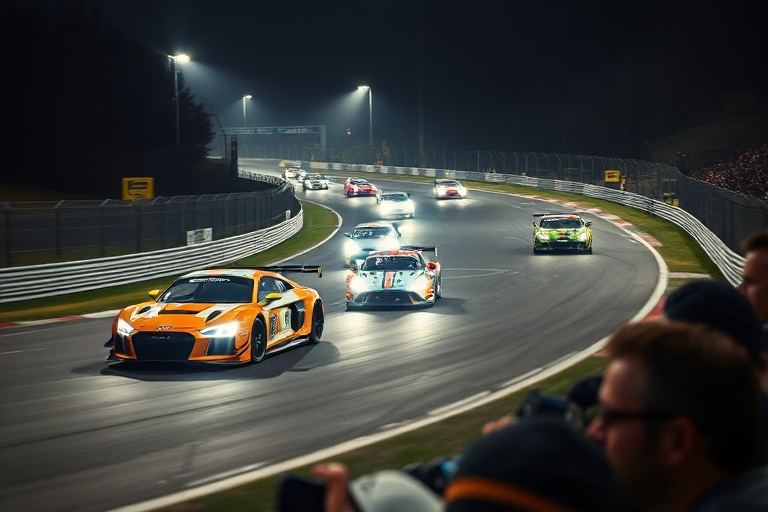
The Nordschleife, often called “The Green Hell” by Jackie Stewart, is infamous for its 172 corners, elevation changes, and treacherous surface. The Nürburgring 24 Hours isn’t just about speed—it’s about survival. Teams must navigate everything from icy patches at dawn to blistering heat by midday, all while managing tire wear, fuel consumption, and driver fatigue.
Unlike permanent racetracks, the Nordschleife’s public road origins mean it’s shared with regular traffic the rest of the year. This adds another layer of complexity: drivers must adjust to changing grip levels and unpredictable obstacles, from gravel traps to the occasional wandering cyclist. The circuit’s sheer length—over 25 kilometers—also forces teams into a relentless cycle of strategy adjustments, where a single mistake can cost hours.
For manufacturers, the Nürburgring is the ultimate proving ground. A strong performance here can make or break a brand’s reputation. In 2023, Porsche celebrated its 19th overall victory, while BMW and Mercedes have also left their mark. But the race isn’t just for factory-backed teams. Independent outfits, often with limited budgets, compete alongside them, proving that grit and ingenuity can rival raw horsepower.
The Human Factor: Drivers and Teams
Endurance racing is as much a test of mental fortitude as it is of physical ability. Teams consist of three to four drivers, each taking turns behind the wheel in stints lasting anywhere from 30 minutes to two hours. Sleep deprivation, intense focus, and the pressure to perform flawlessly under extreme conditions create an environment where even the smallest error can have catastrophic consequences.
Drivers must adapt to rapid weather changes, often racing in torrential rain during the day and clear skies at night. The Nordschleife’s elevation means temperatures can swing dramatically, forcing teams to adjust tire compounds and aerodynamic settings on the fly. Pit stops, which can last just 30 seconds, are a ballet of efficiency—fuel must be pumped, tires swapped, and minor repairs made without losing a single second.
For amateur drivers, the Nürburgring 24 Hours is a dream. Qualifying involves a grueling selection process, with hundreds of applicants vying for a coveted spot on the grid. Those who make it often describe the experience as life-changing. Professional drivers, meanwhile, treat the race with the same reverence as a Formula 1 Grand Prix, knowing that a single lap of inattention can end their campaign.
A Global Stage for Motorsport Innovation
The Nürburgring 24 Hours isn’t just a German affair—it’s a truly international event. Teams from Japan, the United States, and the Middle East travel thousands of miles to test their mettle against Europe’s finest. Manufacturers use the race to debut new technologies, from hybrid powertrains to advanced aerodynamics, all under the unforgiving lens of the world’s most demanding circuit.
In recent years, electric vehicles have begun to make their mark. In 2022, the Audi RS e-tron GT became the first fully electric car to finish the race, a milestone that hinted at the future of endurance racing. Meanwhile, hybrid entries from Porsche and BMW have pushed the boundaries of what’s possible, proving that sustainability and performance are no longer mutually exclusive.
The race also serves as a cultural melting pot. Fans from across Europe—and increasingly from Asia and the Americas—gather to camp on the circuit’s hillsides, exchanging stories and forging friendships. The atmosphere is a mix of camaraderie and competition, where seasoned veterans share advice with newcomers over steaming cups of coffee.
Why the Nürburgring 24 Hours Matters
The Nürburgring 24 Hours is more than a race; it’s a testament to human endurance and engineering brilliance. In an era where motorsport is increasingly dominated by high-tech simulations and data-driven strategies, the Nordschleife remains a raw, unpredictable beast. It doesn’t reward the complacent—it rewards those who dare to push harder, adapt faster, and endure longer.
For drivers, it’s the ultimate challenge. For teams, it’s a year-long obsession. For fans, it’s a spectacle unlike any other. And for the automotive world, it’s a reminder that sometimes, the greatest innovations come not from the drawing board, but from the crucible of competition.
As the checkered flag falls and the champagne flows, one thing is certain: the Nürburgring 24 Hours will continue to write its legend for decades to come.
- Sports fans can explore more endurance racing coverage on Dave’s Locker.
- For those interested in automotive technology, our Technology section dives deeper into the innovations shaping modern motorsport.