In the ever-expanding universe of internet horror, few concepts have seeped into popular culture as unexpectedly as The Backrooms. What began as a cryptic forum post in 2018—a single paragraph describing an endless, yellow-lit limbo—has evolved into a sprawling multimedia phenomenon. Now, the next logical step has arrived: a feature-length film adaptation.
The Backrooms movie, still in development but generating significant buzz, represents more than just another horror flick. It embodies the organic growth of internet storytelling, where fan theories, visual memes, and collaborative worldbuilding collide with professional filmmaking. This isn’t a top-down franchise launch. It’s a grassroots horror story that clawed its way into mainstream attention, proving that the most compelling narratives often emerge from the darkest corners of the web.
From Text to Terrors: The Evolution of The Backrooms
The Backrooms started as a simple thought experiment. A user on 4chan’s /x/ board, known as “Notnite,” posted a short description:
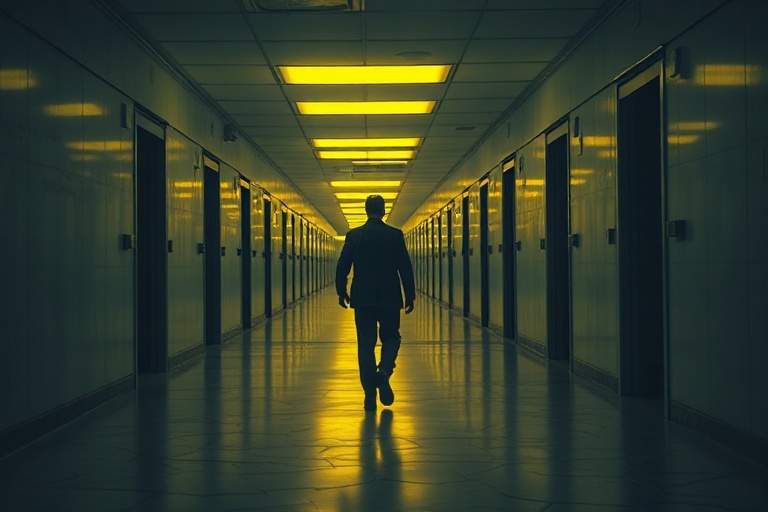
“If you ‘noclip’ out of reality in the wrong way, you’ll end up in The Backrooms, where only the stink of old moist carpet, the madness of mono-yellow, the endless background noise of fluorescent lights at maximum hum-buzz, and approximately six hundred million square miles of randomly segmented empty rooms can welcome you.”
What followed was pure internet alchemy—fans expanded the lore, drew maps of the endless corridors, and invented creatures to populate the void. The Backrooms became a sandbox for horror creativity, where every player could contribute to the mythos. It was less a story and more a framework: a blank canvas for dread.
By 2022, the concept had fractured into countless subgenres—some explored the psychological horror of isolation, others leaned into surreal cosmic terror. The sheer malleability of The Backrooms mythos made it ripe for adaptation. Film studios took notice, but so did indie creators, YouTubers, and even game developers. The IP was free, the rules undefined, and the audience hungry.
Why The Backrooms Movie Matters in the Horror Landscape
The horror genre has long thrived on adaptability. From Stephen King’s novels to viral Reddit stories like Local58, the best horror doesn’t just scare—it invites participation. The Backrooms movie fits squarely into this tradition, but with a twist: it’s adapting an IP that was never meant to be adapted. There’s no original author, no canon script, just a collective fever dream.
This presents a unique challenge—and opportunity—for filmmakers. A traditional studio might try to “clean up” the lore, streamline the mythology, or add a clear antagonist. But the most intriguing adaptations often preserve the original’s ambiguity. Consider how Hereditary and Midsommar used surrealism to amplify psychological terror. The Backrooms film could do something similar: turn the emptiness itself into the villain.
Moreover, the movie arrives at a time when horror audiences crave authenticity. After years of jump-scare-heavy franchises and CGI-laden spectacles, there’s a hunger for raw, unsettling environments. The Backrooms—with its endless corridors and flickering lights—offers a setting that feels both mundane and alien, a place where terror lurks in the corners of your vision.
The Creative Process: How a Fan-Made Horror Story Translates to Film
Bringing The Backrooms to the screen isn’t just about visual effects. It’s about capturing the uncanny dread of an inescapable maze. Early concept art and test footage suggest filmmakers are leaning into analog textures—peeling paint, buzzing fluorescents, the sound of distant footsteps. The goal isn’t to show too much. It’s to make the audience feel the weight of the silence.
Several teams are vying to helm the project. One adaptation, helmed by filmmaker Jeremy Gardner (known for The Battery and Resolution), takes a more arthouse approach, focusing on slow-burn dread and existential horror. Another, produced by Bad Robot’s creative arm, leans into sci-fi horror, suggesting a larger multiverse where The Backrooms are just one layer of reality.
Regardless of the final vision, the film’s success hinges on one key question: Can it preserve the original’s collaborative spirit? The Backrooms thrives because it’s incomplete. Every viewer fills in the gaps with their own fears. A movie that tries to explain too much risks losing that magic.
What We Know So Far: Plot, Cast, and Release Hints
Details remain scarce, but here’s what’s been confirmed or leaked:
- Setting: The film will follow a protagonist who stumbles into The Backrooms while fleeing a mundane threat—a car accident, a home invasion, or perhaps a glitch in reality itself.
- Tone: Expect a mix of psychological horror, cosmic dread, and surreal body horror. Think Jacob’s Ladder meets The Void, with a dash of Silent Hill’s oppressive atmosphere.
- Creatures: While the original mythos includes entities like “Smilers” and “Hounds,” the film may introduce new horrors or reinterpret existing ones to heighten tension.
- Ending: Rumors suggest a non-traditional conclusion—perhaps a loop, a revelation, or a fade-to-white that leaves audiences questioning what they just experienced.
Casting announcements have been minimal, but indie horror favorites like Bill Skarsgård and A24 regulars are rumored to be in early talks. If the movie lands with the right studio, it could premiere at a festival like Sundance or SXSW before a wider release—or even a streaming drop.
The Broader Implications: Why The Backrooms Movie Could Redefine Internet Horror
The Backrooms movie isn’t just another horror flick. It’s a cultural artifact—a testament to how internet-born stories can transcend their origins. In an era where Hollywood increasingly mines nostalgia and remakes, The Backrooms adaptation proves that originality still thrives online.
It also raises important questions about ownership and adaptation. The Backrooms has no single creator, no copyright holder. It belongs to everyone who contributed to its mythos. How will the filmmakers navigate this? Will they credit the original posters? Will they allow fan expansions to continue alongside the movie?
More broadly, The Backrooms movie could signal a shift in how horror IP is developed. Instead of studios greenlighting sequels to existing franchises, we might see more adaptations of grassroots phenomena—stories that grow organically from forums, games, and TikTok trends. The horror genre has always been a proving ground for new ideas. The Backrooms could be the next step.
There’s also the matter of legacy. Will the movie spawn its own lore? Will it inspire games, ARGs, or even theme park attractions? Or will it remain a standalone experiment, a brief but brilliant translation of digital dread into cinematic form?
A Final Thought: The Horror of the Unknown
What makes The Backrooms so terrifying isn’t just the idea of being trapped in an endless maze. It’s the fear of the unknowable. The Backrooms aren’t just a place. They’re a question: What happens when reality glitches? What lurks in the spaces between our constructed worlds?
The movie, whenever it arrives, will have to grapple with this. It can’t rely on jump scares or cheap thrills. It must make the audience feel the weight of the unknown, the dread of the empty corridor stretching on forever. In that sense, the best adaptation won’t be the one that explains The Backrooms—but the one that makes us all afraid to look behind the closet door again.
For horror fans, that’s reason enough to pay attention. For filmmakers, it’s a challenge. For the internet at large, it’s proof that the scariest stories are the ones we tell ourselves.
And when the movie finally drops, we’ll all be waiting—just beyond the threshold, in the flickering yellow light.
For more on the intersection of internet horror and cinema, explore our Horror and Film sections at Dave’s Locker.