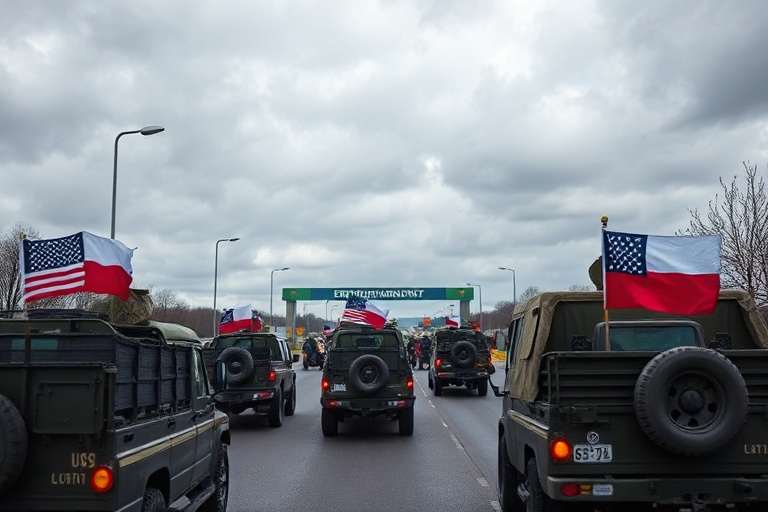
The Pentagon’s decision to cancel planned troop deployments to Poland marks a significant shift in U.S. military strategy in Eastern Europe. Announced last week, the reversal follows months of diplomatic negotiations and logistical planning, raising questions about the broader implications for NATO alliances and regional security.
While the Pentagon has not provided extensive details, sources indicate that budgetary constraints and shifting priorities played a role in the cancellation. Poland, a key NATO ally, has been a focal point for U.S. military presence in Eastern Europe, particularly in response to Russia’s ongoing war in Ukraine. The abrupt change in plans has left analysts and policymakers scrambling to understand the long-term consequences.
Context Behind the Decision
The original troop deployment was part of a broader U.S. strategy to strengthen NATO’s eastern flank amid rising tensions with Russia. Poland has been a vocal advocate for increased military presence in the region, hosting U.S. troops under the European Deterrence Initiative (EDI) since 2014. The canceled deployment would have added thousands of additional personnel to existing rotations.
However, the Pentagon’s decision suggests a recalibration of priorities. Recent reports indicate that the U.S. is reallocating resources to other global hotspots, including the Middle East and the Indo-Pacific. This shift aligns with the Biden administration’s stated goal of maintaining a “global posture review” to address multiple security challenges simultaneously.
For Poland, the cancellation is a disappointment but not an insurmountable setback. The country remains a critical partner in NATO, and the U.S. has reiterated its commitment to regional security. Still, the move underscores the fragility of long-term military planning in an era of shifting geopolitical priorities.
Key Points Surrounding the Cancellation
- Budgetary Constraints: The Pentagon cited financial limitations as a primary factor in the decision, raising concerns about future military spending.
- Shift in Global Priorities: The U.S. is increasingly focusing on the Indo-Pacific and Middle East, potentially at the expense of European commitments.
- Poland’s Role in NATO: Despite the setback, Poland remains a key ally, and the U.S. has pledged continued support for regional security.
- Impact on NATO Cohesion: The cancellation may test the alliance’s unity, particularly as European nations debate their own defense strategies.
Broader Implications for NATO and Eastern Europe
The cancellation of the Poland deployment is more than a logistical hiccup—it signals a potential realignment of U.S. military priorities. For NATO, this could mean increased pressure on European nations to bolster their own defenses. Countries like Germany and France may face calls to take on a larger role in Eastern Europe, particularly as the war in Ukraine continues.
Poland, meanwhile, may seek alternative security arrangements. The country has been a strong advocate for deeper integration with NATO, including hosting permanent U.S. bases. The cancellation could accelerate Poland’s efforts to enhance its own military capabilities, potentially leading to closer ties with other European defense initiatives.
For Russia, the news is likely a strategic win. The Kremlin has long opposed NATO’s expansion in Eastern Europe, and the U.S.’s hesitation to commit additional troops could embolden its regional ambitions. However, NATO’s collective defense doctrine remains intact, and the alliance has shown resilience in the face of Russian aggression.
What’s Next for U.S.-Poland Relations?
The immediate aftermath of the cancellation has been marked by diplomatic reassurances. U.S. officials have emphasized that the decision does not reflect a weakening of the U.S.-Poland partnership. Instead, it is framed as a temporary adjustment in response to evolving security needs.
Poland’s government, while disappointed, has not publicly criticized the U.S. Instead, it has reiterated its commitment to NATO and its role as a leader in European defense. Polish officials have also hinted at exploring new security agreements with other NATO members, including the United Kingdom and France.
Looking ahead, the Pentagon may revisit the deployment plan in the coming months, particularly if global tensions escalate. For now, the cancellation serves as a reminder of the unpredictable nature of international security and the challenges of maintaining long-term military commitments.
Recommended Reading
For further analysis on NATO’s evolving role in Eastern Europe, explore these related articles:
- The Future of NATO: Can Europe Stand on Its Own?
- U.S. Military Strategy in Eastern Europe: A Shifting Landscape
Conclusion
The Pentagon’s decision to cancel the Poland troop deployment is a reminder of the complexities of modern military strategy. While the move may disappoint allies, it also highlights the need for flexibility in an unpredictable geopolitical landscape. As NATO adapts to new challenges, the episode underscores the importance of unity and shared responsibility among member states.
For Poland, the cancellation is a setback but not a defeat. The country’s leadership in European defense remains undiminished, and its partnerships with NATO allies will continue to shape the region’s security architecture. The U.S., too, will need to balance its global commitments with the demands of its allies—a task that will define the future of international security.