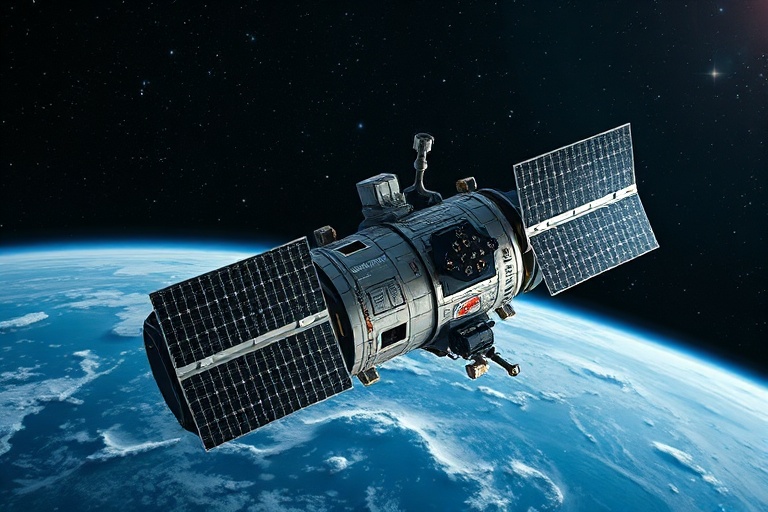
In the vast expanse of space, nations continue to assert their presence through technological prowess and strategic innovation. Russia, with its long history in space exploration, has maintained a robust satellite program that serves both civilian and military objectives. From communications to reconnaissance, these orbital assets play a pivotal role in shaping the country’s geopolitical influence and technological independence.
The Russian space agency, Roscosmos, has been a key player since the dawn of the space age. Even after the dissolution of the Soviet Union, Russia preserved its expertise and infrastructure, ensuring continuity in its satellite deployments. Today, the nation operates a diverse fleet of satellites, ranging from Earth observation platforms to secure military communications systems.
The Evolution of Russia’s Satellite Capabilities
Russia’s satellite program traces its origins to the launch of Sputnik 1 in 1957, which marked the beginning of the space age. Decades later, the country has evolved from pioneering achievements to maintaining a sophisticated and self-sufficient orbital infrastructure. The collapse of the Soviet Union briefly disrupted funding and development, but Russia quickly restructured its space sector under Roscosmos, prioritizing both scientific research and national security.
In the 21st century, Russia has focused on modernizing its satellite fleet. The Glonass navigation system, Russia’s answer to GPS, remains one of its most critical satellite networks. Fully operational since 2011, Glonass provides global positioning services for civilian and military use, ensuring Russia’s autonomy in navigation technology. Additionally, the country has expanded its Earth observation satellites, such as the Resurs series, which support agriculture, disaster monitoring, and urban planning.
- Glonass: A 24-satellite constellation providing global navigation coverage.
- Resurs: High-resolution imaging satellites used for environmental and resource monitoring.
- Luch: Relay satellites that enhance communication between ground stations and orbital assets.
- Tundra: Early warning satellites designed to detect missile launches.
Despite economic challenges and international sanctions, Russia has continued to invest in satellite technology. Recent launches, such as the Arktika-M weather satellite in 2021, demonstrate the country’s commitment to expanding its capabilities in polar orbit, which is crucial for monitoring the Arctic region—a strategic area of growing global interest.
Military and Geopolitical Dimensions
Satellites are not merely tools for scientific inquiry; they are instruments of power. For Russia, satellite technology is central to national security and military strategy. The country’s early warning satellites, part of the Tundra system, provide critical data on potential missile threats, allowing for timely responses. Additionally, Russia has been accused of deploying satellites with dual-use capabilities—civilian in appearance but potentially capable of electronic warfare or anti-satellite operations.
International observers have raised concerns about Russia’s development of co-orbital anti-satellite weapons. In 2021, a Russian satellite, Cosmos 2542, was reported to have approached a U.S. spy satellite in what was described as a potential inspection or interference maneuver. Such incidents underscore the militarization of space and the evolving nature of global security threats.
The geopolitical implications of Russia’s satellite program extend beyond its borders. By maintaining a robust and independent satellite network, Russia reduces its reliance on foreign technology, particularly from Western nations. This autonomy has become increasingly important amid sanctions and technological restrictions imposed following the annexation of Crimea in 2014 and the ongoing conflict in Ukraine.
Global Collaborations and Isolations
Russia’s satellite program has not operated in complete isolation. Historically, it has collaborated with other nations on space missions. For example, the International Space Station (ISS), a symbol of international cooperation, has included significant Russian contributions, such as the Zvezda service module. However, recent geopolitical tensions have strained these relationships.
In 2022, following Russia’s invasion of Ukraine, the European Space Agency (ESA) announced its decision to suspend cooperation with Roscosmos on several missions, including the ExoMars program. This move highlighted the growing divide in space exploration, as Western nations reassess their partnerships with Russia. Meanwhile, Russia has turned to alternative collaborators, such as China, to sustain its space ambitions. The two countries have discussed joint lunar research and the development of a lunar research station, signaling a shift toward new alliances in space.
Despite these challenges, Russia remains a key player in the global satellite landscape. Its expertise in launch technology, particularly with the Soyuz rocket, continues to attract international clients. Countries in Africa, Latin America, and Asia have relied on Russian launch services to deploy their satellites, demonstrating the country’s enduring influence in the space sector.
Future Prospects and Challenges
The future of Russia’s satellite program is shaped by both opportunities and obstacles. On one hand, advancements in miniaturization and artificial intelligence are enabling the development of smaller, more capable satellites. Russia has experimented with CubeSats and microsatellites, which offer cost-effective solutions for specific missions. On the other hand, the country faces significant challenges, including aging infrastructure, brain drain, and the need for modernization.
One of Russia’s most ambitious projects is the Sphere constellation, a planned network of 600 satellites designed to provide broadband internet globally. If realized, Sphere could rival projects like SpaceX’s Starlink and OneWeb, positioning Russia as a major player in the emerging space-based internet economy. However, funding and technical hurdles remain substantial barriers to its completion.
Another critical area is cybersecurity. As satellites become more interconnected, they become potential targets for cyberattacks. Russia has invested in protecting its satellite infrastructure, but the evolving nature of cyber threats poses an ongoing challenge. Ensuring the resilience of these systems is essential for maintaining national security and operational integrity.
In conclusion, Russia’s satellite program reflects a blend of historical legacy, technological innovation, and geopolitical strategy. While the country faces internal and external pressures, its continued investment in satellite technology underscores its determination to remain a leader in space. As the world becomes increasingly reliant on orbital assets for communication, navigation, and security, Russia’s role in shaping the future of space exploration remains significant.
For those interested in the intersection of technology and geopolitics, staying informed about developments in space programs is essential. Whether through civilian innovation or military applications, satellites will continue to play a defining role in the 21st century.