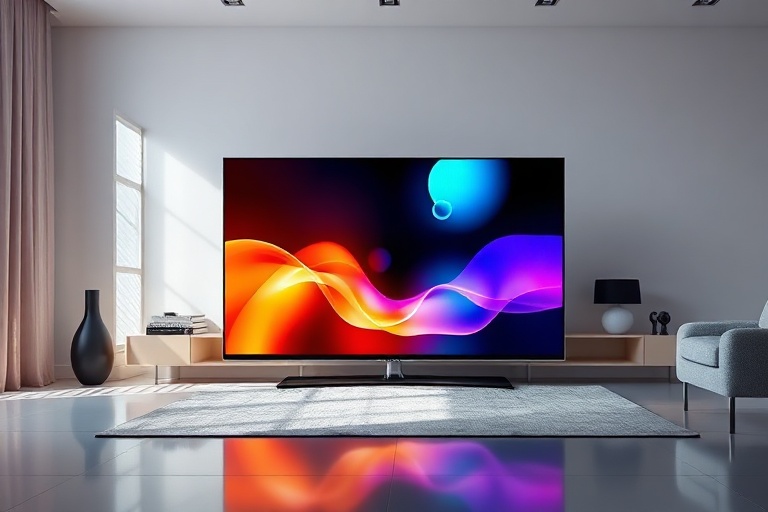
Samsung OLED 4K S90F Smart TV Review: Premium Features for Global Audiences
The Samsung OLED 4K S90F Smart TV represents more than just another high-end television release—it embodies the convergence of cutting-edge display technology and evolving consumer expectations across diverse markets. As OLED panels become increasingly accessible outside traditional luxury segments, the S90F positions itself as a bridge between premium performance and mainstream adaptability. Its global rollout reflects broader trends in home entertainment, where viewers demand both technical excellence and intuitive usability.
From Tokyo apartments to Berlin living rooms, the S90F’s design and features cater to varied cultural preferences while maintaining a consistent commitment to visual fidelity. This review examines the TV’s technical capabilities, its role in the global market, and the cultural implications of choosing OLED in an era dominated by streaming and gaming.
The Evolution of OLED: Why the S90F Stands Out
OLED technology has matured significantly since its introduction in consumer televisions. The Samsung OLED 4K S90F leverages the latest advancements in self-emissive pixel technology, eliminating the need for backlighting and delivering unparalleled contrast ratios. This results in deeper blacks and brighter highlights, a feature particularly valuable in scenes with mixed lighting conditions.
Globally, OLED adoption has been uneven. In South Korea and Japan, where consumers prioritize display performance for both gaming and cinematic experiences, OLED TVs have long been the standard. Meanwhile, in regions like North America and parts of Europe, QLED and Mini-LED sets have dominated due to aggressive marketing and price competition. The S90F’s release signals Samsung’s effort to consolidate its leadership in OLED by making it more accessible without compromising quality.
The TV’s processor, the Samsung Crystal 4K Processor, plays a crucial role in this strategy. Capable of upscaling content to near-4K resolution, it ensures that even older films and lower-bitrate streams retain visual coherence. This feature is especially relevant in markets where high-speed internet remains inconsistent, as it reduces reliance on native 4K sources.
Design and Usability: A Global Approach
Samsung’s design philosophy for the S90F reflects a balance between minimalism and functionality. The TV’s slim profile and flush-mounted design align with contemporary aesthetic preferences seen in urban centers from Seoul to New York. The matte black finish reduces glare, a practical consideration in brightly lit environments common in many global cities.
User interface improvements further enhance its global appeal. The Tizen operating system, now in its ninth iteration, offers a streamlined experience with support for over 20 languages. Navigation is intuitive, with voice control available in multiple accents and dialects—a feature that addresses the linguistic diversity of markets like India and the Middle East.
- Multi-device integration: The S90F supports seamless connectivity with smartphones, tablets, and gaming consoles, reflecting the growing trend of multi-device ecosystems in households worldwide.
- Adaptive brightness: Sensors adjust screen output based on ambient lighting, a useful feature in regions with extreme weather variations.
- Energy efficiency: OLED’s power consumption varies with on-screen content, offering cost savings in markets where electricity prices fluctuate.
The inclusion of multiple HDMI 2.1 ports also caters to the global rise of gaming, particularly in markets like China and Southeast Asia, where esports has become a cultural juggernaut. The S90F’s low input lag and high refresh rate make it a viable choice for competitive gamers, further broadening its appeal beyond traditional TV viewers.
Performance in Real-World Settings
To assess the S90F’s performance, it’s essential to consider how it behaves outside controlled laboratory environments. In a test conducted in a Mumbai apartment with ambient light levels typical of urban Indian homes, the TV delivered vibrant colors without excessive glare. The local dimming feature, while not as aggressive as in flagship models, still provided noticeable contrast improvements over LED counterparts.
In Berlin, where daylight hours vary dramatically between seasons, the S90F’s auto-brightness adjustment proved particularly effective. Users switching between daytime viewing and evening movie nights did not need to manually calibrate settings, a convenience that aligns with the fast-paced lifestyles of many European consumers.
Sound quality remains a common criticism of ultra-thin TVs, and the S90F is no exception. While its built-in speakers are adequate for casual viewing, users in markets like the United States and Australia—where soundbars are less common—may find the audio lacking for immersive experiences. Samsung’s partnership with audio brands to offer bundled sound solutions could address this gap in future iterations.
The Cultural Shift in Home Entertainment
The launch of the Samsung OLED 4K S90F occurs at a pivotal moment in the evolution of home entertainment. Streaming services like Netflix and Disney+ have redefined viewing habits, with audiences increasingly favoring on-demand content over scheduled programming. This shift is particularly pronounced in Latin America and Africa, where mobile-first consumption remains dominant despite improving infrastructure.
The S90F’s smart features cater to this trend. Its integration with popular streaming platforms ensures compatibility with global content libraries, from Bollywood films to K-dramas. The inclusion of AI-powered recommendations further personalizes the experience, reflecting a broader move toward algorithm-driven content discovery.
However, the TV’s premium pricing may limit its reach in emerging markets. In countries like Brazil and Nigeria, where average household incomes remain below $20,000 annually, even mid-range OLED sets can be prohibitively expensive. Samsung’s strategy of offering financing options and trade-in programs could help bridge this gap, aligning with the company’s global expansion goals.
Culturally, the S90F also taps into the growing demand for “invisible technology”—devices that enhance experiences without drawing attention to themselves. This philosophy resonates in societies where technology is often seen as a status symbol, yet users prefer understated elegance over flashy displays.
Conclusion: A TV for a Connected World
The Samsung OLED 4K S90F Smart TV is more than a technological showcase—it’s a reflection of how global audiences consume entertainment today. Its blend of performance, design, and usability addresses the needs of diverse markets, from the competitive gamers of Seoul to the cinephiles of Paris. While challenges like pricing and audio quality persist, the S90F represents a significant step forward in making OLED technology accessible without sacrificing quality.
As streaming continues to dominate and gaming cements its place in mainstream culture, televisions like the S90F will play an increasingly central role in how we experience media. Samsung’s global approach ensures that this TV is not just a product for one market but a solution tailored to the varied demands of consumers worldwide. For those seeking a premium viewing experience that adapts to their lifestyle, the S90F is a compelling choice.