airplane
From Wright Brothers to Supersonic: The Evolution of the Airplane
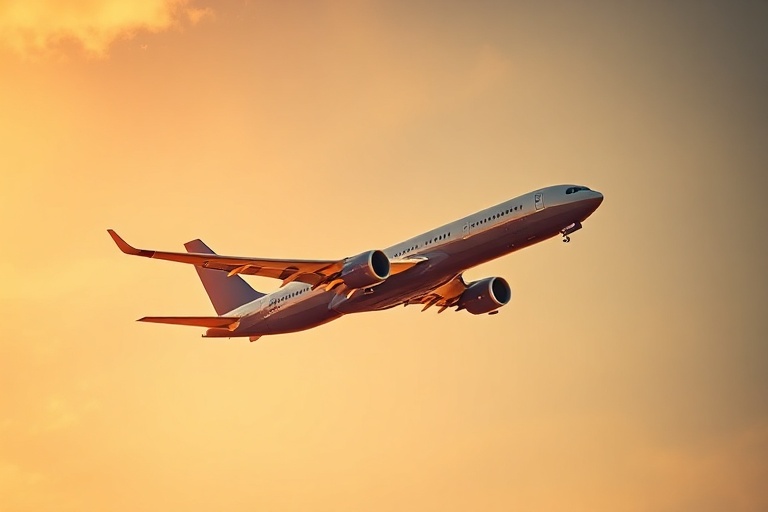
The airplane stands as one of humanity’s most transformative inventions, reshaping global connectivity, commerce, and culture. What began as a fragile wood-and-fabric biplane in the early 20th century has evolved into a marvel of engineering capable of crossing continents in hours. This journey reflects not just technological progress but also the relentless ambition to conquer the skies.
Commercial aviation alone now carries over four billion passengers annually, a figure that underscores the airplane’s indispensable role in modern life. Yet beyond statistics, the airplane symbolizes human ingenuity—balancing aerodynamics, materials science, and safety in a single machine. Its development mirrors broader societal shifts, from post-World War I optimism to today’s focus on sustainability and efficiency.
The Birth of Powered Flight
The airplane’s origins trace back to December 17, 1903, when Orville and Wilbur Wright made history at Kitty Hawk, North Carolina. Their Wright Flyer achieved the first sustained, controlled, powered heavier-than-air flight, lasting 12 seconds and covering 120 feet. This breakthrough was the culmination of years of experimentation, including wind tunnel tests and glider trials.
Early aircraft were frail and unreliable, with wooden frames and fabric coverings. Pilots often relied on intuition rather than instrumentation, facing extreme danger with each flight. By the 1920s, however, advances in engine power and structural design allowed for longer distances and greater payloads. The introduction of metal fuselages and retractable landing gear marked a turning point, paving the way for the sleek airliners of the 1930s.
The airplane quickly transitioned from a novelty to a tool of war and exploration. During World War I, it became a weapon, with dogfights and reconnaissance missions altering battlefield dynamics. Post-war, airlines like Pan Am and Imperial Airways began connecting continents, shrinking the globe and fostering cultural exchange.
How Airplanes Work: The Science Behind the Skies
At its core, flight relies on four fundamental forces: lift, weight (gravity), thrust, and drag. Wings generate lift by creating a pressure difference between their upper and lower surfaces, a principle described by Bernoulli’s equation. Jet engines or propellers provide thrust to overcome drag, while the aircraft’s weight is countered by lift.
Modern airplanes incorporate advanced materials like carbon fiber composites to reduce weight without sacrificing strength. Fly-by-wire systems replace manual controls with electronic signals, enhancing precision and safety. Meanwhile, avionics suites integrate GPS, radar, and collision-avoidance technologies to navigate complex airspaces.
The efficiency of an airplane is measured by its lift-to-drag ratio, fuel consumption, and range. Airlines prioritize these metrics to optimize routes and reduce operating costs. For instance, the Boeing 787 Dreamliner uses composite materials to achieve 20% better fuel efficiency than previous models, lowering emissions and ticket prices.
Here are key factors that define an airplane’s performance:
- Aerodynamics: Streamlined shapes minimize drag, improving speed and fuel economy.
- Engine Technology: Turbofans and turboprops balance power and efficiency for different flight profiles.
- Avionics: Digital systems enhance navigation, communication, and safety.
- Materials: Lightweight alloys and composites reduce weight while maintaining structural integrity.
- Human Factors: Ergonomic cockpits and automated systems reduce pilot workload.
The Airplane’s Role in Globalization and Culture
The airplane has been a catalyst for globalization, enabling the rapid movement of people, goods, and ideas. In the 20th century, air travel democratized international tourism, allowing middle-class families to explore distant destinations. Today, cargo planes transport 35% of global trade by value, including perishable goods and high-tech electronics.
Culturally, the airplane has inspired countless works of art, literature, and film. From Charles Lindbergh’s transatlantic crossing to the Concorde’s supersonic flights, these feats captured the public imagination. Movies like Top Gun and Airplane! (1980) immortalized the romance and absurdity of aviation, while airports themselves became symbols of modernity and cosmopolitanism.
The airplane also reflects societal values. In the 1950s and 60s, air travel was a status symbol, accessible only to the wealthy. By the 1980s, deregulation and budget airlines made flying affordable for millions. Today, the rise of ultra-low-cost carriers and private aviation highlights shifting economic priorities, with sustainability becoming a growing concern.
Environmental impact is now a critical conversation in aviation. The industry accounts for about 2.5% of global CO₂ emissions, prompting efforts to develop sustainable aviation fuels (SAFs) and electric aircraft. Companies like Airbus and Boeing are investing in hydrogen-powered and hybrid-electric planes, though commercial deployment remains years away.
Challenges and the Future of Aviation
Despite its achievements, the airplane faces significant challenges. Congestion at major hubs like London Heathrow and Los Angeles International slows operations, while rising fuel costs squeeze airline profits. Geopolitical tensions and pandemics, such as COVID-19, have repeatedly disrupted global travel, exposing the industry’s vulnerability.
Safety remains a paramount concern, though statistics show air travel is remarkably secure. The last major commercial airliner crash involving a U.S. carrier was in 2009, with the industry averaging fewer than one fatal accident per year in the past decade. Advances in predictive maintenance and AI-driven diagnostics are further reducing risks.
Looking ahead, several trends are poised to redefine aviation:
- Sustainability: Airlines are committing to net-zero emissions by 2050, with SAFs and electric planes leading the charge.
- Autonomy: Autonomous flight systems could reduce human error and improve efficiency, though regulatory hurdles remain.
- Supersonic Revival: Startups like Boom Supersonic aim to bring back commercial supersonic travel by the late 2020s.
- Urban Air Mobility: Electric vertical takeoff and landing (eVTOL) aircraft could revolutionize short-haul travel and urban commuting.
- Personalization: Hyper-personalized in-flight experiences, from AI concierges to mood lighting, are becoming standard.
The airplane’s story is far from over. As technology advances and societal needs evolve, it will continue to adapt—whether as a tool for exploration, a symbol of human achievement, or a solution to global challenges. The skies remain a frontier, and the airplane is our most trusted vehicle to navigate it.
For those interested in the intersection of technology and travel, explore our Technology and Travel sections for deeper insights.
Conclusion
The airplane is more than a machine; it is a testament to human curiosity and perseverance. From the Wright brothers’ modest first flight to the era of supersonic jets and autonomous drones, aviation has consistently pushed the boundaries of what’s possible. As we confront climate change and technological disruption, the airplane will need to evolve once again—balancing innovation with responsibility.
Yet one thing is certain: the dream of flight, born over a century ago, will continue to soar. Whether you’re a frequent flyer, an aviation enthusiast, or simply someone who marvels at the sight of a plane taking off, the airplane remains a symbol of progress—a reminder that the sky is not the limit, but merely the beginning.