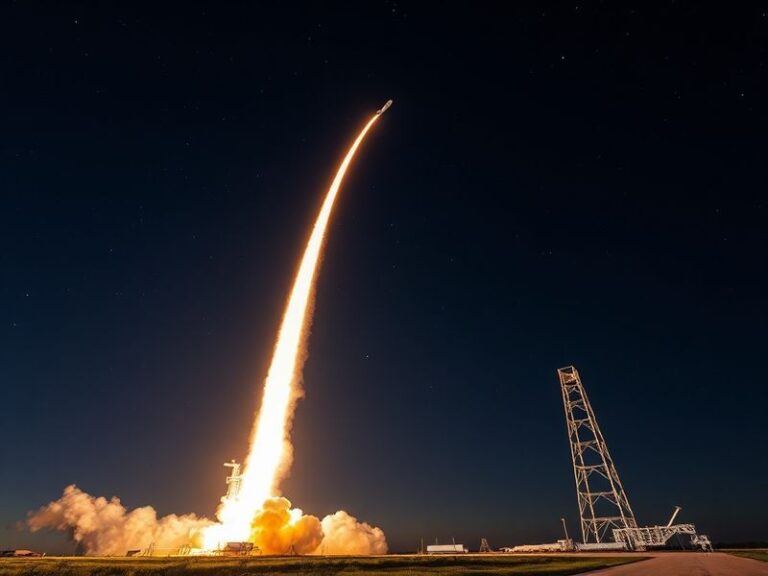
goddard
Robert Goddard: The Visionary Behind Modern Rocketry
The name Robert Goddard is synonymous with the birth of modern rocketry. Born in 1882 in Worcester, Massachusetts, Goddard’s fascination with flight and space began in childhood. A bout of illness at 16 sparked his interest in exploring the cosmos, leading him to write a 1904 entry in his diary: “It is difficult to say what is impossible, for the dream of yesterday is the hope of today and the reality of tomorrow.” This early conviction would define his life’s work.
Goddard’s contributions extended beyond theoretical musings. He built and launched the world’s first liquid-fueled rocket on March 16, 1926, in Auburn, Massachusetts. The flight lasted just 2.5 seconds and reached an altitude of 41 feet, but it marked a turning point in aerospace history. His relentless experimentation—despite skepticism and ridicule—laid the foundation for the rockets that would eventually carry humans to the Moon.
While Goddard’s work was initially met with indifference by the U.S. government, his ideas resonated internationally. German rocket scientists, including Wernher von Braun, studied his patents closely during the 1930s and 1940s. This transatlantic exchange of knowledge would later influence the development of both military and civilian space programs. Goddard’s legacy endures in every rocket launch, from the early V-2s to modern SpaceX missions.
The Science Behind Goddard’s Breakthroughs
Goddard’s genius lay in his systematic approach to solving complex engineering problems. Unlike earlier solid-fueled rockets, which were limited in power and control, Goddard focused on liquid propellants—specifically gasoline and liquid oxygen. This innovation allowed for greater thrust, longer burn times, and the ability to throttle or shut off the engine, features critical for modern spacecraft.
His research extended beyond propulsion. Goddard also explored gyroscopic stabilization, parachute recovery systems, and multi-stage rockets. In 1919, he published A Method of Reaching Extreme Altitudes, a paper that outlined the mathematical principles for rocket flight. Though critics dismissed his theories as impractical, Goddard’s calculations were remarkably accurate. His work anticipated the challenges of escaping Earth’s gravity and navigating the vacuum of space long before such feats became reality.
Goddard’s patents became a cornerstone for later advancements. Among his 214 inventions were designs for rocket nozzles, fuel pumps, and guidance systems. These patents were so foundational that the U.S. government had to purchase them from his widow after his death in 1945 to avoid legal disputes with emerging aerospace companies. Today, they remain a testament to his foresight.
The Global Impact of Goddard’s Work
Goddard’s influence stretched far beyond the United States. In the Soviet Union, rocket pioneers like Sergei Korolev studied his work despite Cold War tensions. Korolev’s R-7 rocket, which launched Sputnik in 1957, owed much to Goddard’s designs. Similarly, German engineers who had once dismissed Goddard’s work later relied on his principles to develop the V-2 rocket during World War II.
Even in Japan, where rocketry developed independently, Goddard’s ideas seeped into the scientific discourse. After World War II, American occupation forces shared captured German V-2 documentation with Japanese researchers, many of whom were already familiar with Goddard’s theories through academic journals. This cross-pollination of ideas highlights how scientific progress often transcends borders, even in times of conflict.
Goddard’s vision also extended to space exploration beyond Earth. He theorized about sending payloads to the Moon as early as 1920, decades before the Apollo missions. His 1926 rocket launch was, in many ways, a precursor to the lunar missions of the 1960s. While Goddard himself did not live to see humans walk on the Moon, his work was a silent force guiding every step of that journey.
The Man Behind the Myth: Goddard’s Personal Struggles
Despite his monumental achievements, Goddard’s life was marked by personal hardship and professional isolation. The scientific community often ridiculed his ideas, and the press mocked his early experiments. Headlines like “Moon Rocket Madness” in the 1920s reflected the public’s skepticism. Goddard responded by retreating into his workshop, where he meticulously documented every experiment, no matter how small.
His health was another obstacle. Chronic tuberculosis and later throat cancer weakened him physically, yet he continued working until his death. Colleagues described him as introverted and meticulous, a man who preferred the company of equations and blueprints over social gatherings. His wife, Esther Goddard, became his most ardent supporter, managing his correspondence and protecting his patents during his lifetime.
Goddard’s posthumous recognition came slowly. It wasn’t until the 1960s, as the U.S. raced to the Moon, that his contributions were fully acknowledged. NASA’s Goddard Space Flight Center, established in 1959, stands as a tribute to his legacy. Yet even today, many outside the aerospace community remain unaware of the man who made spaceflight possible.
Why Goddard Still Matters Today
The principles Goddard established continue to shape space exploration. Modern rockets, from the Saturn V that carried astronauts to the Moon to the reusable boosters of SpaceX, trace their lineage back to his early experiments. His emphasis on liquid fuels and precise engineering remains central to rocket design. Even the concept of multi-stage rockets, which Goddard patented in 1914, is still used in missions to Mars and beyond.
Goddard’s story is also a lesson in perseverance. In an era when spaceflight was considered science fiction, he dedicated his life to proving the impossible possible. His journey from a sickly child to a pioneer of aerospace mirrors the arc of countless innovators who defy convention. Today, as private companies and governments alike push the boundaries of space, Goddard’s spirit lives on in every launch.
Beyond rocketry, Goddard’s legacy invites reflection on how ideas travel and evolve. His patents were freely shared with the world, yet it took decades for their full potential to be realized. This underscores the unpredictable nature of innovation—how a single vision, nurtured in obscurity, can ignite revolutions across continents and generations.
Robert Goddard once wrote, “The dream of yesterday is the hope of today and the reality of tomorrow.” More than a century later, his dream has not only become reality but continues to expand into the cosmos. As humanity looks toward Mars, the outer planets, and beyond, the foundations laid by this unassuming visionary will remain indispensable.