Swatch Watch: The Swiss Brand That Changed Timekeeping Forever
Swatch Watch: How the Swiss Brand Reinvented Timepieces in the 1980s
When Nicolas G. Hayek founded Swatch in 1983, he didn’t just launch a watch brand—he sparked a cultural shift that redefined how people viewed timepieces. The Swiss company emerged from the ashes of two failing watch manufacturers, ASUAG and SSIH, with a bold mission: to create affordable, stylish watches that would compete with digital timekeepers flooding the market. At its core, Swatch was a rebellion against the traditional Swiss watch industry’s reliance on mechanical complexity and high price tags.
Hayek’s vision was simple yet revolutionary. He stripped down watchmaking to its essentials, focusing on plastic casings, quartz movements, and bold, playful designs. The result was a watch that cost less than $50 but carried the prestige of Swiss craftsmanship. By the mid-1980s, Swatch had become a global phenomenon, selling millions of units and turning the once-staid watch industry on its head. Today, Swatch remains a symbol of accessibility, innovation, and Swiss ingenuity.
The Birth of a Watch Revolution
Swatch’s origins trace back to the quartz crisis of the 1970s, when Japanese companies like Seiko and Casio dominated the market with affordable, battery-powered watches. Swiss watchmakers, known for their intricate mechanical movements, struggled to compete. Enter Hayek, a Lebanese-born engineer and consultant who saw an opportunity. In 1983, he merged ASUAG and SSIH, forming the Swatch Group, and introduced the Swatch watch—a product that combined Swiss precision with mass-market appeal.
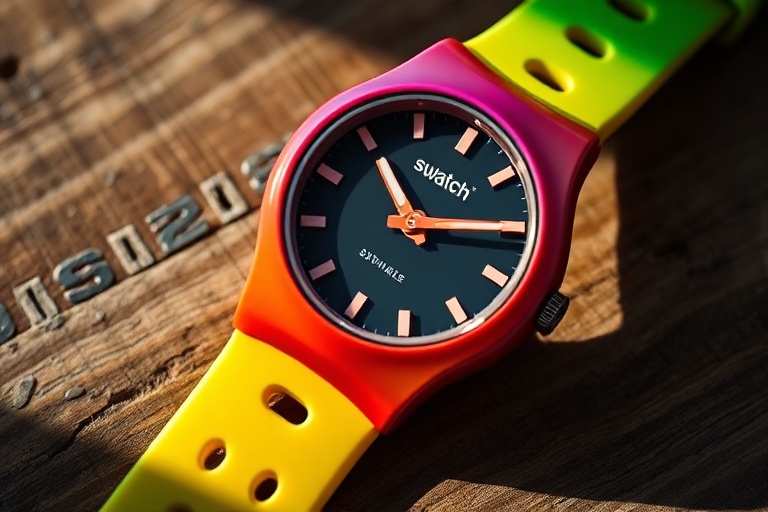
The first Swatch models debuted in 1983, featuring bright colors, interchangeable straps, and a price point that made them disposable in the eyes of some purists. Yet, their simplicity was their strength. Unlike traditional watches, Swatch models were designed to be fashion statements, not just timekeeping tools. The brand’s early marketing leaned heavily into youth culture, collaborating with artists and designers to create limited-edition collections that felt more like collectibles than mere accessories.
One of Swatch’s most iconic early campaigns was the 1984 “Swatch Art” series, which featured designs by artists like Keith Haring and Jean-Michel Basquiat. These collaborations blurred the lines between fashion and art, positioning Swatch as a cultural player rather than just a watchmaker. The strategy worked. By 1985, Swatch had sold over 100 million units, and its annual revenue exceeded $1 billion.
Design Philosophy: Playfulness Meets Precision
Swatch’s design ethos has always prioritized creativity over convention. From its inception, the brand embraced bold colors, unconventional shapes, and modular components. The classic Swatch watch, with its rectangular case and two-tone strap, became an instant icon. But Swatch didn’t stop there. Over the years, the brand has experimented with everything from transparent backs to kinetic movements, proving that functionality and fun aren’t mutually exclusive.
A closer look at Swatch’s design evolution reveals a few key themes:
- Color and Aesthetics: Swatch watches are often defined by their vibrant palettes. Early models like the “Beat” series featured minimalist, monochromatic designs, while later collections embraced neon hues and metallic finishes. The brand’s 2020 “Skin” series, for example, showcased ultra-thin cases in pastel shades, catering to a new generation of watch enthusiasts.
- Modularity: Swatch has long championed interchangeable straps and cases. The 2019 “Swatch x Omega” collaboration, which paired Swatch’s colorful designs with Omega’s mechanical movements, highlighted the brand’s ability to blend high and low watchmaking.
- Limited Editions: Swatch’s limited-run collections have become highly sought after. The 2018 “Jelly Fish” series, made entirely of transparent plastic, sold out within hours. Similarly, the 2021 “Scuba” line paid homage to the brand’s aquatic roots, featuring deep-sea-inspired colorways.
Swatch’s design team has also embraced sustainability. In recent years, the brand has introduced recycled materials into its watches, including plastics derived from ocean waste. This shift reflects a broader industry trend toward eco-consciousness, proving that Swatch can be both trendy and responsible.
Swatch in Pop Culture: From Counterculture to Mainstream
Swatch’s influence extends far beyond the watch industry. In the 1980s and 1990s, the brand became a staple of hip-hop, punk, and rave culture. Artists like Run-DMC, Madonna, and the Beastie Boys frequently sported Swatch watches in music videos and public appearances. The brand’s association with counterculture gave it an edgy, rebellious aura that resonated with younger audiences.
Swatch’s marketing campaigns have always been as much about attitude as they are about product. The brand’s early ads featured slogans like “Swatch. The Watch for the Eighties” and “Art meets Time.” These campaigns weren’t just selling watches; they were selling a lifestyle. Swatch watches became symbols of individuality, allowing wearers to express their personalities through bold, unconventional designs.
In the 2000s, Swatch pivoted toward collaborations with high-fashion brands. Partnerships with the likes of Comme des Garçons, Calvin Klein, and even luxury giant Tiffany & Co. elevated Swatch’s status from streetwear staple to high-fashion contender. These collaborations blurred the lines between luxury and accessibility, reinforcing Swatch’s role as a bridge between subcultures and mainstream fashion.
Swatch’s cultural footprint is also evident in its forays into music and art. The brand has sponsored music festivals, collaborated with DJs, and even released watches inspired by iconic album covers. This cross-disciplinary approach has kept Swatch relevant across generations, ensuring that it remains more than just a watch brand.
The Swatch Group: A Watch Empire Built on Diversity
While Swatch is the brand’s most recognizable name, it’s just one piece of the larger Swatch Group puzzle. The conglomerate, which Hayek helped build, owns over 18 watch brands, ranging from luxury (Breguet, Omega) to mid-range (Longines, Tissot) to accessible (Certina, Mido). This diversity allows the Swatch Group to cater to every segment of the market, from first-time watch buyers to seasoned collectors.
Swatch’s role within the group is unique. While brands like Omega and Blancpain focus on heritage and craftsmanship, Swatch serves as the group’s experimental arm. It’s where trends are born, risks are taken, and new audiences are engaged. For example, Swatch’s 2022 “MoonSwatch” collaboration with Omega—a collection of watches inspired by the moon—generated unprecedented hype, selling out in minutes and driving traffic to Dave’s Locker’s Trending section.
The Swatch Group’s strategy has paid off. Today, it’s the world’s largest watch company, with annual revenues exceeding $8 billion. Swatch remains its flagship brand, but the group’s portfolio ensures that it can weather economic downturns and shifting consumer tastes. Whether it’s through Swatch’s playful designs or Omega’s timeless elegance, the group continues to shape the watch industry.
Why Swatch Still Matters Today
In an era dominated by smartwatches and digital timekeeping, Swatch’s relevance might seem surprising. Yet, the brand has adapted by blending nostalgia with innovation. Recent years have seen Swatch embrace vintage aesthetics, re-releasing classic models like the “Irony” and “Diaphane” lines. These retro-inspired watches appeal to collectors and newcomers alike, proving that timeless design never truly goes out of style.
Swatch has also leaned into sustainability, a growing priority for consumers. The brand’s “Swatch x Parley” collection, made from recycled ocean plastic, aligns with its commitment to reducing environmental impact. This eco-conscious approach resonates with younger shoppers who prioritize ethical consumption.
Despite its global success, Swatch remains rooted in its Swiss heritage. The brand continues to manufacture most of its watches in Switzerland, a rarity in an industry dominated by outsourced production. This dedication to quality and craftsmanship sets Swatch apart from competitors that prioritize cost-cutting over tradition.
For watch enthusiasts and casual wearers alike, Swatch offers something unique: the freedom to express individuality without breaking the bank. Whether you’re drawn to its bold designs, cultural cachet, or Swiss precision, Swatch remains a testament to the power of simplicity and creativity in watchmaking.
As the brand approaches its 50th anniversary in 2033, it’s clear that Swatch’s legacy is far from over. From its humble beginnings as a disruptor to its current status as a global icon, Swatch has proven that a watch can be more than just a timekeeper—it can be a work of art, a fashion statement, and a cultural symbol. In a world of fleeting trends, Swatch endures because it refuses to take itself too seriously.
For those looking to dive deeper into Swatch’s history or explore its latest collections, Dave’s Locker’s Fashion section offers curated insights and reviews that highlight the brand’s ever-evolving story.