The Backrooms Movie: A Deep Look at Horror’s New Frontier
The Backrooms phenomenon has evolved from an eerie internet myth into a full-fledged cinematic exploration with the upcoming Backrooms movie. Originally rooted in creepypasta culture, the concept of endless, yellow-lit office corridors has captivated horror enthusiasts for over a decade. As filmmakers prepare to bring this unsettling universe to the big screen, anticipation and speculation continue to build.
This article examines the origins of The Backrooms, the challenges of adapting an internet-born horror concept to film, and what audiences can expect from the cinematic experience. We also explore how the movie might influence future horror storytelling in an era dominated by found-footage and psychological thrillers.
The Origins of The Backrooms: From Creepypasta to Cultural Icon
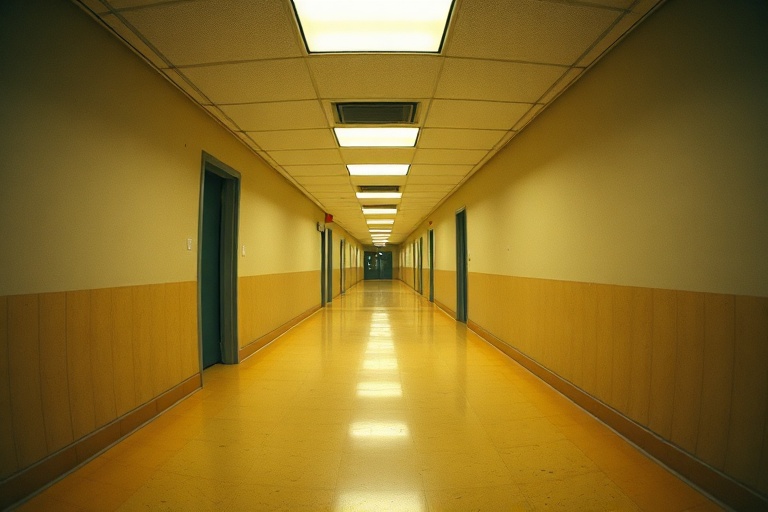
The Backrooms first emerged in 2018 on 4chan’s /x/ paranormal board as a user-generated horror concept. The original post described a liminal space—a non-place that exists between the real world and another reality—where wanderers could become trapped in an endless maze of fluorescent-lit offices, flickering lights, and the distant hum of fluorescent bulbs. The simplicity of the idea, combined with its eerie plausibility, struck a chord with online horror communities.
Unlike traditional horror villains or haunted locations, The Backrooms thrived on ambiguity. It wasn’t about a ghost or a monster—it was about the dread of being lost in a place that shouldn’t exist. This minimalist approach allowed fans to project their own fears onto the concept, fueling countless fan-made stories, videos, and even video games. The Backrooms became a blank canvas for horror, a place where the terror came not from external threats but from the environment itself.
As the mythos expanded, so did the lore. Fans introduced levels—each with its own aesthetic, dangers, and rules. From the claustrophobic offices of Level 0 to the industrial wastelands of Level 3, the Backrooms grew into a sprawling, self-contained universe. This depth made the idea ripe for adaptation, but it also posed a significant challenge: how do you condense an infinitely vast and ever-evolving concept into a single film?
Adapting a Digital Myth: The Challenges of Bringing The Backrooms to Film
Translating an internet-born horror concept into a visual medium is no small feat. The Backrooms thrive on imagination and the unseen. The horror comes from what isn’t shown—the flicker of a light in the distance, the sound of footsteps in an empty hallway, the slow realization that you’re not alone. Filmmakers must strike a balance between showing enough to satisfy audiences while preserving the mystery that made the concept so compelling.
One of the biggest challenges will be designing the visual aesthetic of The Backrooms. The original concept relied heavily on the uncanny familiarity of office spaces—beige carpets, fluorescent lighting, and the hum of HVAC systems. These mundane elements, when taken to an extreme, become deeply unsettling. The film must recreate this atmosphere without veering into parody or losing the sense of dread. Early production stills suggest a focus on practical effects and minimalist set design, which could help maintain the eerie authenticity of the source material.
Another hurdle is the narrative structure. The Backrooms are, by definition, a place without a clear beginning or end. A linear story might struggle to justify its existence in such a setting. Potential approaches could include:
- A found-footage style, where characters document their descent into the Backrooms, adding layers of realism and immersion.
- A psychological thriller, where the protagonist’s grip on reality slowly unravels as they realize they’re trapped in a non-place.
- A anthology-style film, with each segment exploring a different level of The Backrooms.
The filmmakers’ choices here will determine whether the movie feels like a fresh take on horror or a shallow imitation of the source material. Given the creative team’s background in indie horror, there’s potential for something truly innovative.
What to Expect from the Backrooms Movie: Themes and Influences
Horror films often reflect the anxieties of their time, and The Backrooms movie is no exception. The concept taps into several modern fears:
- Isolation and Entrapment: The idea of being lost in a place with no exit resonates in an era where people feel increasingly disconnected, even in crowded spaces.
- The Uncanny Valley: The Backrooms play on the horror of the familiar made strange—office spaces that should feel safe but instead feel oppressive and wrong.
- Existential Dread: The lack of clear rules or logic in The Backrooms forces characters (and audiences) to confront the absurdity of their situation.
- Digital Age Paranoia: The Backrooms originated online, and their expansion into film mirrors how digital spaces can feel inescapable and surreal.
Visually and tonally, the film may draw comparisons to other works, such as Jacob’s Ladder (1990) for its psychological horror, The Shining (1980) for its labyrinthine setting, or Annihilation (2018) for its blend of sci-fi and body horror. However, the filmmakers have emphasized a commitment to originality, aiming to carve out a distinct identity within the horror genre.
Another intriguing possibility is the incorporation of meta-commentary. Since The Backrooms began as an internet story, the film could explore themes of digital culture, fandom, and the way horror evolves in the age of social media. A clever script might even acknowledge the audience’s familiarity with the source material, playing with expectations in unexpected ways.
The Future of The Backrooms: Beyond the Movie
Regardless of how the film performs, The Backrooms are unlikely to disappear. The mythos has already spawned numerous fan works, including games like Backrooms Game and countless YouTube videos. A successful movie could revitalize interest in the concept, inspiring new levels, stories, and even spin-offs.
For horror fans, The Backrooms represent an exciting frontier. They challenge traditional storytelling by rejecting clear narratives in favor of atmospheric dread. If the film captures even a fraction of the original concept’s power, it could pave the way for more unconventional horror adaptations. It might even encourage studios to take more risks with liminal space horror, a subgenre that’s ripe for exploration.
Moreover, The Backrooms movie could serve as a case study in adapting internet-born horror. As social media continues to spawn new myths and legends, filmmakers will increasingly look to these digital spaces for inspiration. The challenge will be to translate the raw, unfiltered creativity of online communities into cohesive, cinematic experiences—a task that’s as daunting as it is exciting.
As the release date approaches, speculation will only intensify. Will the film live up to the hype? Will it capture the eerie essence of The Backrooms or fall into the trap of over-explaining its mysteries? For now, one thing is certain: the Backrooms are here to stay, and their journey from creepypasta to cinema is just beginning.