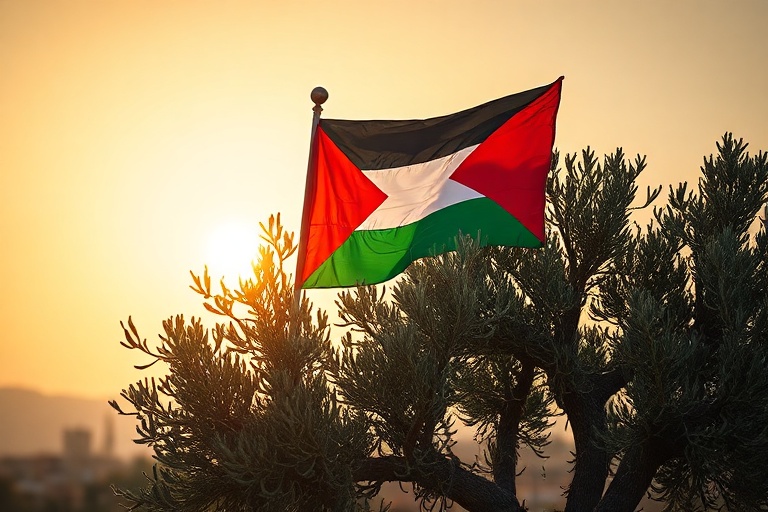
The flag of Palestine is more than a piece of cloth. It represents a people’s struggle, their heritage, and their unyielding quest for statehood. With its bold colors and distinct design, the flag has become a powerful emblem recognized worldwide. Its history is deeply intertwined with the Palestinian national movement, reflecting both resilience and the enduring hope for self-determination.
The Origins and Design of the Palestine Flag
The current flag of Palestine was officially adopted by the Palestine Liberation Organization (PLO) in 1964, though its design traces back to the Arab Revolt against Ottoman rule in the early 20th century. The flag’s colors—black, white, green, and red—were first used in the 1916 flag of the Arab Kingdom of Hejaz. These colors carry deep symbolic meaning in Arab culture.
The flag consists of three horizontal stripes: black at the top, white in the middle, and green at the bottom. Overlaying the stripes is a red triangle extending from the hoist side. The colors represent:
- Black: The black stripe symbolizes the defeat of the Abbasid Caliphate by the Fatimids and represents the color of the Black Standard used by Muhammad in early Islam.
- White: The white stripe stands for the Umayyad Caliphate, representing purity and light.
- Green: The green stripe represents the Fatimid Caliphate and is often associated with Islam, prosperity, and nature.
- Red: The red triangle symbolizes the Hashemite dynasty and the blood of martyrs who fought for Arab independence.
This design was not originally created for Palestine but was adopted by Arab nationalists as a unifying symbol. Its adoption by the PLO in 1964 solidified its place as the national flag of the Palestinian people, even before the establishment of an independent state.
Historical Context and Political Significance
The Palestine flag’s journey from a pan-Arab symbol to a national emblem is marked by political struggle. During the British Mandate period (1920-1948), Palestinians did not have an official flag. Instead, they used various symbols, including the crescent and star, to represent their identity. The Arab Revolt flag, with its distinct colors, became a rallying point for Palestinian nationalism.
In 1948, with the creation of the state of Israel and the subsequent displacement of hundreds of thousands of Palestinians (known as the Nakba), the flag took on new meaning. It became a symbol of resistance against occupation and dispossession. The PLO, founded in 1964, formally adopted the flag as the emblem of the Palestinian people, using it to assert their presence on the global stage.
During the First Intifada (1987-1993), the flag was frequently displayed in protests against Israeli occupation. Israel, however, banned its public display in the West Bank and Gaza Strip until 1993, when the Oslo Accords provided limited autonomy to Palestinians. Even today, the flag’s display remains a contentious issue in some areas, reflecting the ongoing tensions in the region.
The Flag in Modern Palestinian Society
Today, the Palestine flag is a ubiquitous presence in Palestinian communities, both in the occupied territories and across the diaspora. It is flown at protests, displayed on buildings, and worn as clothing or accessories. The flag’s visibility is a statement of identity and defiance in the face of occupation and displacement.
In Gaza and the West Bank, the flag is often seen alongside images of martyrs and leaders like Yasser Arafat. It is also a common sight at international events, where Palestinian athletes, artists, and diplomats use it to represent their nation. For example, Palestinian athletes compete under the Palestine flag in the Olympics and other global competitions, despite not having a sovereign state.
Social media has further amplified the flag’s reach. Hashtags like #PalestineFlag and #FreePalestine have trended globally, with users sharing images of the flag to raise awareness about the Palestinian cause. This digital activism has helped the flag transcend geographical boundaries, making it a symbol recognized far beyond the Middle East.
The Flag’s Role in International Diplomacy
The Palestine flag’s recognition in international diplomacy has been a slow but evolving process. The United Nations granted Palestine observer state status in 2012, allowing the flag to be flown at UN headquarters in New York. This was a symbolic victory for the Palestinian people, as it signaled growing international recognition of their statehood aspirations.
Many countries, particularly in the Global South, recognize Palestine as a state and fly its flag alongside their own. In Europe and North America, the flag is often seen at pro-Palestinian rallies, reflecting widespread support for the Palestinian cause. However, its display in some Western countries has sparked controversy, with critics arguing that it glorifies terrorism or anti-Semitism. Supporters counter that the flag represents a people’s right to self-determination and resistance against oppression.
The flag has also become a tool in peace negotiations. In past talks between Israel and the PLO, the issue of the flag’s display in East Jerusalem and other contested areas has been a point of contention. For Palestinians, the flag’s presence in these areas is a non-negotiable symbol of sovereignty. For Israel, it represents a challenge to its control over the territories.
Challenges and Controversies
Despite its symbolic power, the Palestine flag is not without controversy. In Israel, the flag is often associated with opposition to the state’s policies and is sometimes banned in public spaces. Israeli authorities have confiscated flags at protests, citing security concerns. This has led to clashes between security forces and Palestinians, further entrenching the flag’s role as a symbol of resistance.
Another challenge is the flag’s association with political factions. While the PLO and the Palestinian Authority officially recognize the flag, Hamas and other militant groups also use it, sometimes leading to confusion or negative perceptions. However, for many Palestinians, the flag transcends political divisions. It is a unifying symbol of their shared identity and struggle.
The flag has also faced criticism from some Arab states, particularly those with normalized relations with Israel. These countries often downplay the flag’s display to avoid diplomatic tensions. Despite this, the flag remains a potent symbol for Palestinians, regardless of their political affiliations or geographical location.
Conclusion: A Flag That Flies Higher Than Borders
The Palestine flag is more than a national symbol; it is a testament to the Palestinian people’s perseverance and their unwavering belief in justice. From its origins in the Arab Revolt to its current role in global activism, the flag has evolved into a universal emblem of resistance and hope. Its colors tell a story of history, culture, and identity, while its presence in protests and diplomatic halls underscores the ongoing fight for statehood.
For Palestinians, the flag is a reminder of their past, a marker of their present struggles, and a beacon for their future. It flies not just in the West Bank and Gaza but in refugee camps across the Middle East, in diaspora communities in Europe and the Americas, and on digital platforms worldwide. In a region marked by conflict and division, the Palestine flag stands as a unifying force, a call for justice, and a symbol of the enduring Palestinian spirit.