Understanding the Pentagon: Power, Strategy, and Global Influence
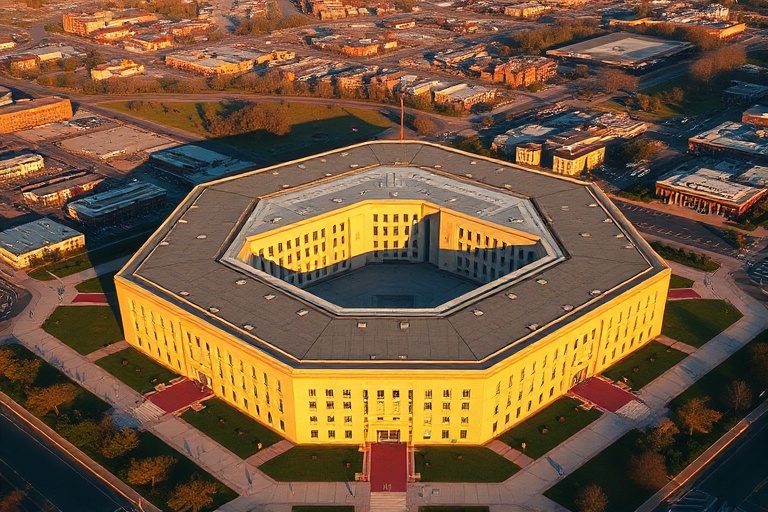
The Pentagon stands as one of the most recognizable and influential buildings in the world. Its distinctive five-sided shape and sheer scale make it an unmistakable landmark, but its significance extends far beyond architecture. As the headquarters of the United States Department of Defense, the Pentagon plays a central role in shaping global military strategy, defense policy, and national security.
Located in Arlington, Virginia, just across the Potomac River from Washington, D.C., the Pentagon was completed in 1943, a remarkable feat of engineering considering it was built in just 16 months. The building spans over 6.5 million square feet and houses more than 26,000 employees. Its design was driven by necessity—World War II demanded rapid expansion of military operations, and the Pentagon became the physical embodiment of America’s growing defense infrastructure.
A Symbol of Military Strategy and Global Influence
The Pentagon is more than just an office building; it is the nerve center of the U.S. military. From this location, the Joint Chiefs of Staff, the Secretary of Defense, and other high-ranking officials coordinate operations that span the globe. The building’s layout is intentionally designed to facilitate communication and decision-making, with corridors arranged to minimize travel time between offices.
Inside the Pentagon, decisions are made that affect not just American troops but also international relations, economic policies, and even technological advancements. The building’s influence can be seen in everything from defense contracts worth billions to the deployment of troops in conflict zones. Its role in shaping military doctrine and strategy ensures that the Pentagon remains a focal point for both allies and adversaries.
Key Functions of the Pentagon
- Command and Control: The Pentagon serves as the primary hub for the Department of Defense, coordinating military operations through the Joint Chiefs of Staff and regional combatant commands.
- Policy Development: Defense policies, including budget allocations and military doctrine, are formulated within its walls.
- Intelligence Integration: Agencies like the Defense Intelligence Agency and the National Security Agency contribute to the Pentagon’s intelligence-gathering and analysis efforts.
- Emergency Response: In times of crisis, the Pentagon acts as a command center for national and international responses, from natural disasters to acts of terrorism.
For those interested in the broader implications of military strategy, the Pentagon’s operations offer a window into how defense priorities shape global politics. You can explore more about these dynamics on Dave’s Locker News.
The Architecture Behind the Power: Design and Security
The Pentagon’s design was the result of a competition held in 1941, shortly after the attack on Pearl Harbor. The winning entry, submitted by architect George Bergstrom, envisioned a massive, efficient workspace that could accommodate the rapid expansion of the War Department. The building’s five-sided shape was not just a stylistic choice—it allowed for a compact layout that minimized the distance between offices, reducing the need for excessive walking.
Construction began in September 1941 and was completed by January 1943, a record-breaking pace that reflected the urgency of wartime needs. The building was constructed using an innovative system of reinforced concrete and steel, which allowed it to withstand the weight of its own structure and the constant flow of people. Even today, the Pentagon remains one of the most structurally sound buildings in the world.
Security at the Pentagon is another critical aspect of its design. The building is surrounded by a secure perimeter, with controlled access points and surveillance systems monitoring every entrance. The 2001 terrorist attacks, which targeted the Pentagon directly, led to significant upgrades in security protocols. Today, the building operates under strict guidelines to ensure the safety of its occupants while maintaining its role as a functioning military headquarters.
Broader Implications: The Pentagon’s Role in Modern Geopolitics
The Pentagon’s influence extends far beyond the borders of the United States. Its decisions ripple through international relations, often dictating the tone of diplomatic negotiations and military alliances. For example, the Pentagon’s role in NATO and other defense pacts ensures that American military strategy aligns with its global commitments. This interconnectedness means that policies made within its walls can have far-reaching consequences, from trade agreements to humanitarian interventions.
The building also serves as a symbol of American military might, a fact not lost on adversaries like China and Russia. The Pentagon’s budget, which exceeds $700 billion annually, underscores its central role in defense spending. This financial commitment allows the U.S. to maintain its technological edge, from stealth aircraft to cyber warfare capabilities. However, it also raises questions about the balance between military spending and domestic priorities, a debate that continues to shape political discourse.
For a deeper look at how military spending impacts global economics, visit Dave’s Locker Business.
The Pentagon in Popular Culture and Public Perception
Beyond its military and political significance, the Pentagon has carved out a unique place in popular culture. Films, television shows, and video games often depict the Pentagon as a hub of intrigue, where high-stakes decisions are made in shadowy corridors. Movies like Top Gun and Iron Man have immortalized the building as a symbol of American ingenuity and power, while documentaries and news reports frequently highlight its role in major geopolitical events.
Public perception of the Pentagon is complex. For some, it represents security and stability, a safeguard against external threats. For others, it embodies the excesses of military-industrial complexes and the human cost of war. These contrasting views often spark debates about the ethical implications of defense policies and the accountability of those who make decisions within its walls.
The Pentagon’s cultural footprint is undeniable, but it also serves as a reminder of the human stories behind its operations. From the soldiers who serve on the front lines to the civilians who work tirelessly to support defense initiatives, the building is a microcosm of the broader military community.
Conclusion: A Building That Shapes the World
The Pentagon is far more than a collection of offices and meeting rooms. It is a living institution that shapes the course of global events, influences economic policies, and defines national security strategies. Its design, history, and operations offer a glimpse into the machinery of power that drives America’s defense apparatus.
As the world evolves, so too does the role of the Pentagon. Emerging threats like cyber warfare and artificial intelligence are forcing the building to adapt, ensuring that it remains relevant in an increasingly complex security landscape. Yet, its core mission remains unchanged: to protect the interests of the United States and its allies.
For those seeking to understand the intersection of military power, politics, and culture, the Pentagon serves as a compelling case study. Its story is one of ambition, innovation, and the ever-present question of how to balance security with freedom.