The USS Arizona remains one of the most recognizable and solemn symbols of American military history. Since the attack on Pearl Harbor on December 7, 1941, the battleship has stood as a monument to the 1,177 sailors and Marines who perished aboard her. More than eight decades later, the wreckage continues to serve as a powerful reminder of both tragedy and resilience.
The battleship’s final resting place beneath the waters of Pearl Harbor has transformed into a sacred site. Visitors from around the world come to pay their respects, reflecting on the human cost of war. The USS Arizona‘s legacy extends far beyond its physical remains—it embodies the enduring spirit of service and sacrifice that defines the United States Navy.
The Attack That Changed History
The morning of December 7, 1941, began like any other for the crew of the USS Arizona. At 7:55 a.m., Japanese aircraft launched a surprise attack on the U.S. Pacific Fleet stationed at Pearl Harbor. The battleship was struck by multiple armor-piercing bombs, one of which penetrated the forward magazine. The resulting explosion tore the ship apart, sending flames and debris hundreds of feet into the air.
The devastation was instantaneous. The USS Arizona sank within minutes, trapping hundreds of sailors below deck. The attack claimed the lives of 1,177 crew members—the highest death toll of any U.S. warship in history. The event propelled America into World War II and reshaped the course of global history.
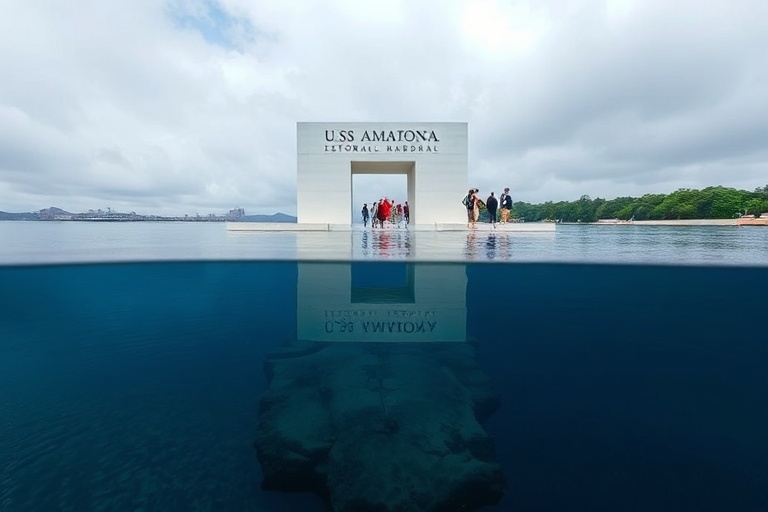
Today, the USS Arizona Memorial serves as a place of reflection. The structure, built over the ship’s submerged hull, allows visitors to stand directly above the wreckage. Oil still leaks from the battleship’s fuel tanks—a phenomenon known as the “Black Tears of the Arizona.” These droplets serve as a haunting reminder of the lives lost and the ongoing impact of the attack.
A Living Memorial
The USS Arizona Memorial was dedicated in 1962, designed to honor the fallen while preserving the battleship as a war grave. The memorial consists of three main parts: the entry room, the assembly room, and the shrine room. The shrine room houses a marble wall inscribed with the names of those who lost their lives aboard the ship.
Every year on December 7, the National Park Service hosts a memorial ceremony at Pearl Harbor. Survivors, veterans, and dignitaries gather to remember the attack and honor the fallen. The event underscores the enduring significance of the USS Arizona in American consciousness.
The memorial also plays a crucial role in education. Through exhibits, films, and personal accounts, visitors learn about the attack’s historical context and its consequences. The USS Arizona serves as a tangible connection to the past, bridging generations with its story of sacrifice.
Preservation and Controversy
Maintaining the USS Arizona as a memorial presents unique challenges. The battleship’s wreckage is a designated war grave, meaning that recovery efforts must balance preservation with respect for the fallen. In 1984, the National Park Service began a long-term stabilization project to prevent the hull from deteriorating further.
Controversy has occasionally arisen regarding the memorial’s management. Some argue that the site should prioritize historical accuracy, while others advocate for a more interpretive approach. The debate reflects broader questions about how nations memorialize their past—whether through solemn remembrance or educational engagement.
The USS Arizona also faces environmental concerns. The battleship’s fuel tanks still contain approximately 500,000 gallons of oil, which continues to leak into the harbor. Environmentalists and historians debate the best way to address this issue, weighing the risks of removal against the potential ecological damage.
The Broader Impact of Pearl Harbor
The attack on Pearl Harbor had far-reaching consequences beyond the USS Arizona. It marked America’s entry into World War II, leading to a global conflict that reshaped geopolitical alliances. The war’s aftermath saw the rise of the United States as a superpower, with Pearl Harbor serving as a defining moment in its emergence.
The USS Arizona also symbolizes the human cost of war. Its story is part of a larger narrative that includes other memorials, such as the USS Oklahoma and the USS Utah, both of which also suffered heavy losses at Pearl Harbor. Together, these sites underscore the collective sacrifice of American service members.
In recent years, the USS Arizona has taken on additional significance in discussions about military preparedness and national security. As tensions rise in the Pacific, the memorial serves as a reminder of the importance of vigilance and the consequences of underestimating threats.
For those interested in exploring more about military history and its modern implications, Dave’s Locker News offers in-depth coverage of current events and historical analysis. Additionally, Dave’s Locker Analysis provides thoughtful commentary on the broader impact of historical events.
Key Facts About the USS Arizona
- Launched: 1915, commissioned in 1916
- Displacement: 31,400 tons
- Armament: Twelve 14-inch guns, twenty-two 5-inch guns
- Attack Date: December 7, 1941
- Casualties: 1,177 crew members killed
- Current Status: War grave and memorial in Pearl Harbor, Hawaii
The USS Arizona is more than just a relic of the past—it is a living testament to the courage and sacrifice of those who served. Its story continues to resonate with new generations, ensuring that the lessons of Pearl Harbor are never forgotten.