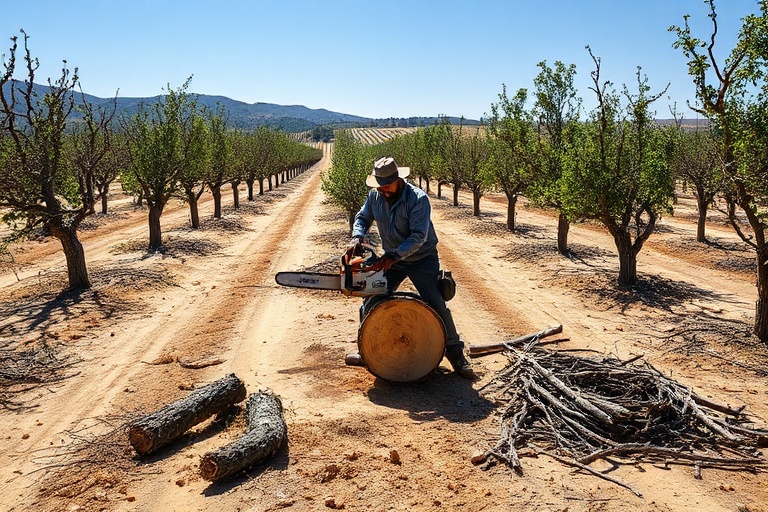
California Peach Tree Removal: Balancing Agriculture and Urban Growth
The golden hills of California once stretched endlessly under vast orchards, where peach trees flourished in the Mediterranean climate. Today, those orchards are shrinking. As urban sprawl accelerates and water resources become increasingly scarce, thousands of peach trees are being removed each year. This shift reflects broader global trends in agriculture, where tradition collides with modern demands.
California’s Central Valley, the heart of American stone fruit production, has long been the world’s leading supplier of peaches. But now, land once dedicated to orchards is being repurposed for housing, industrial zones, and renewable energy projects. The removal of peach trees is not just a local issue—it echoes across fruit-growing regions from Spain to Chile, where similar pressures are reshaping agricultural landscapes.
The Economic Forces Behind the Uprooting
The decision to remove peach trees is rarely made lightly. Orchard owners face a complex web of financial and environmental pressures. Rising labor costs, fluctuating water prices, and competition from cheaper imports have squeezed profit margins. Meanwhile, the cost of maintaining aging trees—pruning, pest control, irrigation—continues to climb.
According to a 2023 report from the California Department of Food and Agriculture, over 12,000 acres of peach orchards were removed between 2018 and 2022. Many growers are choosing to transition to more lucrative crops like almonds or pistachios, which require less water and offer higher market demand. Others are selling their land entirely to developers, where a single acre of orchard can fetch millions in real estate value.
- Labor shortages: Seasonal workers, once abundant, are now in short supply due to stricter immigration policies and competition from other industries.
- Water restrictions: California’s historic droughts have led to mandatory cutbacks, making irrigation for peach trees increasingly unsustainable.
- Market volatility: Fluctuating prices for peaches, driven by global competition and consumer preferences, make long-term planning difficult.
In some cases, the removal of peach trees is part of a strategic pivot. Younger generations of farmers, less tied to tradition, are embracing diversification. Some are replacing peach trees with olive groves or vineyards, which align better with current consumer trends. Others are leasing their land for solar farms, a growing trend in California’s renewable energy sector.
Environmental Impact: A Double-Edged Blade
While the economic rationale for tree removal is clear, the environmental consequences are more nuanced. Peach trees, like all fruit-bearing plants, contribute to local ecosystems. Their removal can disrupt soil health, reduce biodiversity, and diminish carbon sequestration capacity.
On the other hand, peach orchards are not natural ecosystems. They are monoculture plantations that often rely on heavy pesticide use and synthetic fertilizers. In regions where water is scarce, these orchards can strain local aquifers and contribute to soil degradation. The removal of such orchards may, in some cases, allow ecosystems to recover.
However, the transition to alternative land uses doesn’t always guarantee sustainability. For example, almond orchards, now California’s most water-intensive crop, have replaced many peach trees—but at what environmental cost? The shift from peaches to almonds may solve economic problems but creates new ecological ones.
Research from the Nature Conservancy suggests that managed orchards can coexist with ecological goals. Some farmers are adopting regenerative practices, such as cover cropping and reduced tillage, to preserve soil health even as they transition away from peaches. Others are partnering with conservation groups to plant native species alongside remaining orchards, creating buffer zones for wildlife.
Cultural Shifts: From Orchard to Subdivision
The disappearance of peach trees from California’s landscape is more than an economic or environmental issue—it’s a cultural shift. For generations, peach orchards were woven into the identity of rural communities. They were gathering places for families, landmarks for travelers, and symbols of heritage. Today, those orchards are being replaced by housing developments, shopping centers, and industrial parks.
This transformation is not unique to California. In Spain’s Catalonia region, peach orchards have been steadily replaced by urban expansion around Barcelona. In Chile’s central valley, fruit growers are converting orchards to vineyards to meet global demand for wine. Even in the United States, the decline of peach production in Georgia—once known as the “Peach State”—has led to nostalgia and a reevaluation of agricultural priorities.
The loss of peach orchards also reflects changing dietary habits. As consumers worldwide shift toward processed foods and alternative sweeteners, demand for fresh peaches has declined. Supermarkets increasingly stock imported peaches from Chile or South Africa, which can be shipped year-round but lack the local flavor and seasonal connection of California-grown fruit.
- Urbanization: As cities expand, agricultural land is converted to meet housing and infrastructure needs.
- Changing diets: Younger generations prefer processed snacks over fresh fruit, reducing demand for peaches.
- Global competition: Imported fruit often undercuts local prices, making domestic peach farming less viable.
Yet, there is a growing counter-movement. Farmers’ markets, farm-to-table restaurants, and artisanal food producers are reviving interest in locally grown peaches. Organizations like the California Peach Growers Association are promoting heirloom varieties and sustainable farming practices to reconnect consumers with the fruit’s heritage.
The Future of Peach Orchards in California
The fate of California’s peach trees hinges on a delicate balance. Can growers find ways to sustain orchards economically while minimizing environmental harm? Can communities preserve their agricultural heritage amid rapid urbanization? The answers may lie in innovation and collaboration.
Some farmers are experimenting with high-density planting, which increases yield per acre and reduces water use. Others are exploring drought-resistant peach varieties, though these often produce smaller or less flavorful fruit. Technology, too, is playing a role—precision agriculture tools help growers optimize irrigation and reduce waste.
Policy will also shape the future. California’s Sustainable Groundwater Management Act aims to regulate water use more strictly, pushing farmers toward efficiency. Meanwhile, state and federal programs offer grants for farmers who transition to more sustainable crops or conservation practices.
For consumers, the choice is clear. Supporting local peach growers—whether through farmers’ markets, community-supported agriculture (CSA) programs, or simply choosing fresh, in-season fruit—can help preserve orchards for future generations. The peach tree may be disappearing from California’s landscape, but its legacy can endure if we choose to value it.
Conclusion
The removal of peach trees in California is a microcosm of global agricultural change. It reflects the pressures of urbanization, climate change, and shifting consumer habits. Yet, it also presents an opportunity—to reimagine how we grow, consume, and value food. The peach tree may not dominate the hills of Central Valley as it once did, but its story is far from over.
As we move forward, the challenge will be to preserve what is worth keeping—whether that’s the taste of a sun-ripened peach, the livelihoods of farming families, or the health of our planet. The uprooting of peach trees is not just about loss. It’s about transformation, and the choices we make today will shape the orchards of tomorrow.